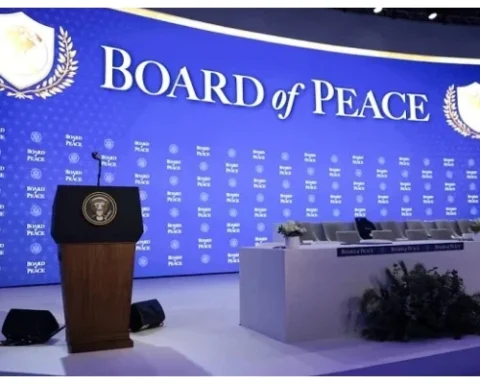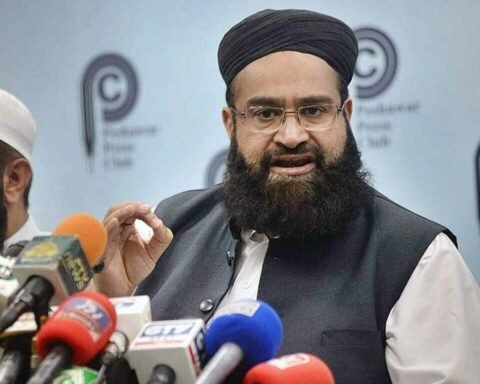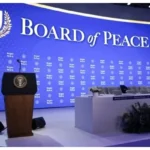
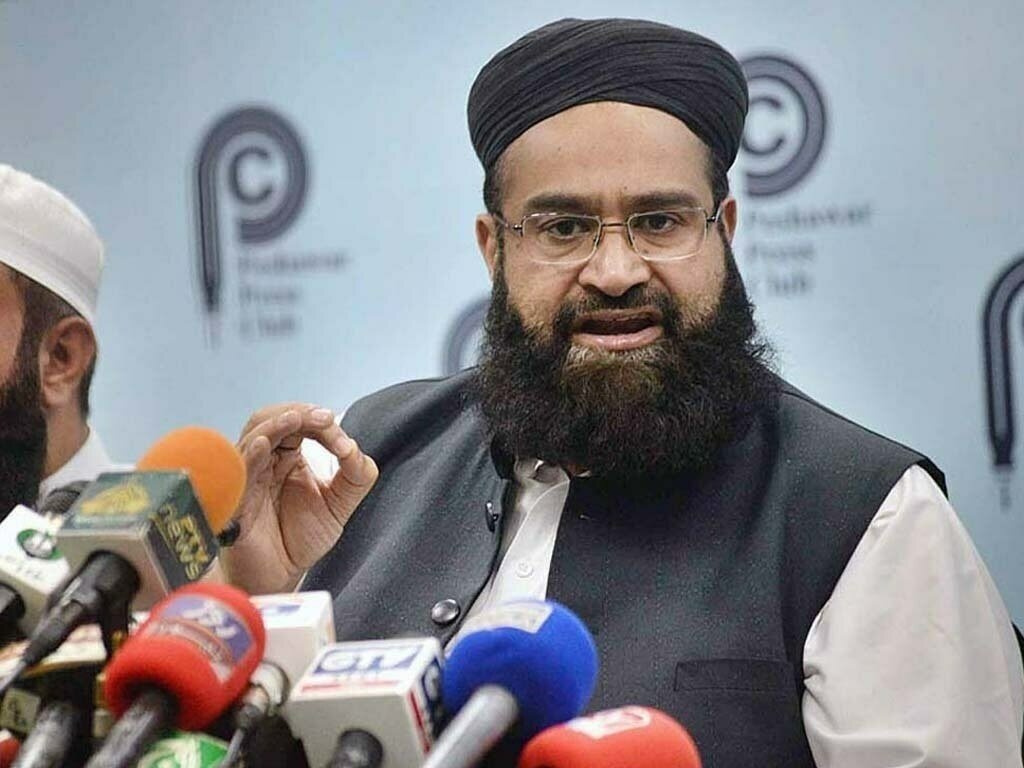

Some positions should remain above the pull of party lines amid the din of everyday politics. These include Palestine, which is why Hafiz Muhammad Tahir Mahmood Ashrafi’s recent comments are significant. He presented Pakistan and other Muslim nations joining the Gaza Peace Board as something done for the Palestinian people, not for publicity, not for point scoring, and not to settle local rivalries, when speaking at the BoP conference and the Peace Council meeting on the situation in Gaza. You may or may not agree with his technique, but his main point is straightforward: Pakistani popular opinion and state policy on Palestine often follow one another, and anybody attempting to break that agreement is messing with a sensitive matter for petty political ends.
That warning is accurate. Palestine is not a remote file in a foreign office cabinet in Pakistan; rather, it is a moral issue that many people consider in their daily prayers, domestic discussions, and evaluations of the justice of the world. When a cause has so much emotional weight, political actors may feel tempted to exploit it as a shield to conceal their own shortcomings or as a stick to bash opponents. According to Ashrafi, this desire should be avoided as it breeds distrust where harmony ought to exist.
A split voice simply distorts Pakistan’s message and makes it easier for foreign powers to disregard it; it does not help the Palestinians
By citing Shehbaz Sharif and Asim Munir as representatives of the Muslim Ummah on Palestine, his statement also attempts to link that unity to the highest levels of leadership. Mentioning both is not a haphazard decision in Pakistan, where the issue of civil-military balance is always up for discussion. It denotes an effort to portray a unified national position across all institutions. The objective is clear: to demonstrate that Pakistan’s position toward Palestine is not swaying with every internal conflict. Some readers will see this as essential, while others will interpret it as political messaging. That stability may be helpful in a global context, since faltering governments are marginalized.
The true test of every board, conference, or council, however, is not the photo opportunity but rather the execution. If it organizes tangible measures, such as ongoing humanitarian aid, medical supplies, diplomatic pressure for a ceasefire, and a real reconstruction plan that does not see Palestinians as a problem to be solved, a new platform like the Gaza Peace Board may be beneficial. Pushing for uniform terminology in international fora may also be beneficial, ensuring that demands for human rights are not biased and that the victim’s passport is not used to rank civilian suffering.
However, people will rightfully wonder what changed for the kid under the debris if the BoP space turns into just another platform for leaders to reiterate claims they have made for years
A comprehensive ceasefire, an end to Israeli cruelty, the rehabilitation of Gaza, and the establishment of an independent Palestinian state with Al Quds as its capital are among the demands Ashrafi made, and they are in line with what the majority of Pakistanis want to hear. Although Pakistan has always had this stance, it is important to reiterate it since certain international players are attempting to legitimize permanent occupation while using the language of peace. The demand for a Palestinian state is a means of expressing that charity cannot take the place of justice and that aid trucks are insufficient. Without political rights, reconstruction might become a vicious cycle in which Gaza is restored just to be demolished once again. Another trap is created when a truce is seen as a stopgap rather than a solution.
However, opinions regarding what Pakistan and other Muslim nations can really do must be honest. They have their own diplomatic and economic limitations, and they lack authority over the main military pressure instruments. However, they do have tools, and they need to utilize them responsibly. They may assist verifiable relief routes that reach people rather than networks that embezzle funds, organize humanitarian corridors, and finance shelters and hospitals. They may use international law to advocate for accountability in reputable venues and continue to raise the matter at the UN as a recurring demand based on rights rather than as a seasonal headline.
In order to prevent any state from being isolated when it speaks honestly, they may also establish a common diplomatic stance
Avoiding performative indignation is the most difficult aspect. Anger is rewarded on social media, but diplomacy requires endurance. The Gaza Peace Board should provide specific objectives, deadlines for funding pledges, and a long-term rehabilitation plan linked to Palestinian political assurances if it is sincere. Rebuilding lives needs logistics, funding, trauma treatment, and governance assistance; it should include reputable humanitarian specialists in addition to clergy and politicians. Additionally, by keeping internal political disputes out of the Palestine file, it should preserve the unity Ashrafi spoke of. It is acceptable, even necessary, to criticize, but the focus should be on efficacy and policy rather than who gets to claim ownership of a cause that belongs to the oppressed.
Ashrafi’s remarks serve as a reminder of a fundamental concept that Pakistan must uphold: the Palestinian struggle is a principle, not a symbol for regional politics. For the Palestinian people, participation in the BoP must include more than just attendance if Pakistan and other Muslim nations are included. It must include persistent action, a unified message, and a determination to keep Gaza bleeding while the rest of the world moves on. The requirement is straightforward. Put an end to the slaughter, restore the damaged areas, and acknowledge the right of the people to a state and capital in Al Quds. The only issue is whether the institutions that are now being established will take that desire seriously enough to be significant.