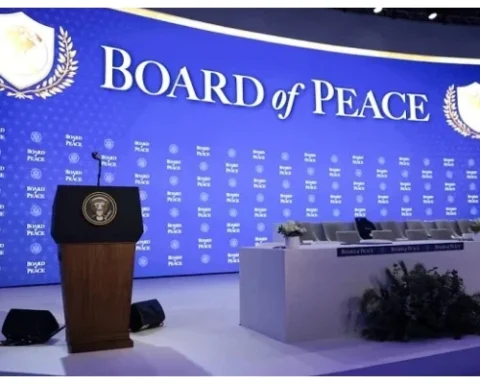
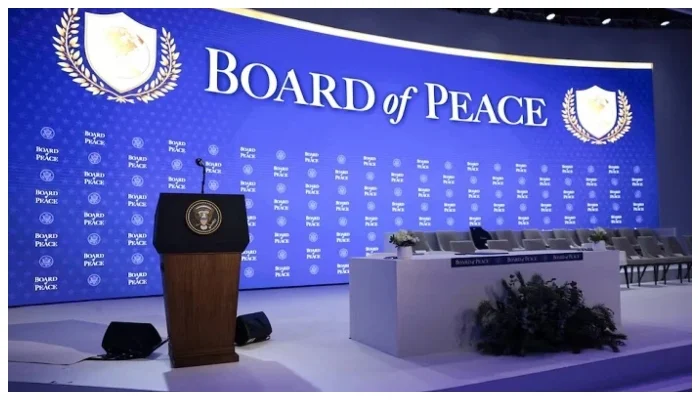

President Trump’s remarks at the Board of Peace meeting in Washington matter less for their flattering tone and more for what they reveal about how this White House wants to run diplomacy. When Trump publicly credits Prime Minister Shehbaz Sharif for helping “promote peace” in Gaza, he is not just offering courtesy. He is signaling that Pakistan is being treated as a useful, even preferred, partner in a new forum that the United States is trying to build outside the familiar United Nations first approach. That move has consequences, because it reshapes who gets a seat at the table, what kind of leverage is rewarded, and how quickly symbolic praise can turn into real demands.
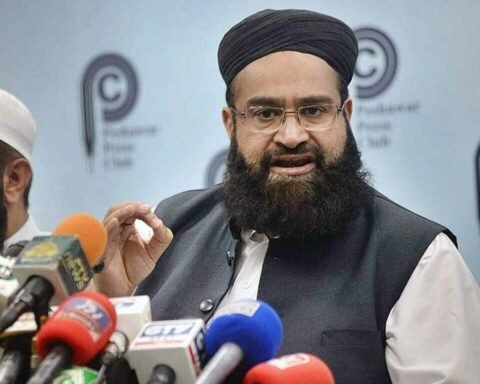
Start with the Gaza angle. Pakistan has consistently framed its position as political support for Palestinians plus humanitarian assistance, while also being careful about any military footprint that could look like fighting Palestinians rather than protecting civilians. Reuters reports that PM Shehbaz planned to seek clarity on any potential troop role, stressing peacekeeping and humanitarian limits rather than combat tasks. That is not a minor detail. It is the difference between a mission that can be defended at home and one that could ignite backlash.
Trump’s public appreciation, in that context, looks like a carrot, an attempt to keep Islamabad close as Washington tries to assemble a multinational stabilization plan and large reconstruction pledges
But praise comes with a price. Trump’s style is personal and transactional. If he likes a leader, he says it, and then he expects deliverables. The Board of Peace itself is being presented as a big vehicle for Gaza funding and security planning, with talk of international forces and oversight that could overlap with, or compete with, the UN system. Even sympathetic observers should be uneasy about that. When a new structure is chaired by the sitting U S president and tied to headline pledges, it can become a channel for pressure, not just cooperation. Countries may find themselves praised one day and blamed the next if they hesitate on troops, money, or political cover.
Then there is Trump’s unusually warm language about Field Marshal Asim Munir, calling him a strong and determined fighter, and in some reports using words like “tough” and “good fighter.” That kind of compliment is not neutral. It elevates the security establishment as a central interlocutor, not merely a background institution. In Pakistan’s case, that may feel familiar, even convenient, because foreign capitals often treat the military as the anchor of policy continuity. Still, it carries risk. When Washington publicly lionizes a uniformed leader, it can complicate civilian messaging, and it can feed the perception that security ties are the real relationship, while civilian diplomacy is the presentation layer.
Over time, that weakens the very civil political capacity that any long peace plan for Gaza would need from Muslim majority partners: legitimacy, public buy-in, and transparent constraints
The most combustible line, though, is the Jets’ claim. Trump has now talked about a much higher number of aircraft shot down in the Pakistan-India fighting than he previously mentioned. Reuters documented him earlier saying he thought up to five jets were shot down, while recent coverage describes him claiming eleven. That is not a small discrepancy. It shows how Trump narrates conflict: not as a careful record of events, but as a story that supports a preferred conclusion, that he stopped the fighting through economic threat and personal intervention. India has repeatedly rejected claims of third-party mediation, and battlefield claims from both sides have remained contested in public reporting. If Trump keeps inflating numbers, it can inflame nationalist sentiment and make quiet de-escalation harder for leaders on both sides.
For Pakistan, the temptation is obvious. Being praised by the US president on a global stage can look like diplomatic rehabilitation and strategic relevance, especially after years of uneven ties. It can also open doors to trade, financial support, and crisis management channels. Yet the same spotlight can create a trap. If Pakistan is publicly framed as a key peace actor, it may be pushed into roles that are politically expensive, such as boots on the ground in Gaza under a mandate that opponents can paint as serving someone else’s agenda. Even if the mission is genuinely about protecting civilians and enabling aid, perceptions can decide domestic politics.
That is why the careful language about peacekeeping and humanitarian boundaries is essential, and why Islamabad will need written clarity on command structure, rules of engagement, and the political end state
There is also a broader moral question that Trump’s remarks glide past. Compliments to leaders do not equal a workable peace. Gaza needs a credible political horizon, serious reconstruction governance, and security arrangements that do not simply freeze conflict until the next explosion. Money helps, but money without legitimacy can harden grievances. A forum like the Board of Peace might mobilize resources quickly, but speed is not the same as justice or durability. If the Board becomes a stage for declarations and personality politics, it could end up weakening multilateral norms while failing to deliver on the ground.
So how should we read Trump’s statements? As an opening, not a guarantee. Pakistan is being courted as a Muslim-majority partner whose participation could add credibility to a stabilization plan. Trump is also sending a message to rivals and allies alike: he will reward leaders he likes, highlight generals he trusts, and claim ownership over ceasefires, whether others agree or not. Pakistan can benefit from engagement, but only if it keeps its objectives tight: humanitarian access, political legitimacy, and zero ambiguity about any troop role. If Islamabad treats praise as policy, it will be disappointed. If it treats praise as a negotiating moment, it can extract clarity, protect its domestic red lines, and still contribute to a real peace effort that outlasts today’s headlines.