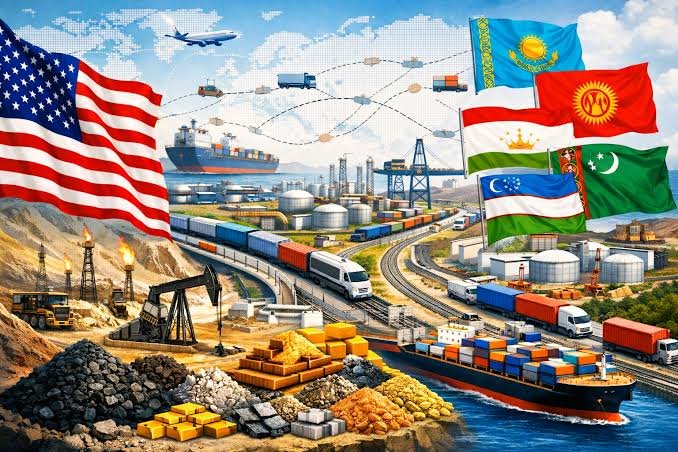

South and Central Asia are once again becoming central to global strategic competition. For the United States, the region is no longer only about counterterrorism or post-9/11 security calculations. It is now tied to critical minerals, energy corridors, access to Central Asian markets, great-power competition, and the future balance of influence between the West, China, Russia and regional powers. In this context, continued instability in Pakistan’s western regions is not merely Pakistan’s domestic security problem. It is a direct threat to American strategic interests. The growing use of Afghan territory by militant networks, along with allegations of India-backed proxy activity aimed at weakening Pakistan, risks creating a dangerous security vacuum that could undermine Washington’s long-term objectives across the wider region.
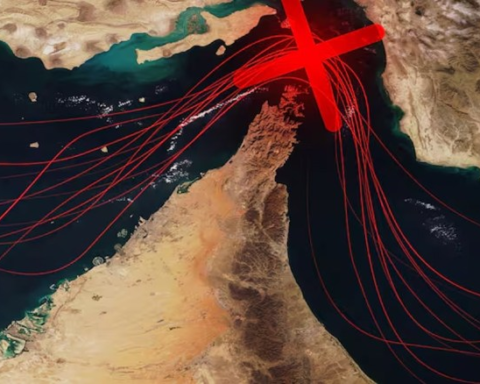
Pakistan occupies a critical geopolitical position. It connects South Asia with Central Asia, the Middle East and the Arabian Sea. Its western regions are located near some of the world’s most strategically important corridors, including routes that could support trade, energy movement and mineral access between Central Asia and global markets. If these areas remain unstable, the United States and its allies will find it difficult to promote alternative connectivity projects that reduce overdependence on China-led infrastructure. Persistent violence in Balochistan, Khyber Pakhtunkhwa and border areas damages investor confidence, raises security costs and discourages Western companies from entering projects related to mining, transport, energy and logistics.
This directly benefits America’s competitors, especially China, which has already built deep economic and strategic stakes in the region
The threat is particularly serious because Afghanistan, after the US withdrawal, has again become a permissive environment for several militant groups. The Taliban’s inability or unwillingness to dismantle terrorist sanctuaries has allowed anti-Pakistan militant groups to regroup, recruit and operate with greater freedom. These networks do not only threaten Pakistan. They weaken the broader regional security architecture that the United States spent two decades trying to build. If terrorist organizations once again gain depth, resources and operational space in Afghanistan, the consequences will not remain confined to Pakistan. They could threaten Central Asian republics, Western interests, diplomatic missions, infrastructure projects and eventually global security.
From Washington’s perspective, a destabilized Pakistan would be a major strategic setback. Pakistan is a nuclear-armed state, a major Muslim country, a long-standing security partner and a key geographic bridge to Afghanistan, Iran, China, Central Asia and the Arabian Sea. Any sustained campaign of violence inside Pakistan would weaken state capacity, divert resources away from economic reform and counterterrorism, and create openings for hostile intelligence networks and transnational extremist groups.
For the United States, this would mean fewer reliable partners, fewer economic opportunities and greater space for China and Russia to shape regional outcomes
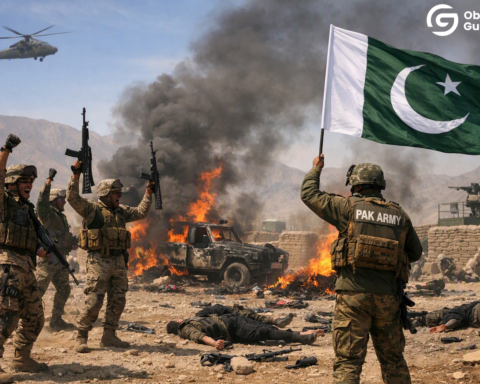
The alleged use of proxy warfare against Pakistan through Afghan territory must therefore be viewed through a wider strategic lens. If external actors are encouraging or enabling militant groups to pressure Pakistan, they are not only targeting Islamabad. They are undermining the possibility of regional integration, damaging prospects for Western investment and creating conditions in which extremism and great-power rivalry can flourish together. Such tactics may appear useful to those who seek short-term leverage against Pakistan, but they carry long-term consequences for the entire region. Proxy warfare rarely remains controlled. It produces blowback, strengthens criminal economies, empowers extremist commanders and weakens the very state institutions needed to maintain order.
The United States must recognize that its interests are better served by a stable, secure and economically viable Pakistan. Stability in Pakistan would support counterterrorism cooperation, protect regional supply chains, open possibilities for Central Asian connectivity and create a stronger foundation for Western commercial engagement. It would also prevent China from becoming the only major power capable of operating economically in high-risk environments. If American policymakers want to compete effectively with China’s expanding influence, they cannot treat Pakistan’s security concerns as secondary.
A Pakistan under constant militant pressure will inevitably rely more heavily on partners willing to invest despite risk, and China has already positioned itself as that partner
Washington should therefore adopt a more active and balanced regional approach. First, the United States should deepen intelligence and counterterrorism cooperation with Pakistan. This does not require returning to the old dependency-based model of security relations. Instead, it should be based on shared interests: preventing terrorist safe havens, disrupting financing networks, monitoring cross-border militancy and protecting critical infrastructure. Second, Washington should increase diplomatic pressure on the Taliban to prevent Afghan soil from being used by militant groups. Recognition, engagement, humanitarian support and economic access should be linked to verifiable action against terrorist sanctuaries. The Taliban cannot be allowed to benefit from international engagement while ignoring the security obligations that come with control of Afghan territory.
Third, the United States should work with allies and regional partners to identify and curb external support networks that finance, arm or politically protect proxy groups. This includes stricter monitoring of illicit money flows, propaganda networks, cross-border facilitation channels and diaspora-linked funding mechanisms. Counterterrorism today is not only about military action; it is also about financial intelligence, cyber monitoring, diplomatic pressure and coordinated law enforcement.
If proxy warfare is allowed to operate through deniable networks, it will continue to destabilize Pakistan and weaken regional order
Finally, American policy must move beyond crisis management. The United States should support economic stabilization, energy development, mineral-sector transparency and regional connectivity projects that include Pakistan as a serious partner. Security and economics cannot be separated. Militancy grows where governance is weak, investment is absent and local populations feel abandoned. A development-oriented approach, combined with hard counterterrorism cooperation, would serve both Pakistani and American interests.
The future of South and Central Asia will be shaped by those who can provide stability, connectivity and economic opportunity. If the United States ignores Pakistan’s security challenges, it risks losing strategic ground to China, allowing Afghanistan to become a renewed terrorist hub and weakening its own influence in one of the world’s most important regions. A stable Pakistan is not a favor to Islamabad. It is a strategic necessity for Washington. In the emerging contest for influence across Eurasia, Pakistan’s security may prove to be one of the decisive factors in protecting long-term American interests.