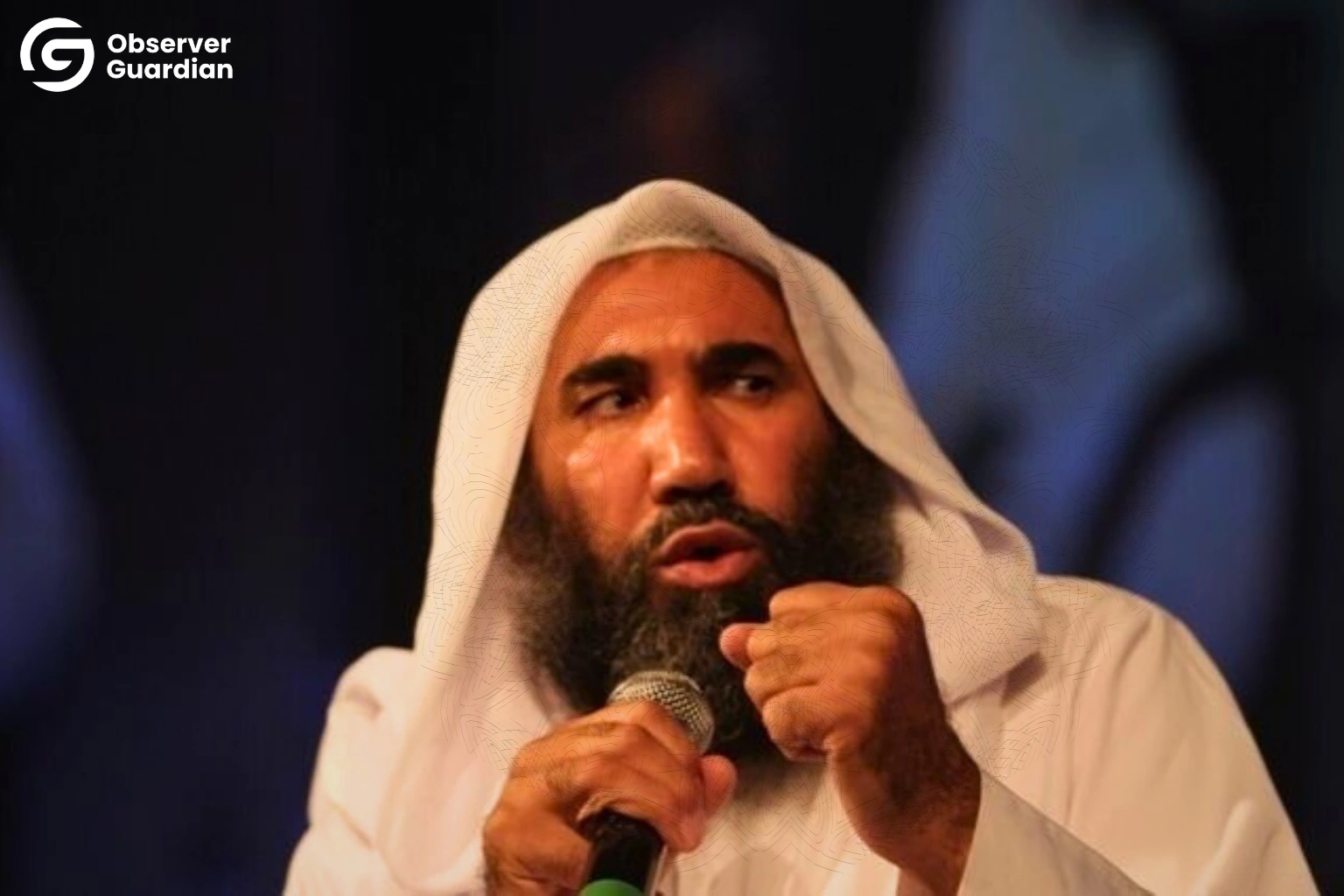

Political discourse and media have long portrayed Pakistan as betraying Mullah Abdul Salam Zaeef, the Taliban ambassador in Islamabad at the time of 9/11, by surrendering him to the United States. On this, a veteran journalist, Tahir Khan, recently provided a video clip where the former ISI Chief General (Retd) Ehsan ul Haq categorically denied this long-standing allegation in a seminar. His narrative is detailed and throws much light on the diplomatic intricacies that Pakistan was experiencing at that time. The real turn of events that saw Mullah Zaeef finally captured is a much more subtle story than the accusations imply.
The Foreign Policy Legacy of 9/11
Mullah Abdul Salam Zaeef remained in the diplomatic residence in Islamabad after the Taliban regime was overthrown in 2001. It was not just a matter of bureaucracy; his continued stay in a diplomatic residence, despite no longer being an accredited ambassador, became a major embarrassment for Pakistan on the world stage. It was reported that international journalists camped outside the residence of Zaeef waiting to get soundbites (General Ehsan ul Haq). Zaeef had been in constant contact with them and had consistently attacked Pakistan and taken advantage of the media coverage to make Islamabad appear bad. These declarations upset the fragile balancing exercise that Pakistan was playing with international obligations and her historical relationship with Afghanistan.
A Diplomatic Tightrope
As the Taliban government fell, remnants of the government took refuge across the border. One of them included an alternative to form a government in exile in Pakistan, with Mullah Zaeef as leader.
This was a red line to Pakistan, which could not afford to host a Taliban government in exile after joining the global alliance against terrorism.
The Pakistani Ministry of Foreign Affairs officials repeatedly urged Mullah Zaeef to leave his diplomatic house and live in the country as a regular Afghan citizen that was provided with respect and flexibility. But he refused.
Pakistan was also then already hosting almost five million Afghan refugees. Not one of them was given to the United States, which is a natural opposition to the story of betrayal. The case of Zaeef was managed through several diplomatic and personal appeals, which became increasingly unbearable by his obstinate demand that he should remain the ambassador.
The Decision to Deport
At a certain point, Pakistan decided to operate within the confines of its law. Mullah Zaeef was neither diplomatically immunized nor accredited. Therefore, he could be deported like any foreign national who had not gained status through legal means. In Afghanistan, the Pakistani authorities organized his deportation through the Torkham border. Even when he was being transported by helicopter, the authorities gave Zaeef one last opportunity to change his mind and stay in Pakistan as a non-governmental citizen. He declined again.
After crossing the border, Zaeef was captured by the Afghan troops, not the Pakistani troops, and later sent over to the Americans.
This critical difference that is usually overlooked when retelling the story that Mullah Zaeef was arrested inside Afghanistan, not handed over by Pakistan thereby completely dismantles the myth of betrayal.
Distortion and Misrepresentation
When Mullah Zaeef was released out of Guantanamo Bay, he wrote a book in India that blamed the Pakistani nation as having betrayed him and positioned himself as a victim of politics. That description is squarely criticized by General Ehsan. In the Pakistani perspective, Zaeef had been deported on a purely legal and diplomatic basis, not ill will or conspiracy. The state was left with very little to do in his refusal to cooperate.
Setting the Record Straight
The dematerialization of this problem is not merely a historical argument, but it serves as a reminder of how easily narratives can be twisted and changed over time when the complex decisions of diplomacy are simplified into moral judgments. Immediately after the 9/11 attack, Pakistan was experiencing unprecedented pressure at the international level, domestic security issues, and the changing regional balance. In that respect, the way it handled the case of Mullah Zaeef was calculated, legal, and practical.
The narrative about the betrayal of Mullah Zaeef by Pakistan should be buried as per revelations made by General Ehsan ul Haq. What emerges instead is a picture of a state navigating impossible choices and upholding international commitments while trying to preserve dignity amid chaos.
⚠ Disclaimer
The views and opinions expressed in this article are exclusively those of the author and do not reflect the official stance, policies, or perspectives of the Platform.