

The recent arrest of two suspected ISIS inspired operatives in Delhi and Madhya Pradesh has once again elicited a foreseeable outburst of finger pointing. Although there is no piece of proven evidence, allegations have come forward that these arrests were done due to the intelligence agency in Pakistan, the ISI. So, it is not a new trend in scapegoating, but it is a well-worn sequence of Indian politics which it uses, whenever it is grappling with a failure on account of its own security deficits.
The Growing ISIS Menace in India
ISIS has been well received at Indian soil. In the recent years, the Indian authorities acknowledged that they have detected several terror modules in various states such as Delhi, Uttar Pradesh, Maharashtra, and Madhya Pradesh. These cells have been recruiting, radicalizing and plotting attacks to a great extent without any outside guidance. Additionally, the awkward reality is that ISIS has been gaining ideological ground in India, where social cleavages and lack of counter-radicalization mechanisms have benefited it.
India tends to turn the problem of these domestic security failures outside, instead of seeking a solution. The connection between ISIS presence in India and the ISI of Pakistan, provides a handy political scapegoat, taking the focus off from structural problems like community polarization, increasing radicalization of peripheral communities, and deficiencies in intelligence co-ordination between national and state intelligence services.
A Political Story, Not a Security Evaluation
Besides, there is no plausible international intelligence evaluation that can substantiate the allegations that India has made against Pakistan. They seem to belong to a bigger trend of creating anti-Pakistan discourses to legitimize domestic and geopolitical interests. Every few months, the Indian media seems to come up with a fresh new ISI link story, which is always anchored on an anonymous police source, and never proven from outside source. Thus, this repetition is not a new thing, but is a continuation of blame game.
Pakistan has decisively refuted such false accusations, maintaining that it does not give shelter or aid to ISIS or any other terror organization.
This is supported by the record that the institutions of the military and law enforcement in Pakistan, have invested last ten years of their lives in destroying the extremist nets, by using high risk and sustained operations.
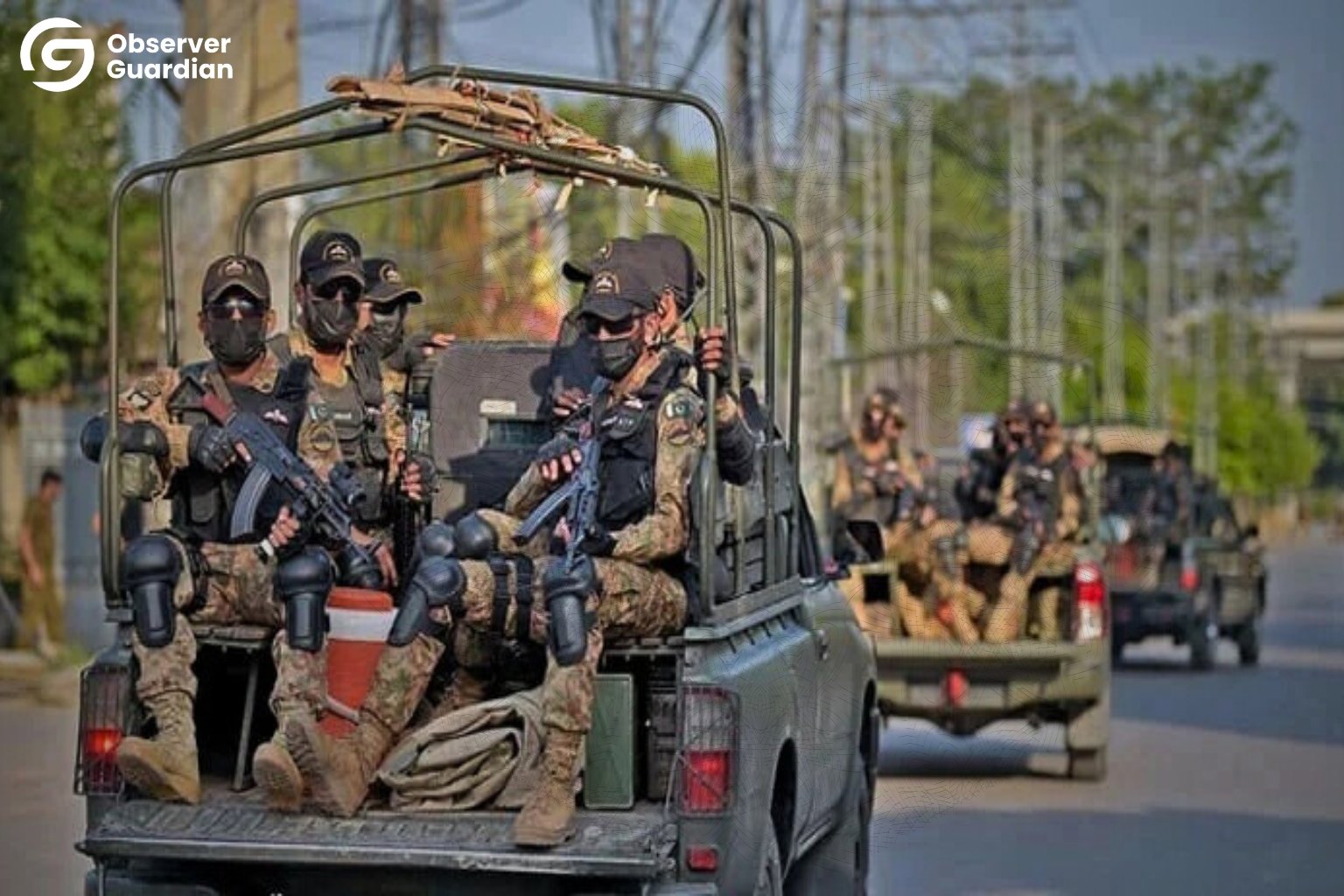
The Proven Counterterrorism Record in Pakistan
Moreover, Pakistan paid a very high price in its war against terrorism. Since 2014, hundreds of ISIS and related militants in the border regions of Pakistan are eradicated in military actions, including Operation Zarb-e-Azb and Operation Rah-e-Shahadat. Such operations have significantly curtailed the activities of the extremist groups, which were present as a source of existential threat to the state.
The security policy of the year 2005 in Pakistan has developed into a multi-layered security phenomenon, which incorporates intelligence coordination, legal reforms and international cooperation in contrast to purely kinetic operations of the past years. Thus, an integrated system that aligns the laws in Pakistan with the UN and FATF regulations in counter terror financing is now conducted by the National Counter-Terror Authority (NACTA).
Furthermore, the American senior officials have recognized the role played by Pakistan. General Michael Kurilla, the former chief of U.S. Central Command said, that the efforts by Pakistan against ISIS were phenomenal. Hence, such recognition discredits the Indian line of accusation that Pakistan harbors or supports ISIS.
The Actual Cause of the Turmoil
Additionally, the deteriorated situation within India should make the world more worried than these unsubstantiated allegations. The emergence of localized radicalization, local riots, and the internet extremist cells is an indication of internal divisions that cannot be repaired by scapegoats. Rather than addressing these realities, the Indian authorities tend to use terrorism narratives to rationalize aggressive policies against Pakistan, and to develop global sympathy for itself, as a victim of cross border terrorism.
Indian and international analysts alike have recorded the activities of ISIS in India, and there is no evidence from international analysts regarding the accuracy of Indian allegations. The group is not receiving any foreign assistance, but its popularity in that region is mostly based on domestic complaints.
A Call for Objectivity
In a nutshell, Pakistan is a devoted international partner in the war against ISIS. Its sacrifices, plans and operational achievements are documented and verifiable. Any effort to draw Pakistan into the internal security failures of India, are politically fueled distractions against the real counterterrorism collaboration in South Asia.
Pakistan’s stance remains clear that it will not tolerate any act of terrorism on its territory and will cooperate with all nations to ensure ISIS and similar groups have no safe havens in the region.
These allegations must be seen by the international community as an effort to blame Pakistan, instead of being a solution to the problems. So, constructive and long term regional security needs facts regarding internal weaknesses, and not scapegoats.
Lastly, the stance of Pakistan is also quite evident, as it will not tolerate any act of terrorism on its territory, and will cooperate with other states to ensure that organizations such as ISIS have no base in the area. The unfounded attempts of India to associate Pakistan with ISIS agents are not merely unscrupulous, but they also jeopardize the trust and cooperation that is needed to deal with the very real danger.
⚠ Disclaimer
The views and opinions expressed in this article are exclusively those of the author and do not reflect the official stance, policies, or perspectives of the Platform.