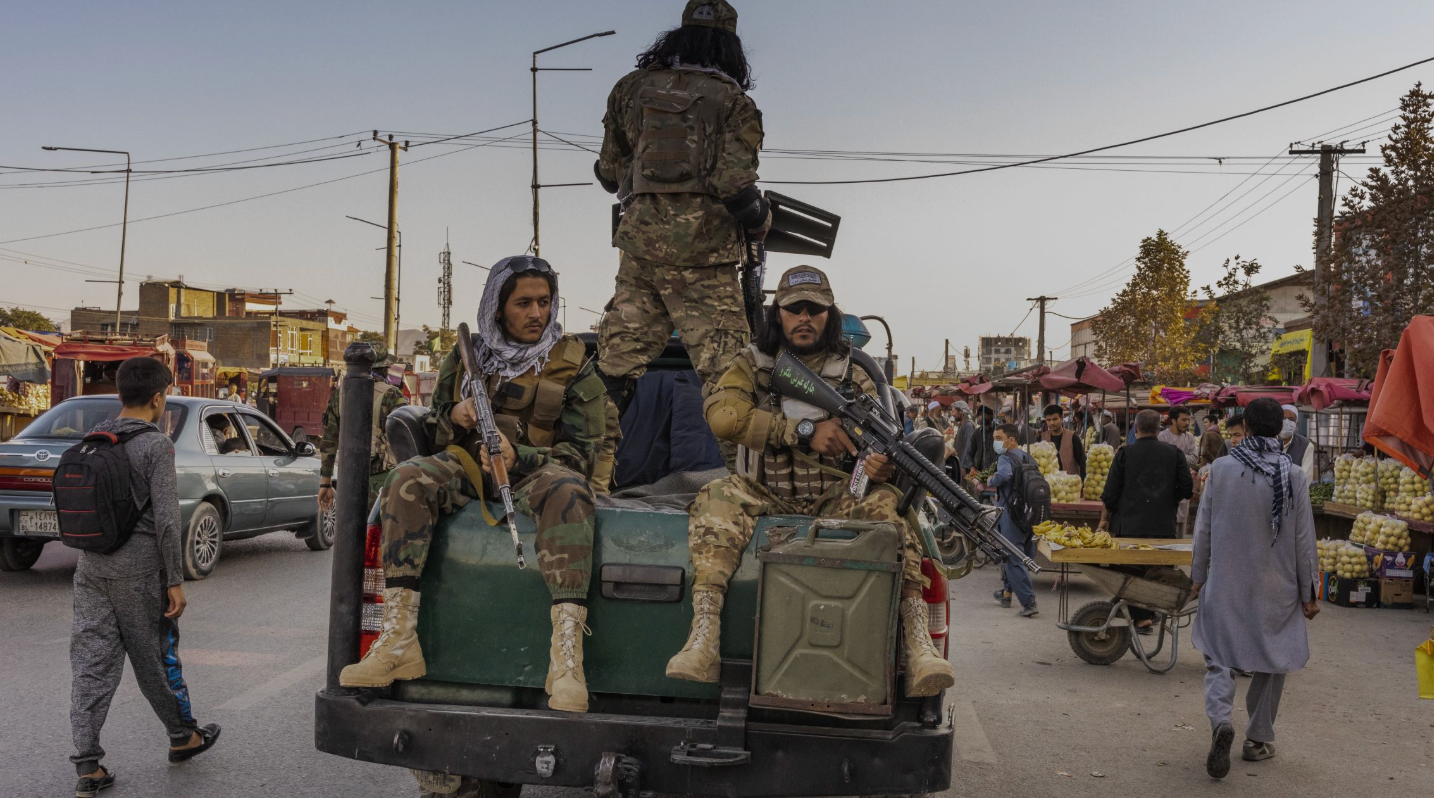

Russia’s renewed warnings about the expanding influence of terrorist groups in Afghanistan highlight a troubling and increasingly complex security landscape that the international community cannot afford to overlook. In recent remarks at a UN Security Council committee briefing, Russia’s Ambassador Vassily Nebenzia raised concerns that Daesh, in particular, is steadily broadening its operational presence in Afghanistan. These warnings come at a time when the region is already grappling with political uncertainty, fragile borders, and competing international interests. Nebenzia’s comments reflect a larger fear that Afghanistan, just a few years after the withdrawal of Western forces, may once again become fertile ground for militant groups seeking to exploit security vacuums and instability.
According to Nebenzia, the situation is aggravated by the fact that Daesh fighters operating in Afghanistan are not merely local recruits but include militants with extensive battlefield experience from Syria and Iraq. This raises the stakes considerably. Foreign fighters bring not only tactical skill and combat readiness but also transnational connections that allow extremist groups to coordinate operations far beyond Afghanistan’s borders. Their presence could accelerate the evolution of Daesh’s Khorasan branch into a more sophisticated, internationally connected network capable of disruptive attacks across the region.
Russia’s characterization of this threat as “deliberately fueling tensions” underscores the perception that terrorist groups aim to position themselves as alternative power structures, entities capable of filling governance gaps or undermining the authority of the de facto Afghan government
Another critical dimension of Russia’s warning involves the vast quantities of military equipment left behind during the hurried withdrawal of US and NATO forces in 2021. Nebenzia voiced concerns that these weapons, now unaccounted for in many cases, could fall into the hands of militants. Such a development would dramatically accelerate the operational capacity of extremist groups. A well-armed insurgency with access to modern rifles, armored vehicles, night-vision systems, and communication tools would pose a severe threat not only within Afghanistan but also to neighboring states whose borders remain highly porous. The possibility that these weapons could be smuggled into Central Asia, South Asia, or even the Middle East amplifies Russia’s fears of a broader regional security crisis.
Russia’s concerns are not entirely new; Moscow has consistently raised alarms about terrorist activity emanating from Afghan territory. Yet the gravity of the current warning suggests a shift in tone, one that appears more urgent than in previous statements. The Kremlin has deep strategic interests in ensuring stability along its southern periphery, particularly in Central Asia, where former Soviet republics could be vulnerable to cross-border militant infiltration. In this context, Nebenzia’s remarks about the risk of terrorism “spilling over” into Central Asia should be taken as a sign that Russia views the situation as nearing a critical tipping point.
For Moscow, the fear is not simply an Afghan problem; it is a regional problem with potential implications for its own national security
At the heart of Nebenzia’s message is a call for comprehensive measures to counter terrorism, an appeal that reflects both longstanding frustrations with global counterterrorism strategies and recognition that the current situation requires a more coordinated approach. This call includes the dismantling of all terrorist groups operating in Afghanistan and preventing the country from becoming a launchpad for attacks against other states. It also subtly underscores Russia’s belief that the international community, and particularly Western nations, bear responsibility for the instability that emerged after the withdrawal. The lingering consequences of military intervention, rapid disengagement, and the subsequent power vacuum now form part of the geopolitical narrative that Russia is using to argue for stronger oversight and cooperation.
However, the Islamic Emirate, which governs Afghanistan, has firmly rejected Russia’s warnings, insisting that Afghan soil will not be used for hostile activities against any country. This response mirrors the Emirate’s consistent stance since taking power: that it has the situation under control and that concerns about terrorist safe havens are exaggerated or politically motivated. While the Emirate may have ideological and political incentives to downplay the threat, the international community remains skeptical. Reports from independent observers, regional governments, and global intelligence agencies often contradict the Emirate’s assurances.
The question, then, is whether the Emirate has both the capacity and willingness to eliminate groups like Daesh, whose extremist ideology directly challenges its own authority
Russia’s warnings should not be dismissed as mere geopolitical posturing. They reflect a growing unease shared by many countries in the region, which fear that unchecked militant activity in Afghanistan could reignite instability reminiscent of the 1990s. The threat is not only ideological and political but also practical: weapons are circulating, fighters are mobilizing, and borders remain vulnerable. If the situation is ignored, the consequences could extend far beyond Afghanistan’s rugged landscapes. Central Asian states could face infiltration, radicalization, and renewed insurgency. Regional power rivalries could intensify as countries deploy more resources to secure their borders. Even global security could be affected if Afghanistan once again becomes a hub for transnational terror networks.
What is needed now is a sober acknowledgment that the security vacuum in Afghanistan is a shared international problem, not one that any single state, Russia included, can address alone. Whether or not the Islamic Emirate admits the scale of the threat, the evidence of growing militant activity is difficult to ignore. The international community must engage with Afghanistan’s authorities, regardless of political differences, to develop pragmatic counterterrorism cooperation. If vigilance lapses, the region may find itself confronting a renewed surge of terrorism that could have been mitigated through collective action. Russia’s warning may be politically charged, but it carries a truth that policymakers worldwide should heed: the dangers in Afghanistan are growing, and ignoring them will not make them disappear.