
India’s accelerating hydroelectric push across its northern and north-eastern frontiers has sparked a storm of humanitarian, environmental, and geopolitical anxieties. While hydropower is frequently marketed as clean, renewable, and central to India’s energy transition, the manner, scale, and strategic geography of these projects raise questions far beyond electricity generation. For communities living along the Brahmaputra and Indus basin rivers, and for neighbouring Pakistan, India’s dam-building spree is increasingly interpreted as a coercive tool, one that risks destabilizing fragile ecosystems and delicate political balances. What should have been a cooperative regional approach to shared rivers is mutating into a competitive, zero-sum race, one that critics claim edges worryingly close to “water weaponization.”
India’s north-eastern Himalayan frontier illustrates the starkest example. The construction of mega-projects such as the 2000 MW Subansiri Lower, with its 125-meter dam and a staggering cost escalation from ₹6,285 crore in 2002 to well over ₹26,000 crore today, has revealed the deep contradictions in India’s hydro strategy. Designed in a highly seismic zone, the project has faced landslides, structural safety concerns, and organized resistance from local communities who fear catastrophic flooding in the event of tectonic shifts. Yet the Subansiri project is only the beginning. The planned 1650 MW Upper Subansiri, the 2880 MW Dibang, and the 1800 MW Kamala projects indicate an unmistakable trend: a push for extremely large dams in some of the world’s most ecologically fragile regions.
Residents argue that the human cost, loss of land, cultural dislocation, and risk to life, outweigh any advertised benefits
These developments fit into a much broader blueprint. India’s proposal for 208 dams across twelve north-eastern Himalayan sub-basins, together capable of generating an estimated 65,000 MW, represents one of the most ambitious hydro expansions anywhere in the world. Advocates frame it as a strategic necessity, citing the need to counter China’s upstream activity near the Medog region of Tibet. But unlike the sparse coordination that exists between China and downstream states on the Mekong or the Lancang, the north-eastern hydropower race proceeds with virtually no bilateral frameworks for ecological monitoring, cumulative-impact assessment, or cross-border water management. For a river system as climatically volatile as the Brahmaputra, such unilateralism heightens downstream flood vulnerabilities and hydrological uncertainty for millions of people who rely on the river for agriculture and survival.
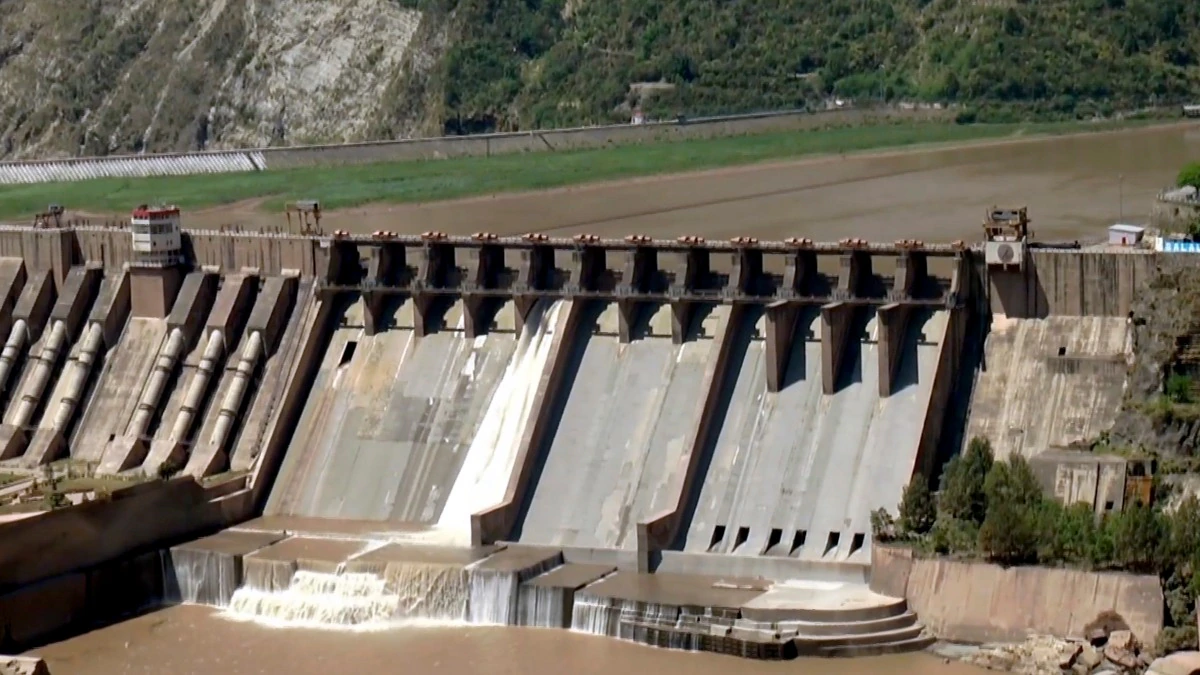
The situation on the Western Front is even more politically charged. In the Jammu and Kashmir region, India has pressed ahead with multiple dams along the Chenab, Akal Dul (1000 MW), Kiru (624 MW), Kwar (540 MW), and Ratle (850 MW), despite persistent diplomatic disputes with Pakistan under the 1960 Indus Waters Treaty (IWT). While India maintains these projects comply with treaty regulations, Pakistan argues that India’s design changes, accelerated timelines, and selective suspension of treaty mechanisms undermine the treaty’s spirit. In Islamabad’s view, such unilateral actions threaten downstream irrigation networks and reservoirs that are essential for food security in Pakistan’s arid plains.
It is within this context that critics describe India’s expanding hydro-infrastructure as a form of “water coercion” or even “water terrorism”, language reflecting fear that control over river flows could one day become leverage in bilateral tensions
Environmental consequences compound these disputes. Large dams trap river sediments, reducing natural soil replenishment in downstream floodplains. For countries like Pakistan, which already struggles with declining agricultural productivity, sediment starvation could have long-term consequences for crop yields. Dams also fragment river ecosystems, blocking fish migration routes and disrupting habitats fundamental to tribal and rural livelihoods. In the eastern Himalayas, where biodiversity is exceptionally rich yet poorly studied, hydroelectric tunnelling and blasting pose potentially irreversible ecological damage. Moreover, the region is one of the world’s most seismically active zones: massive reservoirs can trigger landslides, reservoir-induced tremors, and catastrophic flood events should dam failures occur.
The humanitarian dimension is equally troubling. Thousands of tribal families face displacement in Arunachal Pradesh, Jammu & Kashmir, and Assam as land is acquired for construction sites, transmission lines, and resettlement zones. Compensation is often delayed, contested, or inadequate. Many affected communities lose not only homes and farmlands but also ancestral forests, burial grounds, and cultural heritage. Critics argue that these projects therefore constitute a direct affront to the internationally recognized right to life, livelihood, cultural protection, and free prior informed consent. In effect, the burden of India’s energy ambitions falls disproportionately on vulnerable populations who benefit least from the electricity produced.
Yet, despite these profound humanitarian and environmental risks, India continues the hydroelectric race with limited transparency and minimal public consultation. Cost overruns, commonplace across major projects, are met not with reassessment but with larger budgets. Scientific objections are often dismissed as anti-development obstructionism. And regional diplomacy remains secondary to domestic political optics and energy-security narratives.
The recently approved 700 MW project near the disputed border with China only reinforces fears that hydropower in India’s Himalayas is no longer solely an energy initiative; it is increasingly entangled with militarized posturing and territorial assertion
None of this is inevitable. India could pivot toward smaller run-of-the-river projects, cooperative basin management with neighbours, climate-resilient irrigation support, and participatory environmental governance. It could pursue energy diversification that does not excessively burden seismically fragile river valleys or marginalized indigenous communities. But unless such a shift occurs, India’s hydropower surge risks becoming a lasting symbol of environmental neglect, humanitarian disregard, and geopolitical brinkmanship. In a region where rivers sustain civilizations, turning them into instruments of contestation may carry consequences far more dangerous than any energy shortfall they were meant to solve.