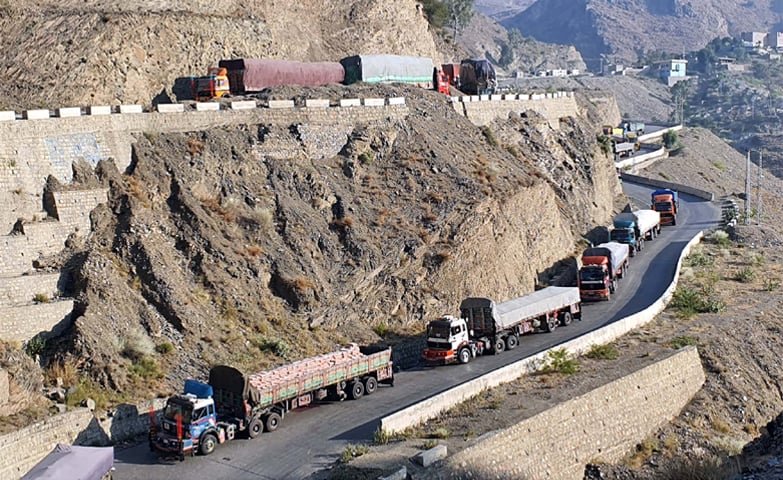

The current trade standoff between Pakistan and Afghanistan is frequently described as the result of bureaucratic failure, economic paralysis, and border closures. The recent New York Times article about truck convoys that have been immobilized for months, closed Afghan markets, and stranded goods captures the urgency of the situation but ignores its deeper causes. Fundamentally, this is not a dispute over tariff schedules or customs procedures. It is the unavoidable result of a worsening security situation in which the Taliban government has made deliberate decisions that jeopardize Afghanistan’s own economic lifelines as well as regional stability.
Pakistan has been Afghanistan’s most important geographical, commercial, and humanitarian neighbour for more than 40 years. Pakistan’s ports, markets, and transit routes have long served as Afghanistan’s link to the outside world. During several wars, millions of Afghans sought safety in Pakistan. Afghan companies have a significant impact on Pakistan’s urban economy. Despite its own economic difficulties, Pakistan continued to facilitate commercial trade and humanitarian shipments even after the Taliban took power in 2021.
Kabul’s unwillingness to deal with Pakistan’s most pressing issue, cross-border terrorism, has gradually reduced this reservoir of goodwill
A harsh and verifiable reality is the source of Pakistan’s annoyance. The Tehreek-e-Taliban Pakistan (TTP), a group with operational and ideological ties to the Afghan Taliban, has dramatically increased its attacks in Pakistan since 2021. In addition to killing soldiers, police, and civilians, these attacks have caused instability in areas along Pakistan’s western border. TTP operatives use Afghan territory as a staging ground and move across the border with relative freedom, according to Pakistani intelligence assessments supported by interrogated militants and intercepted communications. According to Islamabad, these attacks are part of a pattern of behaviour that the Taliban government is unwilling to address.
The trade standoff appears as a result rather than a cause in this situation. Pakistan’s need to prevent terrorist infiltration is the reason behind its decision to limit or halt cross-border travel. For a long time, militants have taken advantage of the Torkham and Chaman crossings, which are important hubs for Afghan trade, by disguising themselves as civilians. Although border closures are expensive and unpopular among Pakistan’s business community, they are a strategic decision motivated by national security concerns. Islamabad’s leeway decreases significantly when Kabul is unable to control organizations that openly aim to destabilize Pakistan.
Without acknowledging the long-term burden Pakistan continues to bear due to Afghan migration, the crisis cannot be comprehended. Over 45 years of hosting Afghan refugees without consistent international support has put tremendous strain on the economy, society, and security. In response to mounting evidence that some militants hide among unregistered populations, the repatriation of undocumented Afghans has been extensively reported internationally. Pakistan maintains its sovereign right to control residency while making a distinction between legal refugees and unauthorized immigrants, especially when Kabul refuses to cooperate on verification procedures.
A state that has to deal with ongoing terrorism cannot afford to have blind spots in its immigration and border policies
Despite these obstacles, Pakistan has consistently provided Afghanistan with more than most nations: access to international trade routes, integration into commercial networks, humanitarian logistics, and opportunities for employment and education. Thousands of businesses in Pakistani cities are run by Afghan traders. Afghan families, laborers, and students are integrated into Pakistani society. In the past, these ties have strengthened cross-border interdependence by acting as stabilizing forces. However, Kabul’s recent orders encouraging Afghan traders to leave Pakistan and move their assets to Afghanistan are a departure from this custom, a politically symbolic action disconnected from the economic realities that Afghans must deal with. Afghan business executives themselves admit that Pakistan’s infrastructure is more cost-effective and efficient than any other option.
In addition to harming bilateral ties, the Taliban’s strategy has made Afghanistan’s internal economic vulnerability worse. Humanitarian aid is needed for more than half of the Afghan population, but shipments are still halted due to ongoing border tensions. The Taliban invites punitive measures and border restrictions that eventually hurt Afghan laborers, farmers, and traders by refusing to stop militant groups. Political orders, like prohibiting or restricting contact with Pakistan, may appease ideological narratives but cause actual financial hardship for Afghan households whose livelihoods rely on international trade.
Although rhetorically appealing, rerouting trade to Iran and Central Asia cannot match the Pakistan corridor’s logistical scope and geographic convenience. Afghan exporters must contend with increased expenses, longer transit times, and infrastructure constraints that limit their access to markets. These alternatives are not replacements, but rather supplements.
At a time when Afghanistan’s population needs more, not fewer, economic outlets, Kabul runs the risk of further isolating the country by choosing conflict over cooperation
Diplomatic engagement is not enough to end the crisis. The presence of militant groups using Afghanistan as a base for attacks on Pakistan is the fundamental problem, not customs regulations. No bilateral trade agreement or border management agreement will be sustainable without quantifiable, irreversible action against the TTP. Pakistan is still willing to help rebuild trust, support humanitarian flows, and facilitate trade with Afghanistan. It aims to create a stable Afghanistan that can support regional connectivity rather than undermine it.
However, the Taliban must choose between acting as a responsible government and protecting militant networks whose objectives directly jeopardize regional security. The Pakistan-Afghanistan relationship will remain in a state of crisis until Kabul addresses the contradiction at the core of its governance, which is to support militants while pursuing economic normalization. The Afghan people ultimately pay the highest price. Their suffering is not the result of Pakistani policy, but rather of choices made in Kabul that put ideology ahead of survival, conflict ahead of collaboration, and militancy ahead of the economic alliances that are crucial to Afghanistan’s future.