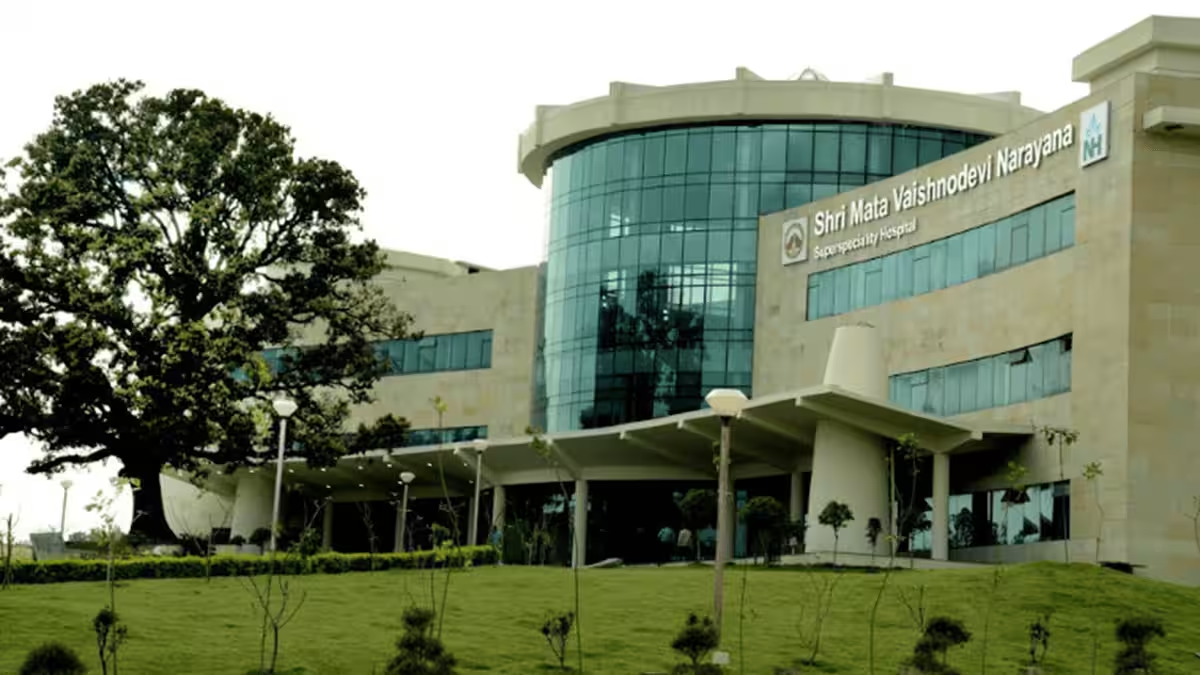

A very concerning pattern can be seen in the recent objections made by the Bharatiya Janata Party (BJP), Vishwa Hindu Parishad (VHP), and Bajrang Dal regarding the admission of Muslim students from Kashmir to the Shri Mata Vaishno Devi Institute of Medical Excellence (SMVDIME). Instead of being a simple, merit-based admissions process, it has become a point of contention for the community. For many in Jammu and Kashmir, this moment represents a growing effort to marginalize young Kashmiris, especially Muslims, in their own country on a social, political, and now educational level.
The BJP leaders’ claim that a medical college supported by the Mata Vaishno Devi Shrine Board must have students who embody the “sacred Hindu ethos” of the shrine is at the center of the controversy. This demand reveals a troubling collective mindset when it is presented as an issue of maintaining spiritual character. It implies that organizations connected to Hindu religious organizations should give preference to Hindu beneficiaries rather than continuing to operate as secular public services.
The constitutional division between faith and the provision of public services is being purposefully undermined when lawmakers start to claim that a contemporary medical facility must somehow represent a religious identity
These worries are only made worse by the BJP leaders’ efforts to change the Shrine Board Act. Their claim that the Board has the right to impose religious preferences in admissions due to donations made by Hindu pilgrims effectively represents a shift toward an exclusionary logic. It suggests that religious discrimination in publicly regulated areas may be justified by charitable contributions associated with a religious site. This is a declaration that religious majoritarianism should control access to opportunities, even in fields where skill and merit are crucial, not just a policy proposal.
That message is made abundantly evident by the BJP’s opposition to SMVDIME admissions that are solely based on merit. Unfair seat distribution or procedural irregularities are not the issue for the protesting organizations. The issue is that too many of the eligible applicants are Muslims from Kashmir. These groups demonstrate a worldview in which professional institutions are tools of cultural dominance rather than public goods by insisting that religion must take precedence over merit.
The fundamental tenets of equal opportunity and academic integrity are compromised by this stance
The rhetoric employed by Hindu nationalist organizations, asserting that a Muslim-majority class in a college established through Hindu donations constitutes an injustice or contradiction, is equally illuminating. The framing conveniently ignores the larger political reality: Hindutva-aligned policies have increasingly attempted to change employment opportunities, land ownership, and demographics in the disputed territory of Jammu and Kashmir. However, the same organizations claim religious exclusivity when Muslim students apply to institutions in their own area. It is a classic double standard that justifies Hindu expansion everywhere as normal and legitimate while portraying Muslim presence everywhere as encroachment.
The BJP’s attempt to disguise this controversy as an issue of upholding “spiritual ethos” does little to hide its true intent. The idea that a public institution situated on Jammu and Kashmiri land should be progressively transformed into a religious community is being promoted. The larger Hindutva goal of imprinting Hindu majoritarian identity on every aspect of life in the Union Territory is served by this transformation, which is subtle in rhetoric but stark in implication.
The BJP and its affiliated groups are unmistakably sending the message that Muslims, especially Kashmiri Muslims, are undeserving of receiving benefits from organizations even tangentially connected to Hindu philanthropy by casting doubt on the very legitimacy of Muslim students’ attendance. This idea, which bases entitlement and value on religion, goes against the fundamental principles of secular citizenship. Additionally, it perpetuates the idea that Muslims in the area must constantly demonstrate their merit in order to live, work, and aspire within state institutions.
A few MBBS seats are not at issue in this dispute. It is a part of a larger and more concerning trend: the use of administrative mechanisms to tighten political control over a disputed territory while simultaneously employing Hindutva ideology to bar Kashmiris, particularly Muslims, from elite educational and professional pathways.
The call to “correct” the admissions list based on religious affiliation is a clear indication of a pervasive worldview that views education as a tool for upholding social hierarchies rather than a neutral ladder of mobility
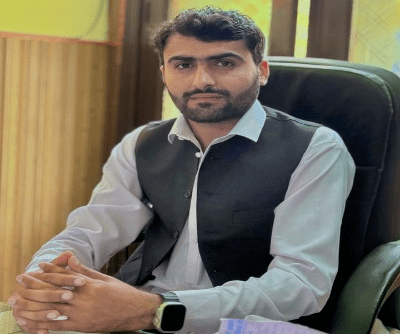
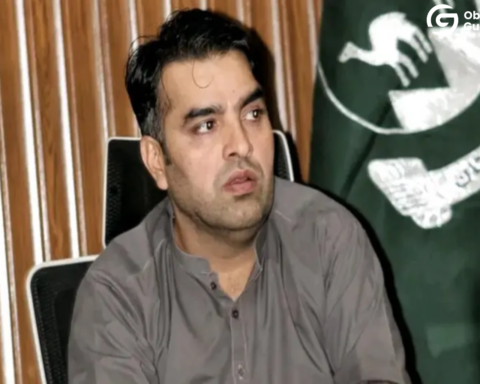
PDP leader and additional spokesperson Zuhaib Yousuf Mir’s intervention stands out in this context as a unique and essential act of political clarity. Mir chastised BJP leaders harshly, accusing them of deliberately escalating intercommunal strife and promoting blatantly discriminatory policies targeted at Muslim students. The seriousness of the situation is encapsulated in his criticism of the BJP delegation, led by Leader of the Opposition Sunil Sharma, which went to the Lieutenant Governor to request the cancellation of admissions and the allocation of seats exclusively for devotees of a single deity. Mir contends that what the BJP presents as a cultural issue is actually a deliberate attempt to marginalize and stigmatize the entire Kashmiri community.
The BJP was not the end of Mir’s criticism. He is equally scathing in his criticism of the National Conference (NC) for its glaring silence. Mir believes that the NC has quietly acquiesced to an aggressively divisive political script by remaining silent. In the face of overt communalism, mainstream parties unintentionally legitimize it when they opt for neutrality.
Therefore, the fight over admissions at SMVDIME is about more than just educational policy. It is a test of the ability of the values of equality, merit, and secularism to endure the demands of a Hindutva politics that is becoming more assertive. It serves as a reminder to Kashmiris that the struggle for rights and dignity now encompasses all areas, from jobs and land to schools and medical facilities.