
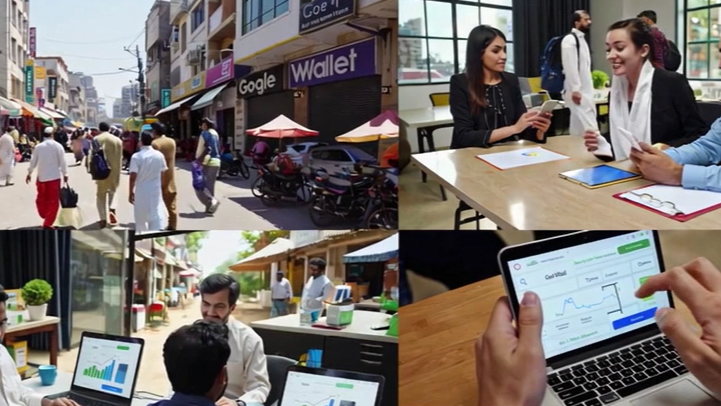

Pakistan’s governance landscape has been portrayed for decades through a limited perspective that reduces it to an unchanging cycle of institutional fragility, bureaucratic inefficiency, and corruption. These depictions, which are frequently repeated without question in international discourse, overlook the substantial reforms the nation has implemented and the quantifiable advancements ingrained in its institutions. Pakistan is not the same as it was in the past. It is a nation that is reevaluating its governance structure, making investments in technology infrastructure, bolstering accountability frameworks, and integrating transparency into the state’s regular operations. However, despite these developments, the world’s opinion of Pakistan is still based more on antiquated presumptions than on current data.
The experiences of Pakistan’s citizens demonstrate a fundamental change in the country’s governance model. Instead of personal negotiations, public interactions with state institutions increasingly resemble regulated, technologically enabled processes. This change is evident in data from the National Corruption Perception Survey (NCPS) 2025: Of those surveyed, 66% said they had never paid a bribe for public services. More remarkably, public perception of organizations like the police, which have historically been viewed with little trust, has improved noticeably. Even though they are small, these adjustments show that the state’s interactions with its citizens are becoming more organized, consistent, and responsible.
Streamlined processes that allow for less discretion or exploitation are gradually replacing the traditional methods that once dominated service delivery
An equally important change has occurred in institutional enforcement. Results from the National Accountability Bureau (NAB), which is frequently at the center of discussions about administrative and political integrity, are hard to overlook. Pakistan’s anti-corruption campaign has reached a new level of efficacy with total recoveries exceeding Rs 12.3 trillion, of which Rs 11.4 trillion were made in an exceptionally short amount of time. A change from symbolic anti-corruption rhetoric to operational efficiency is highlighted by NAB’s recovery ratio, which returns Rs 643 to the national treasury for every rupee spent. These numbers show a larger trend: Pakistan’s enforcement mechanisms are growing more competent, adaptable, and in line with international standards of accountability.
The removal of Pakistan from the FATF Grey List was arguably the most obvious international confirmation of its reform trajectory. To do this, financial monitoring systems had to be completely redesigned, interagency coordination had to be improved, illicit flows had to be better detected, and regulatory frameworks had to be strengthened. This procedure was an expression of institutional resolve and political will rather than just technical compliance. Pakistan’s credibility in international financial networks has been strengthened, and investor confidence has increased as a result of its removal from the Grey List.
It demonstrates a fundamental reality: transparency and governance reform are strategic requirements for economic resilience, international standing, and national security rather than abstract ideals
Digital transformation is a major factor in Pakistan’s progress. With its ability to reduce opportunities for manipulation, enable real-time documentation, and enable unprecedented public oversight, technology has become the cornerstone of the nation’s governance evolution. This is especially clear at the Federal Board of Revenue (FBR), where long-standing informal influence channels have been upended by automated tax systems, algorithm-based audits, digital payments, and POS integration. In addition to broadening the tax base, digitalization within FBR has reduced opportunities for bribery, tax evasion, and undocumented transactions.
Transparency is also increasing in public procurement, which was previously thought to be a major source of corruption. A level of scrutiny that was previously unattainable is made possible by digital tendering platforms, publicly available bid evaluations, and online contract archives. Pakistan has improved oversight while encouraging competition and fair play by recording every step of the procurement cycle. Similar hiring reforms, especially those involving open testing procedures, have contributed to the restoration of trust in the impartiality of public sector employment.
Pakistan’s advanced identity management system is a key component of its transparency journey. The foundation of safe service delivery across industries is now NADRA’s biometric database. NADRA makes sure that public services are connected to verifiable individuals in everything from banking to welfare transfers to telecom regulation, which lowers fraud and increases state capability. Identity infrastructure can revolutionize social protection, as demonstrated by the Benazir Income Support Program (BISP), which employs digital verification and direct bank transfers.
BISP has become a regional model for transparent welfare governance by doing away with middlemen and guaranteeing traceable payments
Mechanisms for financial oversight have also grown. The State Bank of Pakistan’s introduction of digital banking platforms, e-payment systems, and automated transaction monitoring frameworks is lessening the need for cash and cutting down on opportunities for small-time corruption. Greater accountability throughout the financial ecosystem is made possible by the additional layer of transparency provided by public access to banking data and regulatory updates.
By incorporating online complaint systems, automated audits, and data-driven decision-making procedures, provincial governments have also embraced digital governance. Today’s citizens are less inconvenienced and less susceptible to unofficial demands because they can obtain essential services, such as tax payments and license renewals, without having to navigate onerous bureaucratic structures.
Thus, the evolution of Pakistani governance is neither coincidental nor surface-level. It is the outcome of institutional modernization, political commitment, and intentional reforms. These efforts have combined to create a governance environment that is more responsive, transparent, and accountable than it has ever been in the nation’s history. Pakistan’s internal realities show that the groundwork for clean governance has been established, even though it may take some time for global perceptions to change.
The nation’s current challenge is not just to keep reforming but also to make sure that these changes are effectively communicated. Pakistan is in a position to change its reputation internationally and reaffirm its dedication to open, effective, and citizen-centered governance as institutional performance improves and digital systems grow.