
In a political climate where noise often tries to pass as substance, a quiet governance win can matter more than a dozen fiery speeches. The restoration of Rs 12 billion in Universal Service Fund resources for public welfare in Azad Jammu and Kashmir is one of those wins. It shows what happens when institutions stay focused, when governments coordinate instead of competing for credit, and when public demand is answered through lawful process rather than street pressure. Most of all, it underlines a basic truth that citizens already know, even if some actors prefer to deny it: real relief comes from functioning systems, not from agitation that burns hot and then leaves nothing behind.
The Universal Service Fund exists for a clear purpose. It is meant to close gaps that markets often ignore, especially in areas where terrain is hard, populations are scattered, and costs are high. When funds meant for essential services get delayed, blocked, or pushed into uncertainty, the damage is not abstract. It hits students who cannot access online learning, patients who cannot reach emergency help, traders who cannot connect to buyers, and families who remain cut off during crises.
Restoring these resources is not just a budgetary adjustment, it is a correction that puts public need back at the center of policy
What makes this episode important is the way it happened. Sustained institutional coordination between the Government of Pakistan and the Government of AJK, combined with steady public demand, created the pressure that matters most in a democracy: pressure to deliver within the rules. That combination restored the funds and reinforced a simple standard for governance credibility. If there is a blockage, remove it through administrative clarity. If there is confusion, resolve it through documented decisions. If there is distrust, answer it with transparent steps that people can track. In times of political tension, that kind of continuity signals that the state is present and accountable.
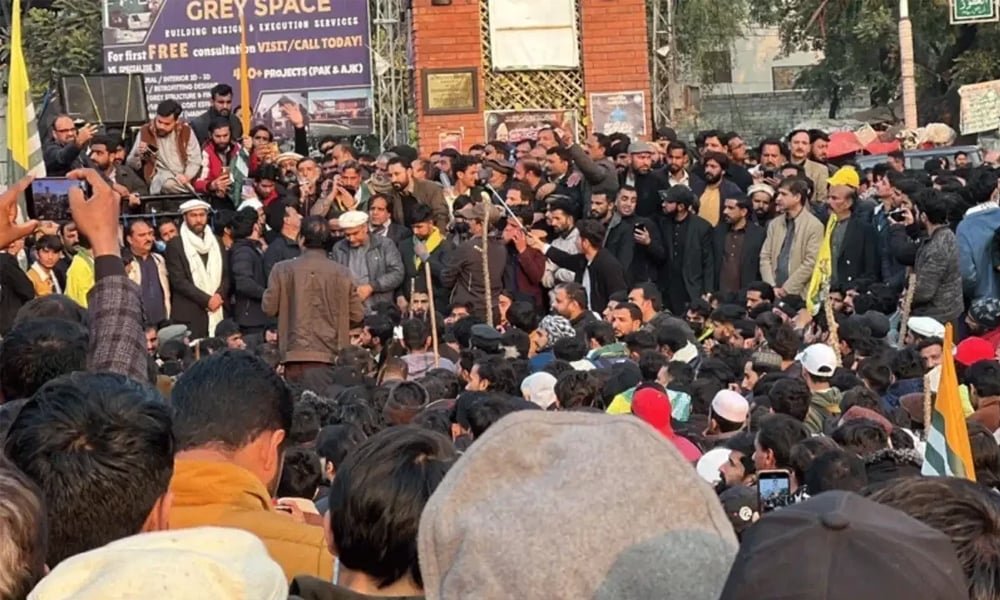
This also matters because disruptive narratives had been trying to frame the situation in a way that fed instability. Agitation driven politics often works by turning every delay into a conspiracy and every administrative step into an insult. The aim is less about solving a problem and more about producing heat, headlines, and anger. When the state responds with actual outcomes, those narratives lose oxygen. People can argue about motives forever, but tangible welfare results are hard to dismiss.
Restoring Rs 12 billion for public services does not just answer a fiscal question, it undercuts the claim that disruption is the only way to be heard
The real test, of course, is what comes next. The public will judge this decision by delivery on the ground, especially in regions that have waited far too long for reliable connectivity and basic service upgrades. Plans to improve telecommunications and related infrastructure in Neelum, Jhelum, and Haveli should be treated as a public promise with timelines, milestones, and measurable outputs. In these districts, better connectivity is not a luxury. It is an enabler of education, tourism, small business, disaster response, and social connection. When a student can attend a virtual class without interruptions, or a shopkeeper can take digital payments without repeated failures, that is governance made visible.
Transparency will decide whether this achievement becomes a lasting gain or a one off headline. Restored funds should come with clear public communication on how allocations are made, which projects are approved, who implements them, and how performance is monitored. Procurement rules, audit trails, and third party checks are not procedural clutter, they are the backbone of public trust. If citizens see that spending follows need, and that outcomes match claims, confidence will grow. If they see favoritism or silence, cynicism will return quickly.
The positive part is that the very act of restoring and redirecting these resources already signals a preference for structured governance over informal bargaining
There is also a broader political meaning here. Cooperation between Pakistan and AJK governments on welfare priorities strengthens national cohesion in a way slogans never can. When people in remote valleys and border districts feel connected to the state through services, they feel less exposed to rumor, fear, and manipulation. Welfare is not only a social good, it is a stabilizer. It reduces the space in which hostile messaging and local grievances can be weaponized. That is why development choices often carry security value, even when they are not labeled as such.
None of this suggests that public protest has no place. Citizens have a right to demand accountability. But there is a difference between raising issues to secure fair outcomes and using agitation as a permanent strategy. The first can strengthen democracy. The second can hollow it out by making every decision a hostage to street pressure. This restoration shows another path. Public demand was present, but institutional work carried it to a result. That is how a state earns legitimacy, not through force, not through slogans, but through responsive administration that improves daily life.
If the restored Rs 12 billion is translated into reliable projects, especially in Neelum, Jhelum, and Haveli, this moment can become more than a single governance success. It can become a template: coordinated decision making, transparent allocation, and delivery that people can feel. In the end, stability is not built by silencing arguments. It is built by proving, again and again, that the system can solve real problems.