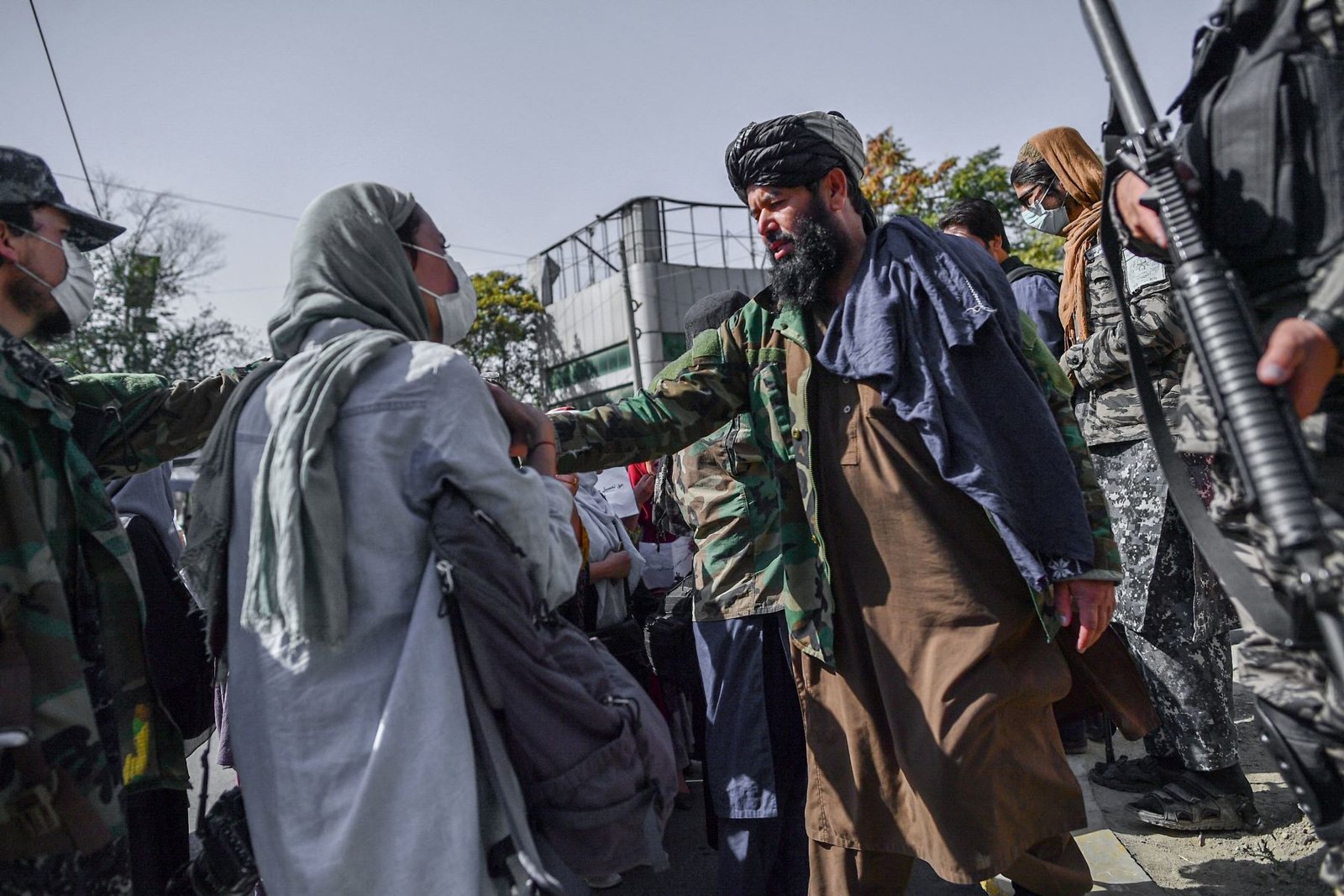

In January 2026, the Taliban announced a new Criminal Procedure Code for Afghanistan and sold it as legal reform, a tidy set of rules to bring order to courts and criminal justice. But the document, signed by Mullah Haibatullah Akhundzada and circulated as a binding law, reads less like a procedure and more like a blueprint for total control. Its reach stretches far beyond trials and evidence. It pushes into belief, speech, loyalty, culture, and family life, turning law into a daily checklist of obedience. When a criminal code starts policing what people think, what they watch, where they gather, and how they speak about rulers, it stops being a justice system and becomes a governing weapon.
The core problem is not only harsh punishment. It is the way the Code rewires the meaning of justice itself. A functioning legal system rests on clarity, equal treatment, and limits on state power. This Code instead builds a hierarchy, then hands wide discretion to the authorities charged with enforcing it. The result is predictably dangerous. Vague offenses make it easy to accuse, hard to defend, and almost impossible to feel safe.
A court under such rules does not protect citizens from arbitrary power. It protects power from citizens, with judges and officials acting as enforcers of ideology rather than neutral arbiters
One of the most revealing features is the explicit division of society into four legal classes: scholars, elites, middle class, and lower class. The same act can trigger radically different outcomes depending on who you are. Scholars get advice, elites get summons, the middle class face prison, and the lower class face prison plus corporal punishment. This is not a side detail; it is the Code’s moral center. It states, in legal language, that some people matter more than others. Once inequality is written into law, every other abuse becomes easier to justify. It tells the poor that the system was never built for them, and it tells the powerful that they can bend it to their will.
This is also where the Taliban’s claim to Islamic legitimacy collapses. Islam’s insistence on justice is not abstract; it is practical and public. The Quranic ethic and Prophetic example demand that rulings follow the act, not the actor, and that strength and status do not shield anyone from accountability. The famous warning that societies perish when the powerful are spared, and the weak are punished, is not a decorative sermon. It is a direct condemnation of exactly this kind of class privilege.
A code that formalizes unequal punishment is not implementing Shariah; it is violating one of its most basic commitments
The Code also turns political dissent into a religious offense. Opposition can be labeled as corruption or rebellion and punished with death, while criticism of leadership can bring flogging and imprisonment. Even silence becomes suspect through rules that criminalize failure to report opposition activity. This is not governance; it is forced loyalty. Early Islamic political tradition, whatever its historical disputes, included a clear idea that rulers could be questioned and corrected. Accountability was a duty, not a crime. The Taliban Code reverses that logic. It sanctifies leadership, treats critique as disobedience, and uses fear to replace consent. When a state needs citizens to inform on each other to survive, it is confessing weakness, not strength.
It criminalizes culture, too, shrinking social space until normal life feels like a risk. Practices like dance, watching dance, or being present at certain gatherings become punishable, not because they harm others, but because they represent an open society where people still have private joy and public identity outside the movement. That is why such rules matter.
Control is not only about prisons and whips. It is also about making people internalize the idea that they are always being watched, and that even harmless pleasure can be reframed as deviance
Women bear a particularly heavy share of this system. The Code treats women’s movement and family ties as matters for punishment, including criminalizing repeated visits to parental homes without a husband’s permission and allowing imprisonment if a woman refuses to return. It also authorizes husbands and guardians to administer punishment, pushing violence into the home under a legal cover. Worse, it narrows “violence against women” to extreme visible injury, leaving psychological abuse and sexual coercion in the shadows where they usually live. Islam recognizes women as moral agents with rights and responsibilities. Turning them into controlled dependents, disciplined by male authority, is not piety. It is patriarchy dressed up as religion.
Then there is the repeated recognition of slavery as a legal category. Any attempt to normalize slave status in modern Afghanistan is a moral scandal, and it sits uneasily even with the historical record the Taliban like to invoke. Islamic teachings encouraged emancipation, tied virtue to freeing human beings, and moved society toward dignity, not toward reviving bondage as an administrative label. A legal system that keeps slavery on the page signals a worldview that is comfortable with permanent human subordination, which is the opposite of justice.
From the standpoint of modern governance, this Code is a recipe for instability. States need predictable rules, transparent authority, and basic protections that reduce arbitrary coercion. The Taliban’s framework moves in the other direction, toward vague crimes, unchecked discretion, and ideological policing. That deepens internal resentment, encourages selective enforcement, and isolates Afghanistan further from a world that measures legitimacy through rights and due process. In the end, this is not a criminal procedure code in the normal sense. It is a political project disguised as law, a document designed to produce fear, enforce conformity, and protect a secluded leadership from scrutiny. Islam came to challenge oppression, not to certify it. A system that sanctifies injustice cannot claim moral legitimacy, and it cannot deliver lasting stability.