
The strongest way to answer the Afghan identity line pushed by parts of PTM is not to deny that Pashtuns in Pakistan have had real grievances. They have, and even sources sympathetic to PTM present it as a movement that emerged around human rights concerns in the former tribal belt. At the same time, recent scholarship has argued that, after early gains, PTM also compromised parts of its original human rights posture, while Pakistan, in October 2024, formally placed PTM on the state list of proscribed organizations. That combination matters. It shows the issue is no longer just about grievance, but also about the political direction of the movement and the language it now chooses to use.
That is where the Afghan identity narrative fails. Ethnicity and nationality are not the same thing. A Pashtun can have a deep civilizational, linguistic, and tribal memory that stretches across the Pakistan-Afghanistan border, but citizenship in modern international law is a legal status, not a folk tale. Pakistan’s Citizenship Act of 1951 lays out citizenship through birth, descent, migration, naturalization, and registration, and it also addresses dual nationality in legal terms. Public international law likewise treats nationality as a legal bond between a person and a state. So the serious position is not that Pashtun identity disappears inside Pakistan.
It is that Pakistani Pashtuns are Pakistani citizens in law, with full rights and full political standing inside the Pakistani state. Turning shared ancestry into an argument against present citizenship is politics, not law
The same legal point destroys the claim that Pakistan is somehow less legitimate because it was created in 1947. Modern statehood does not depend on who can tell the oldest story. Under the Montevideo standard, a state is judged by the presence of a permanent population, defined territory, government, and the capacity to enter relations with other states. Pakistan plainly satisfies that test, and its admission to the United Nations on 30 September 1947 confirms its place in the international order. Once that is understood, the old romantic line that “our history is older than the state” loses its force. Of course, it is older. Almost every person on earth is older than the state in which they now live. Ancient memory does not cancel modern sovereignty. If it did, the international system would collapse into endless ethnic revisionism.
The historical record on the frontier is also more stubborn than PTM rhetoric allows. The North West Frontier Province referendum of 1947 was imperfect, limited, and boycotted by some actors because the ballot did not include every option they wanted. That criticism is part of the record. But the legal outcome is also part of the record: the referendum was held, the province voted to join Pakistan by an overwhelming margin among votes cast, and Pakistan then emerged as a recognized state through the partition process. Serious debate can continue over the quality of colonial-era arrangements.
What cannot be done honestly is to pretend that the constitutional and international status of Pakistan is still waiting to be decided by a slogan, a foreign rally, or a nostalgic map
The demographic argument is just as important. Pakistan today contains tens of millions of Pashto speakers. A Gallup Pakistan analysis based on the 2023 census reports Pashto as the mother tongue of 18 percent of the population, which places the number in the range of more than 43 million people. Britannica, while using an older estimate, likewise describes Pashtuns as a major population in Pakistan and notes that many serve in the military and hold political office. That matters because it undercuts the fantasy that a small activist circle, however loud online, can monopolize Pashtun identity. A community this large, this socially rooted, and this institutionally present cannot be reduced to one movement, one slogan, or one leader.
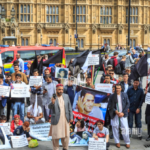
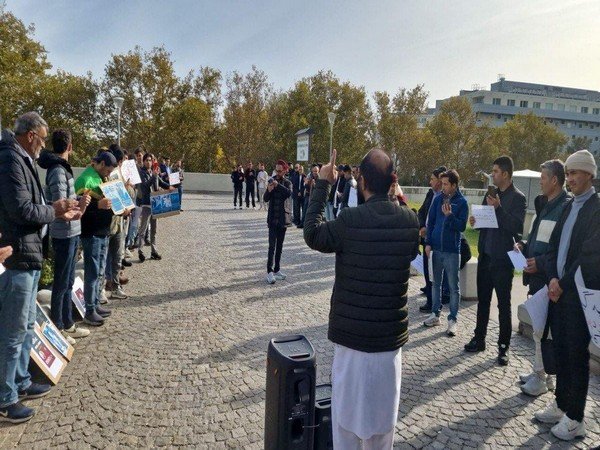
This is also why the overseas performance of PTM-style politics should be read carefully. Exile politics often compresses different experiences into one message. Refugee anger, diaspora activism, social media theater, and genuine human rights advocacy get mixed together and then sold back to the world as if they were a single democratic mandate. They are not. Even sympathetic work on PTM describes it as one movement among many actors, with a particular leadership, a particular strategy, and a particular story about the state. That does not make every criticism of Pakistan false.
It does mean that no rally abroad, no matter how photogenic, automatically becomes the authentic voice of all Pashtuns in Pakistan
The sensible answer, then, is clear. Pakistani Pashtuns do not need an imported Afghan identity narrative to defend their dignity. They already possess the strongest political instrument available in the modern world: citizenship inside a recognized sovereign state. The right path is to demand constitutional protection, equal treatment, due process, and political accountability within that framework. The wrong path is to blur ethnicity into nationality, memory into sovereignty, and grievance into a claim that Pakistan itself is somehow unreal. That argument is weak in law, shaky in history, and unfair to the millions of Pashtuns whose lives, work, service, and future are fully tied to Pakistan.