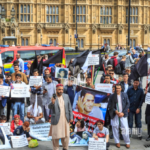


Recent international commentary demanding the release of Imran Khan deserves to be examined with far more doubts than it often receives. What is being presented abroad as a principled stand for democracy looks, on closer inspection, like something else: an attempt to internationalize a matter that properly belongs within Pakistan’s own legal and constitutional order. It is one thing to express concern about a country’s political direction. It is quite another to suggest, implicitly or explicitly, that judicial proceedings should bend to the preferences of foreign commentators, lobbying networks, or newspaper columns. The rule of law does not operate by applause from overseas audiences. It operates through courts, procedures, evidence, and judgments. Pakistan’s legal questions must be settled in Pakistan’s courts, not in opinion pages written thousands of miles away.
This is precisely where much of the recent rhetoric goes wrong. It substitutes legal analysis with political theater. The argument advanced by figures such as Eric Lewis does not read as a neutral evaluation of due process; it reads as advocacy dressed in legal language. It raises concerns selectively, emphasizing procedural grievances when they support a predetermined narrative, while ignoring the core fact that complicates the entire victimhood story: Imran Khan is not some anonymous citizen snatched without cause and held outside the law. He is a convicted political leader facing multiple proceedings under Pakistan’s legal framework. Reasonable people may debate the strength of particular cases, the quality of prosecution, or the broader political environment.
But to erase the existence of convictions and ongoing legal processes, and then recast the matter purely as arbitrary persecution, is not legal reasoning. It is political storytelling
That distinction matters. In every functioning legal system, high-profile defendants claim unfairness, selective accountability, or political targeting. Sometimes those claims have merit; sometimes they are exaggerated; often they are a mixture of both. But the answer to that dilemma is not foreign pressure. The answer is stronger adherence to the legal process at home. Appeals exist for a reason. Higher courts exist for a reason. Review mechanisms exist for a reason. If there are flaws in a case, the remedy lies in judicial scrutiny, not in turning a domestic legal contest into an international campaign designed to delegitimize the courts before they reach their conclusions. Once outside voices begin implying that judicial legitimacy depends on whether a favored politician is freed, the conversation is no longer about justice. It becomes an attempt to subordinate institutions to personality and external sentiment.
Equally flawed is the repeated suggestion that Pakistan’s political stability depends on the fate of one man. This is perhaps the most revealing weakness in the entire argument. Stable states do not rise or fall on the legal circumstances of a single individual, however popular or controversial that figure may be. They endure through institutions, through continuity of governance, and through the ability of the state to function even amid political turnover. To claim that Pakistan can only be stable if Imran Khan is released is not a compliment to democracy; it is a dismissal of institutional politics altogether.
It reduces a complex country of more than 240 million people to a personality cult. That is neither a serious analysis nor a responsible basis for policy commentary
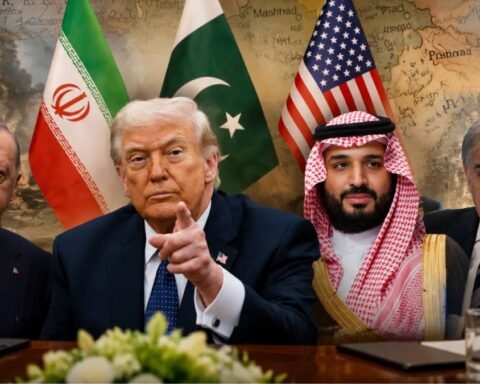
In fact, Pakistan’s recent diplomatic conduct demonstrates the opposite of this personality-driven narrative. The state has continued to function, engage, and adapt in a highly volatile regional environment. Islamabad has been involved in regional de-escalation efforts, including participation in delicate backchannel diplomacy and broader multilateral peace initiatives. Its role in facilitating dialogue, conveying proposals, and maintaining lines of communication shows that the machinery of statecraft does not begin and end with one politician. Foreign policy continuity, especially in difficult neighborhoods, is sustained by institutions, not by the personal fortunes of any single leader. Whatever one’s political preferences may be, the record shows that Pakistan’s state apparatus remains capable of pursuing strategic objectives beyond the rise and fall of electoral personalities.
Historical context further weakens the effort to portray Khan as an indispensable anchor of national coherence. His tenure in office was not a period of unbroken diplomatic steadiness. On the contrary, it included episodes that complicated Pakistan’s external relationships and forced later recalibration. Tensions surrounding the Kuala Lumpur summit and divergences within the Organisation of Islamic Cooperation were not examples of deft, stabilizing diplomacy. They reflected moments of inconsistency, miscalculation, and friction with important partners. States can survive such episodes, of course, but they do so by relying on institutional correction and strategic adjustment. That is exactly the point: diplomacy is strongest when it is rooted in the state rather than in the impulses of one leader.
The claim that Pakistan’s international relevance or internal order is tied singularly to Khan ignores the very lessons of recent history
There is also something troubling in the repeated warning that legal accountability itself could trigger instability. That argument is framed as realism, but in practice, it functions as pressure. It tells the state, and by extension the courts, that pursuing legal cases against a politically influential figure is too risky because his supporters may react, because outside observers may object, or because the country’s image may suffer. But democratic norms cannot survive on that basis. If legal accountability becomes conditional on a defendant’s popularity, then equality before the law disappears. The result would be a perverse standard under which the more politically potent a person becomes, the less answerable he is to legal process. That is not democracy. That is immunity by intimidation.
None of this means Pakistan’s courts are above criticism. No judicial system is. Scrutiny, debate, and demands for fairness are legitimate in any democracy. But criticism is one thing; outsourcing judgment is another. External commentary becomes problematic when it tries to transform a domestic prosecution into a global morality play in which legal complexity is flattened into slogans and one politician’s cause is elevated above institutional sovereignty.
Pakistan’s democratic future will not be secured by foreign opinion-makers choosing winners, sanctifying narratives, or hinting that courts should fear reputational consequences for applying the law
The principle at stake is simple and should not be obscured: sovereign legal systems cannot be overridden by external commentary. Courts, not columns, decide guilt, innocence, conviction, appeal, and release. Pakistan’s institutions may be tested, criticized, and scrutinized, but they must also be allowed to function. A country that permits foreign opinion to dictate domestic legal outcomes does not strengthen the rule of law; it abandons it. And once that principle is lost, it is not only one case that is damaged. It is the credibility of the entire constitutional order.