
The Taliban present their rule in Afghanistan as an “Islamic Emirate” and portray Mullah Hibatullah Akhundzada as Amir al-Mu’minin, the Commander of the Faithful. But when this claim is tested against the basic principles of Islamic governance, political legitimacy, public consent, and justice, it begins to collapse. A state does not become Islamic simply because it uses religious language, adopts clerical symbols, or invokes Sharia in official speeches. Legitimacy in Islam is not built on coercion, secrecy, and exclusion. It rests on consultation, consent, accountability, and justice. By those standards, the current Taliban system appears far less like a lawful Islamic government and far more like an authoritarian order imposed by force.
When the Taliban took Kabul on August 15, 2021, they announced an interim arrangement and suggested that Afghanistan’s future political order would be shaped through a Loya Jirga, in line with Afghan tradition. That promise was never fulfilled in any meaningful way. No genuine national consultation took place, no representative process was held, and no broad public pledge of allegiance was sought. Instead, power was consolidated unilaterally, and Mullah Hibatullah was elevated as the supreme leader without a transparent, inclusive, or nationally recognized mechanism of selection. Even within Taliban ranks, the idea of complete and unquestioned consensus around his authority has been doubtful.
A ruler who emerges without public consent and outside any meaningful consultative process cannot easily claim the moral or religious weight of a legitimate Islamic leader
Islamic political thought does not treat naked force as a sufficient basis for rule. The earliest and most authoritative example in Sunni political history is the caliphate of Abu Bakr, whose authority rested not on conquest but on bay‘ah, a public act of allegiance rooted in consultation and communal acceptance. The legitimacy of leadership in Islam has traditionally depended on some form of consent from the governed or from their recognized representatives. Governance by domination alone may create obedience, but it does not create moral legitimacy. Classical jurists also drew this distinction. A ruler who seizes power by the sword may become a political fact, but that does not automatically make him a just or rightful imam in the normative sense. If coercion replaces consultation, then the spirit of Islamic governance has already been violated.
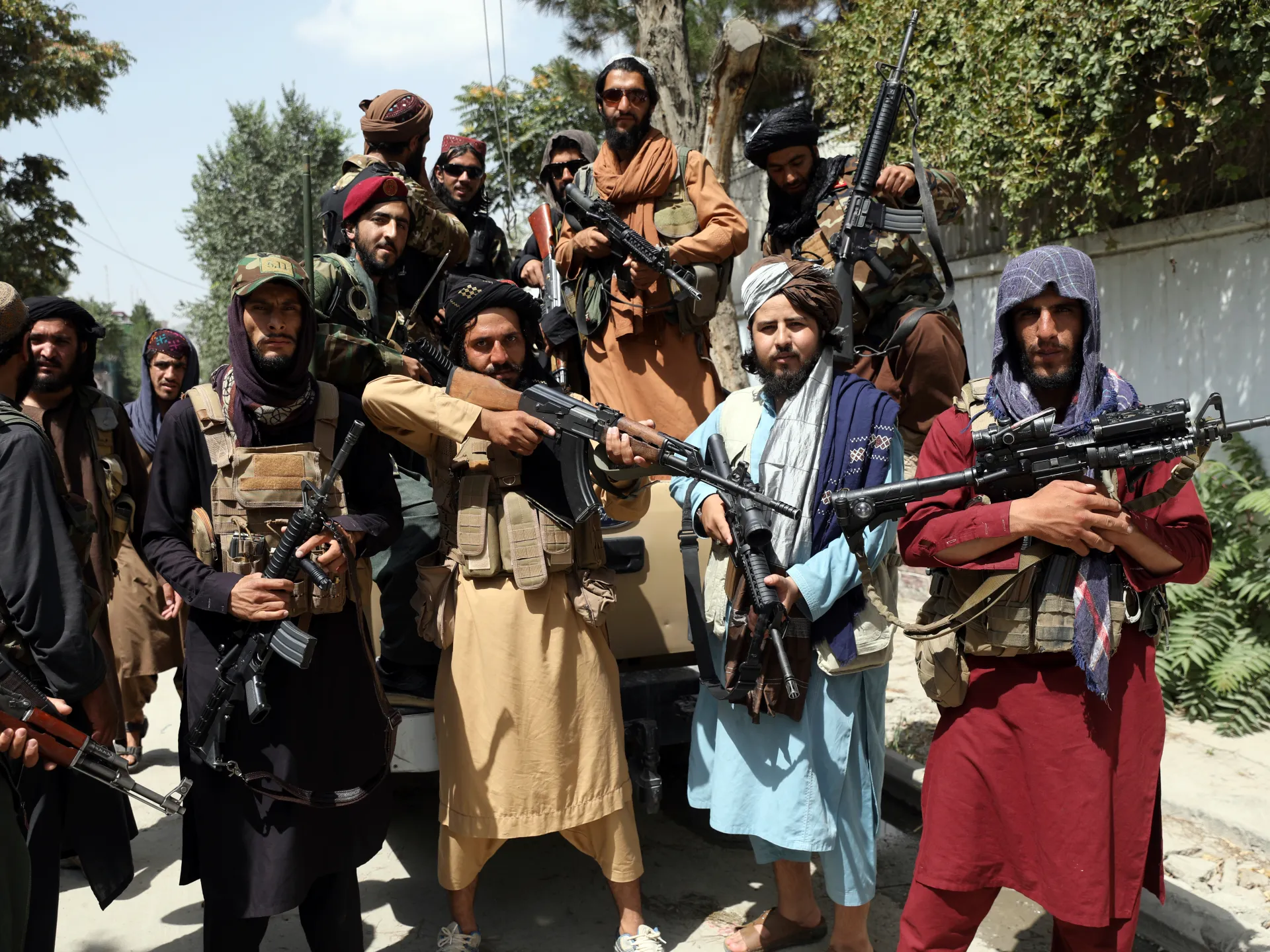
This is precisely the central problem with the Taliban’s current emirate. It was established through armed victory, not public mandate; preserved through fear, not open approval; and structured around obedience to a narrow leadership circle, not national participation. Real power is concentrated in Kandahar, where key decisions are made by an opaque and highly restricted inner circle. Afghanistan has no functioning parliament, no independent judiciary, no free national media, and no meaningful mechanism through which the public can scrutinize or correct those who govern them.
What exists is not a participatory Islamic order but a closed political system centered on one man and a small unelected network around him
The ethnic structure of Taliban rule further undermines its claim to represent Afghanistan as a whole. Afghanistan is a multiethnic country, yet the Taliban’s highest bodies and the most important state institutions are overwhelmingly dominated by one ethnic group. Non-Pashtun communities, especially Hazaras, have been excluded from meaningful power, while Tajiks, Uzbeks, and others are given at best token representation. Women are excluded entirely from political authority. A system that monopolizes power in the hands of one narrow ethno-regional elite cannot convincingly present itself as either nationally representative or Islamic in the broader moral sense. Islam does not sanctify ethnic monopoly. It demands justice and fairness across lines of tribe, language, and origin.
The Taliban’s religious policies also expose the authoritarian core of their project. A just Islamic government protects belief and conscience within the framework of law; it does not turn religion into an instrument of state intimidation. Reports of pressure on Ismailis and Shi‘a communities, attempts to impose one legal-madhhab identity over all others, and the use of education, employment, and security as leverage in matters of creed all point toward forced conformity rather than moral guidance. This contradicts the Quranic principle that there is no compulsion in religion.
When the state begins to police belief so aggressively that dissenting sects are treated as suspect or inferior, religion is no longer serving justice; it is being weaponized to enforce submission
The same logic governs politics under Taliban rule. Criticism is treated not as a civic right but as rebellion. Dissent is framed as sedition, foreign conspiracy, or hostility to Islam itself. Journalists, activists, women, and ordinary critics face intimidation, detention, and violence. Even internal disagreement within the Taliban is suppressed. The treatment of figures such as Abbas Stanikzai, who voiced comparatively moderate positions on girls’ education, constitutional structure, and consultation, shows that this system has little tolerance for alternative views, even from within its own movement. When a state cannot endure criticism, it is usually because it lacks confidence in its own legitimacy.
Supporters of the Taliban argue that the country now has order and stability. But silence is not the same thing as consent, and the absence of open unrest is not proof of justice. A population can be quiet because it is exhausted, frightened, poor, or trapped. There is a kind of peace that resembles a graveyard: still, silent, and lifeless. Islamic governance was never meant to produce only obedience. It was meant to protect dignity, uphold justice, and establish accountability.
A ruler in Islam is not beyond criticism, nor is he above the law. If no one can question authority without fear, then the system may be stable in a technical sense, but it is not righteous
The social consequences of Taliban rule reinforce this conclusion. Women have been pushed out of education, employment, and public life. Intellectual openness is treated with suspicion. Modern governance is subordinated to a rigid mix of tribal hierarchy and ideological control. Economic hardship, unemployment, and social stagnation continue to weigh heavily on the country. Islam is a faith that honors knowledge, welfare, and justice. A system that closes schools, narrows public life, and punishes independent thought cannot credibly claim to embody that tradition.
For all these reasons, the Taliban’s emirate should not be accepted at face value as a legitimate Sharia-based Islamic state. It lacks the core elements that would make such a claim persuasive: public bay‘ah, meaningful shura, national representation, religious fairness, institutional accountability, and equal justice. What has emerged in Afghanistan is not an authentic model of Islamic governance but a coercive, centralized, exclusionary, and ideologically rigid order. It uses the language of religion, but its structure resembles a usurpation of power far more than a lawful Islamic polity. In that sense, the Taliban’s “Islamic Emirate” appears less like a moral state under Sharia and more like an authoritarian monarchy draped in sacred vocabulary.