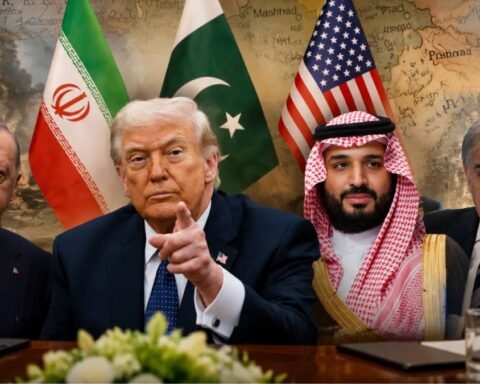

Brahma Chellaney’s latest argument rests on a lazy and ultimately unserious premise that Pakistan and Iran can be treated as parallel nuclear cases because both are Muslim-majority states and can therefore be bundled under the slogan of “nuclear Islamism.” In his April 17, 2026 column, he presents this as evidence of a US double standard. But the phrase does not clarify nuclear politics; it obscures them. Nuclear weapons are not managed by faith communities. They are managed by states, military bureaucracies, treaty obligations, export-control rules, command-and-control systems, and deterrence doctrines. The moment religion is made the organizing category of analysis, strategic reasoning gives way to civilizational caricature.
The most basic flaw in Chellaney’s comparison is legal, not ideological. Pakistan is not a party to the Treaty on the Non-Proliferation of Nuclear Weapons, so it cannot be accused of violating NPT obligations it never accepted. Iran, by contrast, is an NPT signatory and is subject to a safeguards relationship with the International Atomic Energy Agency. The IAEA’s own descriptions of the NPT system make clear that the agency’s verification role is tied to obligations assumed by treaty parties, and its 2025 reporting on Iran was explicitly framed through Iran’s NPT safeguards agreement. That single distinction is enough to sink the claim that the two states should be judged through a uniform legal lens.
States occupying different treaty positions in the nonproliferation regime cannot automatically be expected to receive identical treatment. To insist otherwise is not principled; it is analytically careless
Nor does U.S. policy toward Pakistan prove some enduring ideological indulgence. Washington’s engagement with Pakistan has historically been episodic, transactional, and driven by shifting strategic requirements. Pakistan mattered to the United States during the Cold War and the anti-Soviet campaign in Afghanistan, and it mattered again after 9/11 as a central logistical and counterterrorism partner in the war in Afghanistan. That record certainly reveals inconsistency: at different moments, nonproliferation concerns were sharpened, waived, or subordinated. But inconsistency is not the same thing as favoritism. It is the hallmark of great-power statecraft, especially in regions where security priorities collide. Chellaney’s framing tries to convert this messy geopolitical history into a moral fable. It fails because it erases the actual strategic context that shaped US choices.
Pakistan’s own nuclear trajectory also cannot be severed from South Asia’s security environment. India’s 1974 nuclear test was a major catalyst behind the creation of the Nuclear Suppliers Group, precisely because it demonstrated how civilian nuclear assistance could be redirected toward strategic ends. Pakistan’s response emerged in a regional order already defined by asymmetry, rivalry, and recurring war scares with India. That does not make every Pakistani nuclear decision wise or beyond criticism. It does mean, however, that Pakistan’s program cannot be flattened into a theological category. Iran’s path developed under a different regional balance and under a treaty-bound inspection framework.
To merge those two histories into one moral indictment of “Islamic” nuclear behavior is to replace comparative analysis with polemics
If the real concern is selective enforcement in the global nonproliferation order, the more compelling example is India, not Pakistan. India remained outside the NPT yet received a landmark NSG waiver in 2008, even though NSG rules ordinarily require full-scope safeguards as a condition of supply. Arms control experts have long noted that India’s safeguards apply to designated civilian facilities, not to its entire nuclear complex. Far from being rolled back, that exceptional treatment has been reinforced. In February 2025, the United States and India announced plans to move forward on U.S.-designed reactors in India and possible technology transfer under the 123 civil nuclear framework. This is not a minor footnote. It is a reminder that geopolitical alignment, not abstract consistency, often decides who is treated as an exception.
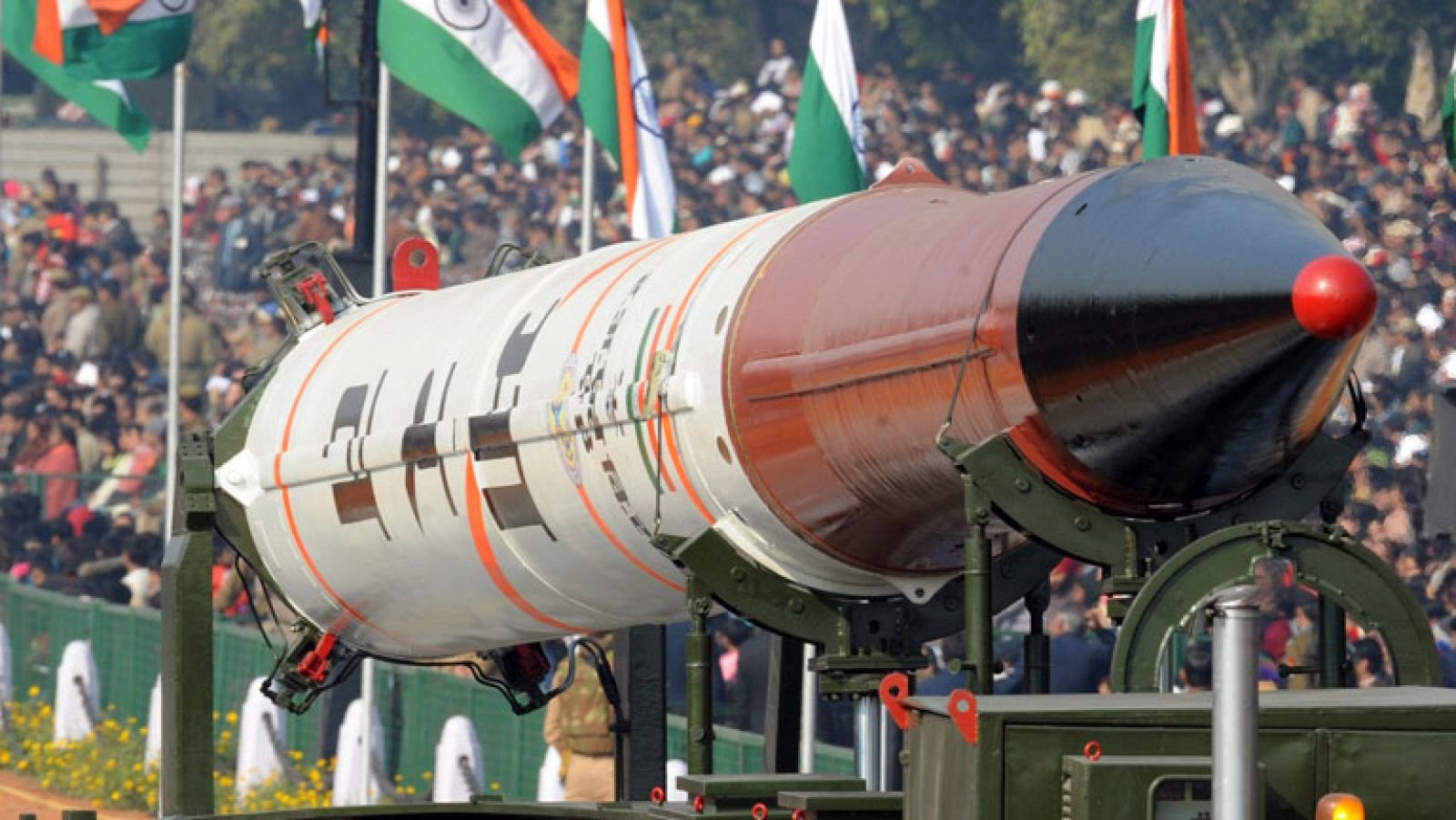
The military balance tells a similar story. SIPRI estimated that India possessed about 180 nuclear warheads as of January 2025. India has also continued to modernize its delivery systems, including the March 2024 Agni-V test involving MIRV technology and a further Agni-V test in August 2025. Yet none of this has prevented India from remaining a favored strategic partner of Washington. That is precisely why lectures about universal nonproliferation morality ring hollow. The problem is not that Pakistan is treated too gently because it is Muslim.
The problem is that the nonproliferation regime, in practice, has always been entangled with hierarchy, alignment, and power. Chellaney’s formulation hides that structural reality behind an inflammatory label
The religious framing also collapses under minimal scrutiny. If religious or civilizational identity were truly the relevant category, then the same lens would have to be applied to Israel, another nuclear-armed state outside the NPT, and more broadly to any state whose strategic discourse draws on civilizational nationalism. But such comparisons are usually avoided because the point is not methodological consistency. The point is to isolate Muslim cases and load them with a special stigma. That is why “nuclear Islamism” is not a serious strategic concept. It is a selective rhetorical device masquerading as analysis.
Even the history of illicit proliferation networks is less tidy than Chellaney-style narratives suggest. Joshua Pollack argued in a 2012 Carnegie discussion that India may have been the A.Q. Khan network’s “fourth customer.” Whether one accepts that thesis in full or not, the larger lesson is obvious: proliferation history is murkier than morality tales allow. It does not fit neatly into the binary of reckless Muslim proliferators and responsible others. That is exactly why analysts should be wary of slogans that promise too much explanatory power while doing so little evidentiary work.
The phrase “nuclear Islamism” does not expose hypocrisy in the global nonproliferation regime. It distracts from the real issues: unequal treaty statuses, exceptional waivers, selective safeguards, regional deterrence pressures, and the way major powers bend principles for preferred partners. A serious debate about South Asian nuclear politics should start there. Chellaney’s framing does the opposite. It turns law into rhetoric, strategy into stereotype, and structural power into sectarian insinuation.