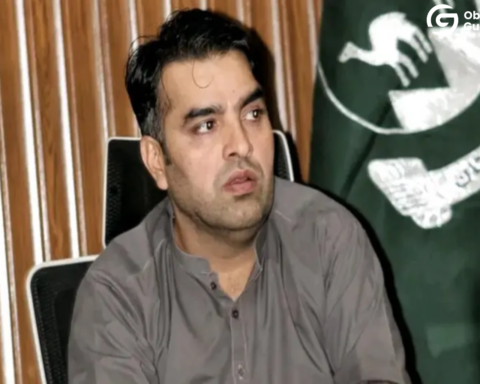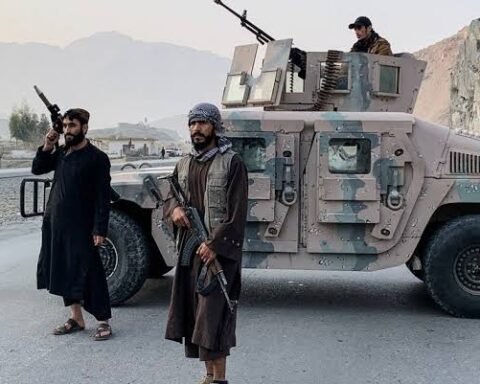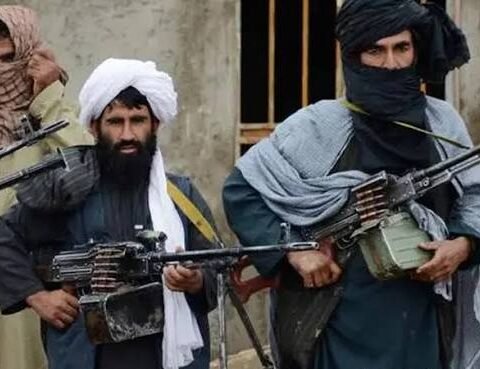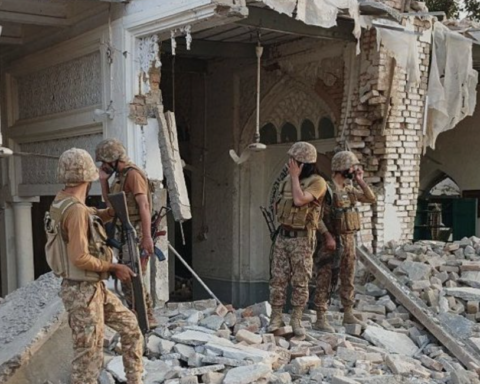
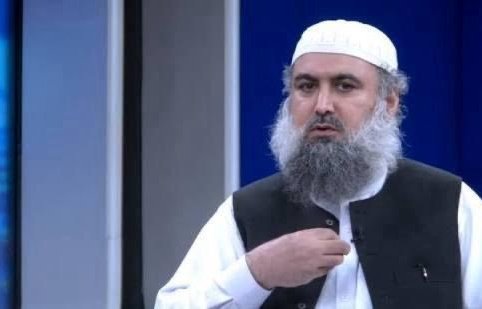

The reported detention of Mullah Mutasim offers a revealing window into the Taliban’s internal power struggles, its methods of enforcing discipline, and its instinctive reliance on narrative control whenever elite tensions become visible. On the surface, the episode may appear to be just another internal dispute inside an opaque movement. In reality, it points to something more significant and a leadership system under Haibatullah Akhundzada that is increasingly centralised, deeply suspicious of dissent, and dependent on controlled messaging to preserve an image of cohesion that may be more fragile than it seems.
One of the most striking aspects of the episode is the Taliban’s initial denial that any arrest had taken place. That response is telling in itself. It reflects a familiar pattern in Taliban information management: deny first, contain second, and only later circulate a version of events that limits political damage. The instinct is not transparency, but calibration. Public acknowledgement of internal arrests, especially involving a figure like Mutasim, would immediately raise questions about factional distrust, the limits of central authority, and the degree of dissatisfaction inside the movement.
The denial, therefore, was not simply about secrecy; it was about buying time to construct a politically safer narrative
The reported fact that Mutasim was detained on the direct orders of Haibatullah Akhundzada, and by his special unit, is equally significant. It suggests that the Taliban’s top leadership is not merely symbolic or clerical, but actively involved in coercive internal enforcement. This matters because the Taliban often presents itself publicly as a united Islamic system governed by consensus and obedience. Yet incidents like this reveal a harder reality: central authority is upheld through security instruments, personal loyalty, and selective punishment. The use of a special unit implies that this was treated not as a routine disciplinary matter, but as a politically sensitive operation requiring trusted enforcement channels.
The accusations against Mutasim also deserve attention. Internally, he was reportedly seen as someone creating divisions within Taliban ranks and helping equip individuals aligned with him. Whether every allegation is accurate is almost beside the point. In movements shaped by secrecy and patronage, perception often becomes reality. If a leader is believed to be cultivating networks, building loyalties, or maintaining external ties, that alone can be enough to trigger action. The subsequent raids on homes and compounds of Taliban members in Kandahar and Kabul, particularly to disarm those suspected of belonging to his network, show that the matter quickly escalated beyond one individual.
It became a wider internal security sweep, exposing the depth of mistrust inside the Taliban’s own ranks
This is what makes the episode politically important. It was not only about Mutasim’s remarks targeting Mullah Baradar, although those comments reportedly provided the immediate trigger. It was also about the broader struggle over authority inside the Taliban. Baradar is not just a personality; he represents a different centre of influence within the movement. Tension involving him cannot be understood in purely personal terms. When derogatory remarks against such a figure produce detention, raids, and internal disarmament, it suggests that personality clashes are now tightly fused with deeper factional competition.
That competition appears to revolve around the broader divide between Kandahar-centric leadership under Haibatullah and other power centres, especially Kabul-based actors and networked factions with their own histories, constituencies, and external relationships. Mutasim’s profile made him especially vulnerable in this environment. As a former Qatar-based Shura figure with known links to Middle Eastern intelligence-linked circles, he embodied the type of political ambiguity precisely that a suspicious leadership would view as dangerous. His earlier removal from internal structures over alleged foreign intelligence connections had already established a long-standing trust deficit.
Even his later return, reportedly facilitated by Mullah Yaqoob because of his historical proximity to Mullah Omar and regional connections, did not erase those suspicions
This raises an uncomfortable but important point that the Taliban is not only worried about ideological dissent or personal disobedience. It is also deeply anxious about infiltration, foreign leverage, and the possibility that internal fault lines could be exploited by outside actors. In such a system, external linkages become political liabilities. They can be interpreted not just as diplomatic or intelligence contacts, but as channels through which rival factions might gain support or protection. Mutasim’s case fits this pattern. His criticism of Haibatullah’s policies appears to have placed him within a dissenting current, but his background made that dissent look, to some inside the movement, more threatening than ordinary disagreement.
His release following assurances from the Haqqani Network further underlines that this was never just a law-and-order issue. It was an episode of bargaining between factions. If Haqqani’s intervention was sufficient to reverse or soften the outcome, then the incident demonstrates that even Haibatullah’s centralised authority is not absolute. It remains powerful, but it must operate within a balance-of-power system shaped by influential networks that cannot be ignored. The Haqqani role suggests that internal cohesion is maintained not only through command but through negotiation among armed and politically entrenched blocs. That matters because it shows the Taliban is held together as much by managed equilibrium as by obedience.
The most revealing part of all, however, may be the unofficial cover story that later emerged: that the arrest resulted from a misunderstanding by a commander who has since been dismissed. This narrative is plainly designed to minimise reputational damage. It avoids acknowledging formal charges, obscures the role of senior leadership, and reframes a politically explosive event as an administrative mistake. Such storytelling is not accidental. It is narrative management in the service of regime stability. The Taliban understands that visible internal fractures can weaken deterrence, embolden rivals, unsettle rank and file members, and complicate its external posture.
So it resorts to selective disclosure and informal explanations that blur rather than clarify
The Mutasim episode underscores a central contradiction at the heart of Taliban rule. The movement projects unity, discipline, and ideological certainty, but beneath that image lie unresolved rivalries, personal animosities, regional power centres, and enduring suspicion. The arrest, the raids, the Haqqani intervention, and the subsequent cover narrative all point to a system struggling to manage fragmentation without admitting it exists. That may work in the short term. But the more a leadership depends on coercion and carefully staged denials to preserve unity, the more it signals that unity is under strain.