
Pakistan today confronts not only terrorism on the ground but a sophisticated information war in the digital space. This war is deliberate, multi-layered and designed to delegitimize the state, weaken public trust, fracture social cohesion and portray Pakistan as a destabilizing force before its own citizens and international partners. In this hostile ecosystem, Al-Mirsad has emerged as one of the latest and most dangerous instruments of propaganda. It is not an isolated media outlet or an independent publication. Rather, it represents a new phase of ideological warfare, strengthened by digital platforms, coordinated messaging, multilingual outreach and possible AI-assisted amplification.
A detailed study by the Center for Security, Strategy and Policy Research at the University of Lahore has exposed Al-Mirsad as a structured propaganda platform linked to the Afghan Taliban’s intelligence apparatus. Launched in 2023 after the Taliban takeover of Afghanistan, Al-Mirsad functions as an unofficial media arm of the Taliban regime. Its links with Taliban leadership, centralized control and amplification by official Taliban spokespersons reveal a coordinated effort to shape regional perceptions in favor of the Taliban while systematically targeting Pakistan.
Unlike earlier Taliban propaganda, which was often fragmented and reactive, Al-Mirsad reflects a professional and strategic media architecture. It produces content in English, Urdu, Pashto, Arabic, Dari and Hindi, distributing material across Telegram, X, WhatsApp, YouTube and other platforms. This multilingual and multi-platform strategy is designed for maximum penetration, redundancy and narrative saturation.
Even when content is removed or restricted, the platform reportedly uses archiving sites and file-sharing networks to keep its propaganda alive and accessible
At the heart of Al-Mirsad’s mission is the demonization of Pakistan. It seeks to portray Pakistan as anti-Islamic, illegitimate, immoral and oppressive, while projecting the Taliban as defenders of faith and morality. This is a false ideological binary, crafted to manipulate religious sentiment and blur political reality. The platform repeatedly frames Pakistan’s counterterrorism efforts as part of a so-called “crusader alliance,” ignoring the fact that post-Doha terror threats, particularly those linked to the TTP, have largely emanated from Afghan territory.
One of Al-Mirsad’s most dangerous tactics is the weaponization of religion. It distorts Islamic concepts to justify terrorism, frames militant violence as religious duty and attempts to delegitimize Pakistan’s counterterrorism operations by branding them as foreign conspiracies.
This turns faith into a tool of radicalization. By presenting violence as sacred obligation, Al-Mirsad moves beyond propaganda into direct ideological incitement
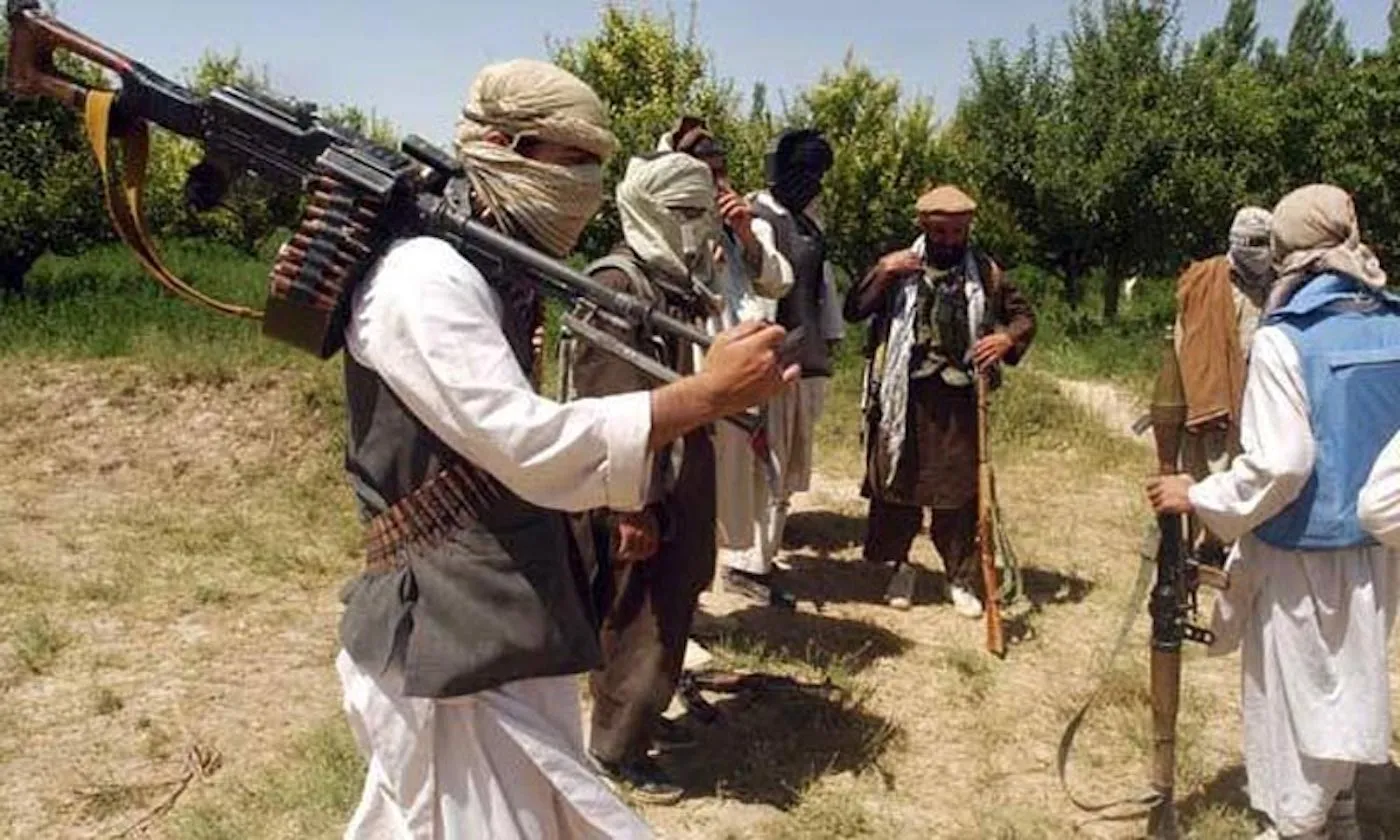
The platform’s treatment of the TTP is especially revealing. It actively legitimizes TTP terrorism by portraying attacks inside Pakistan as necessary or justified, while concealing Taliban-linked support networks and safe havens. Its silence on the killing of innocent Muslims by the Afghan Taliban-supported TTP exposes its selective morality. It amplifies global Muslim causes when they can be used to attack Pakistan, yet ignores Muslim victims when their suffering undermines the Taliban’s narrative.
Al-Mirsad also thrives on fabricated claims and conspiracy building. It has pushed baseless allegations linking Pakistan to ISKP, accused Pakistan of undermining Muslim causes globally and promoted extreme narratives about foreign plots, religious betrayal and state illegitimacy. Such claims are not accidental; they are designed to provoke emotional outrage, generate fear and manufacture credibility through repetition.
Its alleged claims about Pakistan’s economy depending on unrest in the Islamic world, or Pakistanis desecrating sacred religious symbols, are examples of inflammatory disinformation meant to inflame public anger
Beyond religion, Al-Mirsad exploits ethnic fault lines inside Pakistan. It frames Pakistan as an occupier in Pashtun and Baloch regions, aligning its messaging with militant agendas and encouraging internal discord. The objective is clear: fuel polarization, weaken national cohesion and erode trust in state institutions. This is not commentary; it is psychological targeting.
Its external messaging is equally strategic. Al-Mirsad attempts to damage Pakistan’s relations with key partners, particularly China, by portraying Pakistan as insecure, unreliable and unstable in the context of CPEC and regional connectivity. This shows that its agenda extends beyond domestic opinion.
It seeks to isolate Pakistan regionally and globally by reinforcing narratives of failure, insecurity and collapse
The platform also targets younger audiences by hijacking global Muslim causes such as Gaza and embedding anti-Pakistan narratives into broader Islamic discourse. This emotional mobilization, particularly among Gen-Z, is a calculated tactic. Through dehumanization and vilification, Al-Mirsad portrays Pakistan’s institutions as oppressive while glorifying the Taliban, creating an ecosystem where state authority is delegitimized and violence is normalized.
Its content in Hindi further indicates an effort to reach audiences beyond Afghanistan and Pakistan, particularly those already receptive to anti-Pakistan narratives. Historical figures such as Ahmad Shah Abdali and Mahmud of Ghazni are selectively invoked to create false ideological continuity and give Taliban messaging a misleading civilizational framing.
Complex geopolitical realities are reduced to simplistic binaries and Islam versus the enemy, believer versus traitor, resistance versus oppression. Such framing suppresses nuance and forces emotional alignment
Al-Mirsad represents the convergence of terrorism and information warfare. It is a force multiplier for militant narratives, aiding recruitment, radicalization and justification of violence under religious cover. Its high-volume, consistent output and disciplined messaging suggest centralized production and possible technology-assisted content generation. This makes it more adaptive, more persistent and more dangerous.
At its core, Al-Mirsad exposes the Taliban’s intent: not peaceful coexistence with Pakistan, but sustained hybrid confrontation using the information space as a battlefield. Pakistan must recognize this threat for what it is. Al-Mirsad is not journalism, not analysis and not independent media. It is a structured propaganda weapon engineered to distort reality, manipulate perceptions, radicalize audiences and advance hostile strategic objectives against Pakistan.