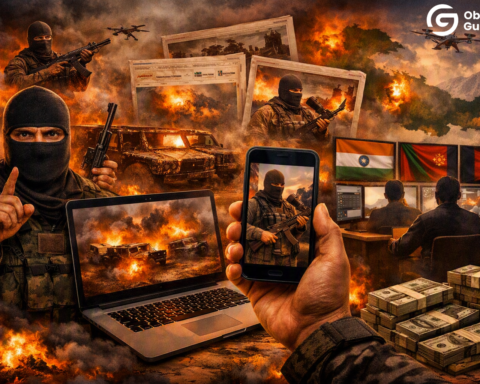
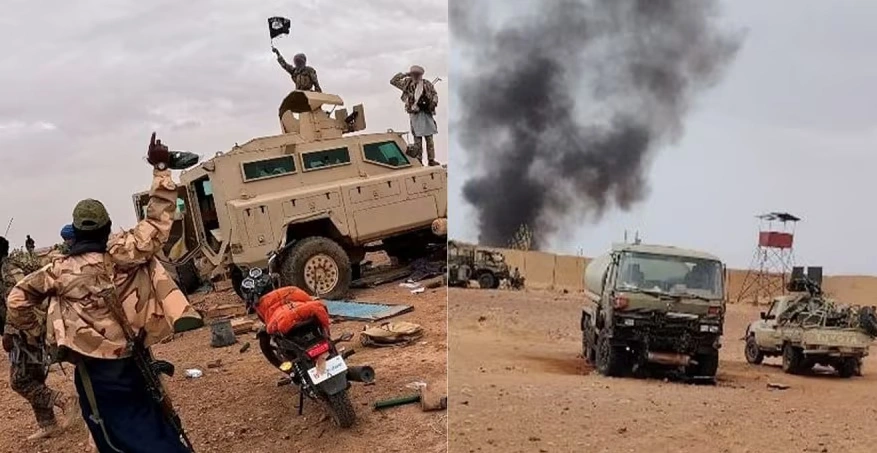

Propaganda succeeds when repetition is allowed to replace evidence. This is the central method used by Fitna al-Khawarij, or FAK, a designation employed by Pakistani authorities for militants associated with the Tehreek-e-Taliban Pakistan. The group seeks to present itself as a victim of state repression while concealing its own record of suicide attacks, executions, kidnappings, intimidation, and assaults on civilians, police officers, and soldiers. Recent attacks attributed to or claimed by the TTP have included bombings, ambushes, and assaults on security positions, demonstrating that its campaign is not a peaceful political struggle but an organised use of violence against the state and society. In February 2026, for example, the TTP claimed responsibility for deadly attacks on police in Kohat and Bhakkar, including a suicide bombing at a checkpoint.
FAK propaganda depends on a calculated reversal of responsibility. After committing or celebrating violence, the group attempts to shift public attention towards the security response, presenting terrorists as persecuted activists and lawful counter-terrorism measures as aggression. This manipulation must be rejected. A movement cannot credibly claim moral victimhood while its members attack mosques, schools, markets, security posts, ambulances and public infrastructure. Nor can it demand sympathy while using fear to silence local communities.
The purpose of such propaganda is not to establish truth; it is to weaken public confidence, discourage counter-terrorism action, and create political space for militants who could never secure legitimacy through democratic means
The group’s own conduct exposes the emptiness of its claims. The reported beheading of soldier Waqas Bangash, followed by the circulation of images attributed to TTP-linked accounts, represents the kind of calculated cruelty designed to terrorise families, demoralise security personnel and attract extremist attention online. Similar reports concerning the beheading of two soldiers in Tirah reinforce the same pattern of psychological warfare. Because some details have circulated primarily through militant-linked or social-media channels, competent authorities and responsible journalists should verify every individual case carefully. Yet the underlying method is unmistakable: violence is not merely committed but converted into propaganda, with the suffering of victims turned into a spectacle.
Such conduct has no Islamic legitimacy. Islam establishes moral limits even during armed conflict and expressly prohibits mutilation. An authentic narration in Sahih al-Bukhari records that the Prophet Muhammad (peace be upon him) forbade the mutilation or maiming of bodies. Another narration in Sahih Muslim instructs fighters not to betray agreements, kill children, or mutilate the dead. These teachings leave no room for the desecration of bodies, theatrical executions, or the glorification of cruelty.
Murdering captives, severing heads, and displaying corpses are not expressions of religious courage; they are violations of human dignity and the Prophetic code of conduct
Mainstream scholars, including respected Deobandi religious figures, have repeatedly challenged militant attempts to monopolise Islamic authority. The Deobandi tradition cannot honestly be reduced to the ideology of armed organisations that selectively quote scripture while ignoring its ethical framework. Scholars and clerics who opposed militant violence in Pakistan have themselves been threatened and killed, illustrating how extremist groups respond to theological disagreement with coercion rather than scholarship. Research on Deobandi opposition to militancy documents clerics who rejected the claim that Pakistan was an illegitimate or unbelieving state and condemned attacks carried out in the name of religion.
The description of such militants as Khawarij is therefore not merely rhetorical; it reflects a recognisable pattern of religious extremism. Prophetic traditions warn of people who would speak in impressive religious language and recite the Qur’an, yet fail to understand or embody its guidance. One narration describes them as people who would kill Muslims while leaving idolaters unharmed. The lesson remains highly relevant: religious vocabulary does not automatically create religious legitimacy.
When a group excommunicates Muslims, murders citizens, attacks the defenders of society, and treats brutality as worship, its slogans must be judged by its actions
Pakistan’s response must nevertheless remain anchored in law, evidence and accountability. Counter-terrorism operations are necessary to protect citizens and dismantle violent networks, but their legitimacy is strengthened when they follow clear legal procedures, distinguish militants from civilians and investigate credible allegations of misconduct. The rule of law is not an obstacle to national security; it is the foundation of sustainable national security. Intelligence-led operations, effective policing, fair trials, protection of witnesses, rehabilitation of vulnerable recruits, and stronger governance in conflict-affected regions should operate together.
Countering FAK propaganda, therefore, requires more than military success. The state, media, scholars and civil society must expose the contradiction between the group’s words and deeds. Victims should be named, local communities should be heard, and terrorist propaganda should never be repeated without proper context. Digital platforms should also prevent violent organisations from exploiting graphic material to recruit supporters, intimidate communities and manufacture an image of strength.
Pakistan must answer falsehood with verifiable facts, extremism with authentic religious scholarship, and violence with lawful justice. FAK cannot be allowed to erase its crimes by manufacturing victimhood. Its record must remain at the centre of the debate: a record of terror, brutality and the deliberate abuse of religion for political violence. No amount of propaganda can transform the targeting of civilians, the desecration of bodies, and the celebration of murder into a legitimate or Islamic cause.