
Watching a single social media post turn into a public conviction is one of the ugliest habits we have picked up in the last few years. It happens fastest when the accusation involves militancy, terrorism, or national security, because those words trigger fear and anger at the same time. People stop thinking like citizens and start thinking like a crowd. They share first, they judge second, and they ask questions only if someone they like gets targeted. That is a dangerous way to live, and it is a dangerous way to govern a society that already has deep wounds.
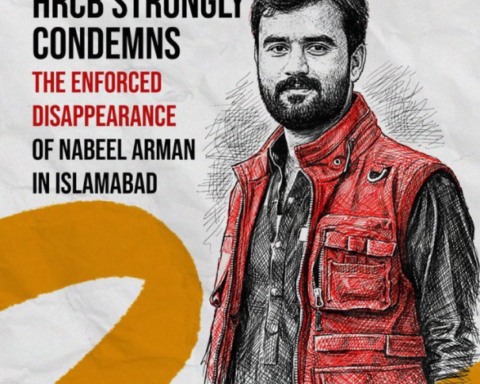
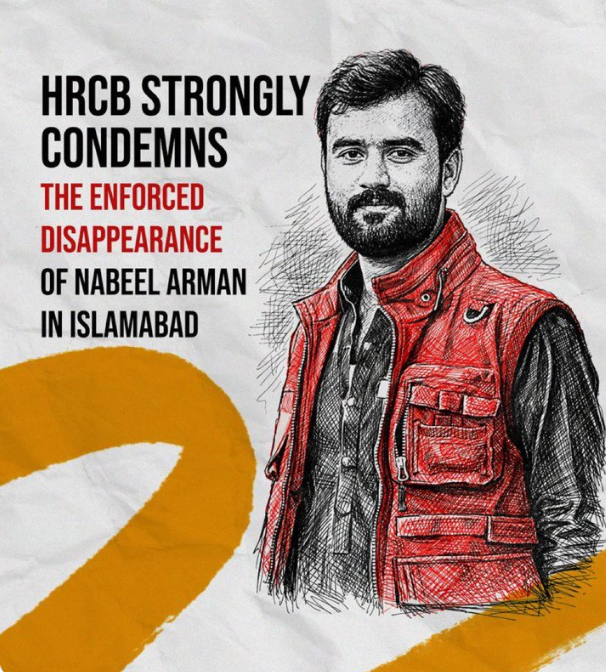
When a post insists that a named person is “not a simple student,” it is trying to do more than describe someone. It is trying to close the argument before it starts. The message underneath is simple: do not sympathize, do not ask for proof, do not point out gaps, do not demand due process. Just accept the label, accept the story, and join the pile on. That is not how truth is discovered.
That is how propaganda spreads, even when the person sharing it believes they are doing the right thing
It is easy to understand why these posts get traction. Violence in Balochistan is not an abstract topic. People have lost family members, jobs, peace of mind, and faith in the future. Every attack creates fresh grief, and grief wants a target. At the same time, many ordinary people also carry anger toward the state and its failures, which makes trust even thinner. In that climate, an accusation feels like clarity. It feels like someone is finally saying what others “won’t say.” But feeling is not proof. Clarity that comes without evidence is usually just simplification, and simplification in conflict zones is often a weapon.
There is also something deeply cynical about the way these posts are framed. They often claim there is an investigation, that names are being withheld, that a network will be exposed “very soon,” and that the public should relax and wait. That language is a performance of authority. It asks you to treat an anonymous account like an institution. It borrows the tone of law enforcement while providing none of the accountability.
If a claim is serious enough to put someone’s life at risk, it is serious enough to require verifiable sourcing. Otherwise, it is a rumor with a costume
The most toxic part is the demand that anyone speaking up for the accused should be quiet. A society that solves hard problems by ordering people to shut up is a society that will never solve those problems. It will only shuffle them around, turning yesterday’s victims into today’s suspects, and today’s suspects into tomorrow’s martyrs. Silencing people does not protect the truth. It protects power, and power can belong to anyone, including people acting in bad faith.
If the person accused is guilty of recruiting, facilitating, or participating in violence, then the correct response is evidence-based prosecution. Not viral condemnation. Evidence-based prosecution is slower, less thrilling, and less satisfying for people who want instant closure. But it is the only path that can separate fact from faction. Courts can be flawed, yes. Investigations can be politicized, yes. But the answer to a flawed process is no process.
The answer is better process, oversight, transparency, and rights that apply even when it is unpopular
There is a second reason to resist online verdicts. They do not just harm the accused; they harm the public’s ability to understand reality. In an environment where every activist is called an operative and every organizer is called a recruiter, the words lose meaning. The signal gets buried under noise. Real threats become harder to spot because the label is being thrown around for social media points. Meanwhile, genuine civic space shrinks because people get scared to speak, organize, or even study political issues. A community cannot breathe when accusation becomes the default language.
There is also a basic moral point here. When you name a person and connect them to terrorism in a public forum, you are not simply “sharing information.” You are putting a target on them. You may be putting a target on their family. You may be inviting harassment, violence, or unlawful detention. If you are wrong, you cannot undo that harm with a quiet correction later. Even if you are right, you are still bypassing the standards that exist to keep societies from sliding into vigilantism.
That is why responsible journalism treats claims like these with extreme caution, and why courts require more than vibes
So what should ordinary people do when they see a post like this? First, slow down. Do not share allegations as if they are confirmed. Second, ask what would count as proof. A formal statement from a credible authority, documented evidence presented in court, reporting from outlets with a track record and named sources, and corroboration from multiple independent lines. Third, watch for manipulation tactics. Calls for silence, claims of imminent exposure without details, guilt by association, and language designed to shame anyone who asks questions. Those are red flags, even when the topic is emotionally charged.
We should be able to hold two thoughts at once. Militant violence is real and must be confronted, and a person accused online still deserves due process and humane treatment. These ideas are not enemies. They depend on each other. Because if we abandon fairness when we are afraid, we will not get safety. We will get a cycle of suspicion, retaliation, and deeper resentment. In the end, the only people who benefit from that cycle are extremists of every kind, the ones who thrive when society is divided and trust collapses.