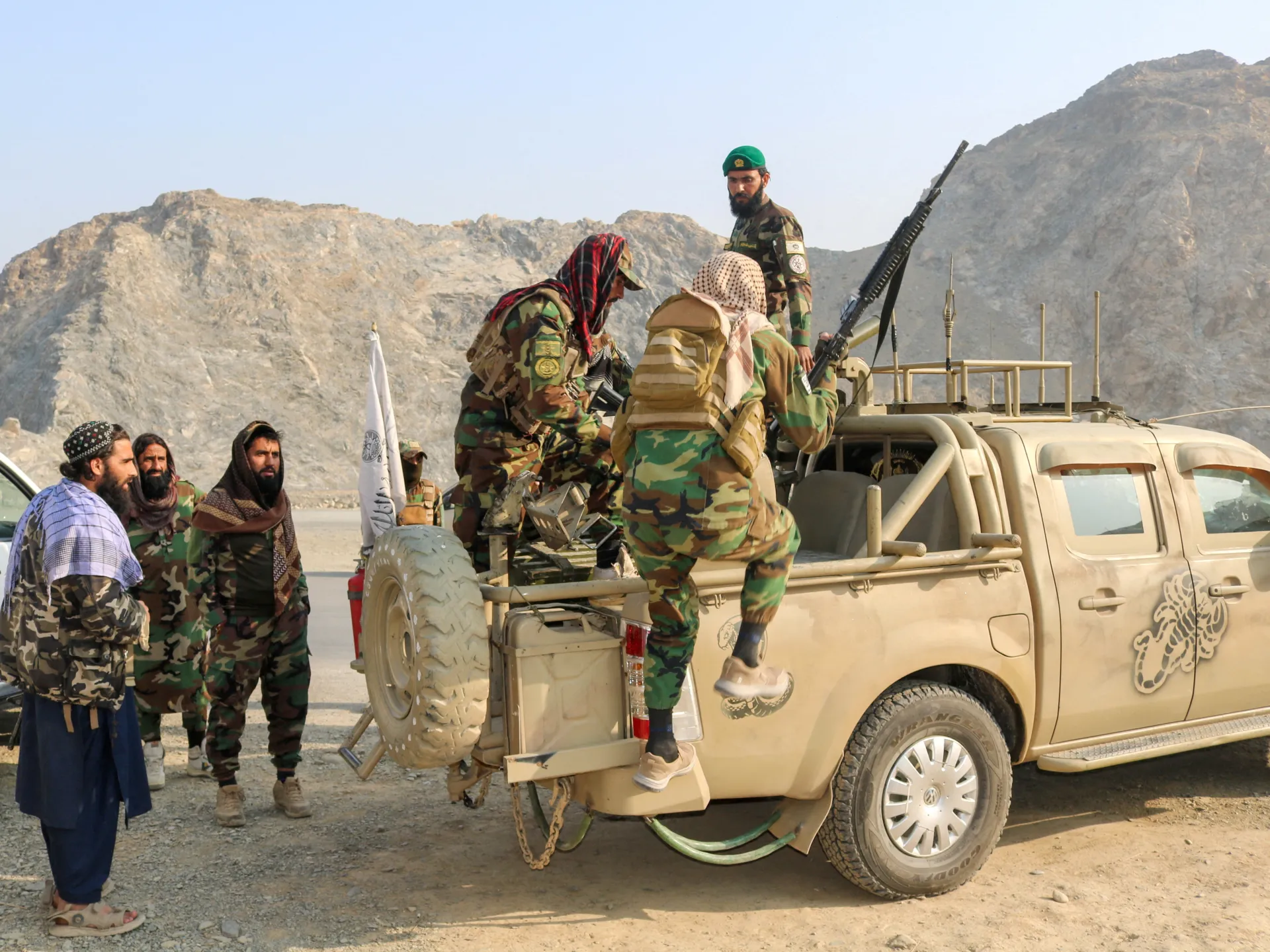

For too long, the world has spoken about Afghanistan as if it were a sealed crisis, tragic, painful, but somehow contained. That view is no longer tenable. Afghanistan under Taliban rule is not simply a poor country in distress. It is becoming a zone where extremist presence, institutional weakness, forced returns, economic strain, and regional confrontation are feeding one another. That is exactly the sort of environment that stops being local. It leaks outward, first into neighboring states, then into wider security, migration, and criminal networks. The world has seen this pattern before, and it should stop pretending it does not know where it can lead.
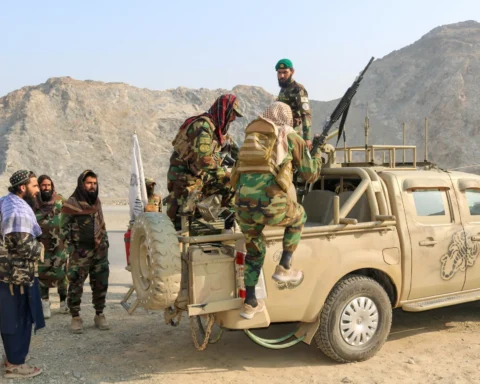
The first mistake is to confuse the Afghan population with the danger. Afghans are the primary victims of what their country has become. The real threat lies in the governing system now in place. The February 2026 UN Security Council report said ISIL K remained under sustained pressure but still kept a potent capacity for attacks and propaganda. The same report also described continued links between Afghanistan and al Qaeda, including safe houses and training-related infrastructure.
That matters because a state does not have to openly announce global aggression in order to become a global threat. It only has to allow space, time, and shelter to actors who are patient enough to build one
Pakistan is the clearest proof that this danger is already spilling over. For years, powerful circles in Pakistan treated Afghanistan as something that could be influenced, managed, or strategically shaped. That logic has curdled into blowback. In March 2026, Reuters reported some of the worst fighting between Pakistan and Afghanistan since the Taliban returned to power in 2021, with China stepping in to cool the crisis. Reuters also reported civilian casualties, airstrikes, and retaliation that pushed the confrontation well beyond routine border tension. Once a neighboring nuclear-armed state is locked in escalating combat with Taliban ruled Afghanistan, nobody can honestly call the problem distant anymore.
That is why the line that Pakistan is the lid makes sense, even if it sounds severe. A lid can cover pressure, but it cannot dissolve it. And when pressure builds inside a closed system, the lid eventually becomes part of the danger. Pakistan’s own accusations center on militant sanctuaries and cross-border violence. Afghanistan denies responsibility, but the denials have not stopped the deadliest round of fighting in years. The point is bigger than blame alone.
A strategy built on tolerating or manipulating militant ecosystems always carries a price. In this case, the price is now being paid in open confrontation, civilian deaths, and rising regional instability
The humanitarian side of the crisis does not soften this argument. It strengthens it. OCHA says around 21.9 million people in Afghanistan, roughly 45 percent of the population, are projected to need humanitarian assistance in 2026. The World Bank says the economy is expanding again, but it also warns that rapid population growth driven by returnees is dragging down income per person and straining livelihoods. That is not genuine stabilization. It is a fragile surface over deeper exhaustion. A state that cannot absorb its own returning population, cannot offer broad employment, and cannot restore normal institutions becomes more vulnerable to coercion, smuggling, recruitment, and internal fragmentation. Mass deprivation is not just a moral failure. It is a security condition.
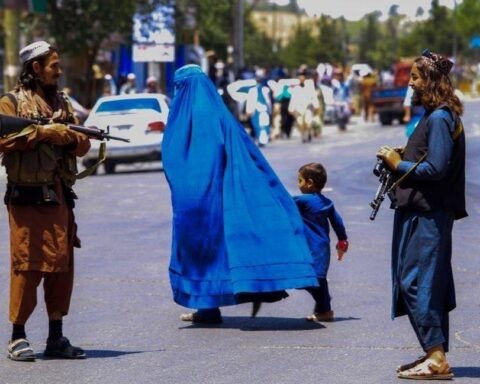
The treatment of women and girls is part of the same picture. It is often discussed as a human rights issue alone, but it is also a state failure with long-range strategic consequences. UNICEF and UNESCO said in January 2026 that Afghanistan remains the only country in the world where secondary and higher education are forbidden to girls and women, affecting 2.2 million adolescent girls. A political order that systematically excludes half the population from education and public life is not building stability.
It is crippling its own future workforce, weakening its own social fabric, and locking in resentment and dependency for years to come. Countries do not become safer by erasing the capacities of millions of their citizens
The same is true of illicit economies. UNODC reported in 2025 that methamphetamine seizures linked to Afghanistan had risen sharply compared with the period before the Taliban returned to power, suggesting that synthetic drug activity had not been choked off by the narcotics ban. Drug networks matter because they do more than move substances. They move money, corruption, protection, logistics, and armed influence across borders. Once those networks mature inside an opaque and isolated political environment, they become harder to uproot and easier to repurpose for other forms of violence and organized crime.
Then there is the return crisis. UNHCR said in March 2026 that more than one million Afghans returned from Pakistan in 2025. That scale of movement into an already strained country would test even a functioning state. Afghanistan is not a functioning state in the normal sense. It is an ideologically rigid system under economic and diplomatic constraint, trying to absorb huge human pressure while facing militant questions it has not resolved. Forced or pressured returns under those conditions do not reduce instability. They thicken it.
The world should stop waiting for a single spectacular event before it takes the warning seriously. Major threats do not always arrive with a formal declaration. More often, they gather slowly in plain view while outsiders reassure themselves that the crisis is too remote, too tangled, or too familiar to demand urgency. Afghanistan is moving in the wrong direction. The extremist shadow is still there. The border with Pakistan is burning. The humanitarian burden is immense. The social order is being hollowed out from within. This is not a stable country that happens to be harsh. It is a dangerous vacuum hardening in real time. And history suggests that vacuums like this do not stay empty for long.