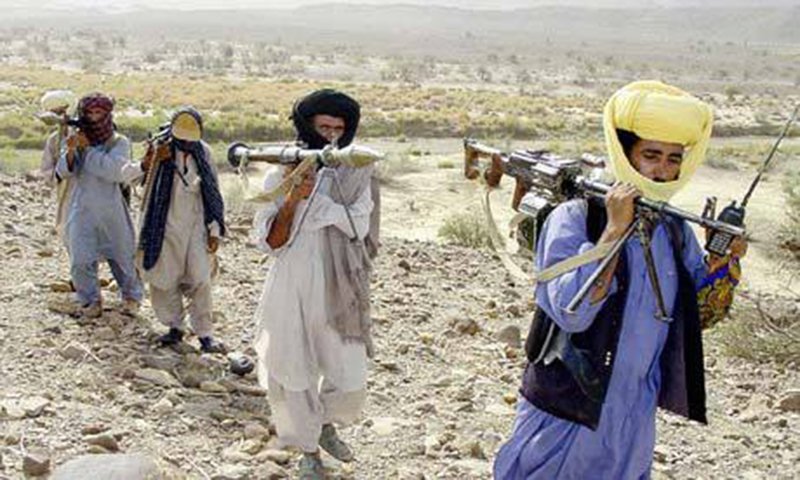
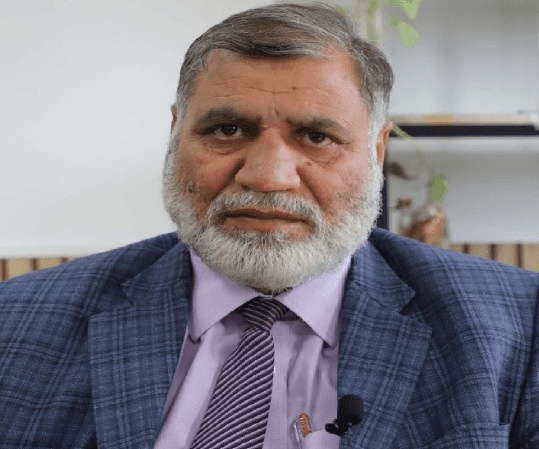
The political history of Balochistan is often narrated through the lens of nationalism, deprivation, and demands for autonomy. Yet within this broader discourse lies an underexamined dimension: the role of tribal power structures and the ways in which certain leaders deployed them for personal dominance rather than collective progress. Among these figures, Nawab Akbar Khan Bugti stands out not only for his political visibility but also for the contradictions that surrounded his career. His own admission that he committed his first murder at the age of twelve, an act he could scarcely recall beyond describing it as a burst of anger, reflects the social environment in which he was raised. In the tribal hierarchy, such violence was not an aberration but a demonstration of authority. It foreshadowed a life defined by coercive influence, personal retribution, and the continuous blending of private vengeance with public politics.
The decades surrounding Balochistan’s elevation to provincial status in 1970 were a transformative period. The state attempted to shape a modern political structure, while tribal leaders negotiated how much of their centuries-old authority they were willing to cede. During this era, four nationalist leaders emerged as central actors: Mir Ghaus Bakhsh Bizenjo, Khair Bakhsh Marri, Ataullah Mengal, and Akbar Bugti. The first three, despite ideological differences, broadly kept disputes within the political domain, engaging in debates, constitutional dialogues, and overt expressions of dissent that fit within the evolving parliamentary landscape. Bugti, by contrast, regularly personalized political disagreements, turning them into matters for tribal confrontation. Disputes with him were rarely just ideological; they often escalated into threats, coercion, or direct conflict.
His politics blurred the boundaries between democratic engagement and feudal domination, reinforcing a pattern in which tribal identity overshadowed public representation
One of the most consequential contradictions of Bugti’s political posture was his approach to natural resources. Much of Baloch nationalist rhetoric revolves around the idea that Balochistan’s wealth, gas, minerals, and various extractive industries benefit the center while leaving locals marginalized. Yet Bugti’s own record complicates this narrative. Rather than advocating for transparent, institutionalized resource governance that would empower ordinary citizens, he favored arrangements that preserved tribal royalties and personal supremacy. His opposition to state regulation or broader public participation was not because he feared federal exploitation, but because regulatory frameworks reduced tribal gatekeeping over resource flows.
During General Pervez Musharraf’s government, a series of reforms were initiated to modernize the regulatory system governing mines and minerals. These reforms aimed to introduce corporate governance, auditing standards, and policies to ensure that revenue was handled transparently. Bugti resisted these measures vehemently. The core issue was not constitutional rights or provincial autonomy, but the threat posed to traditional control mechanisms. Institutional accountability inherently challenged a tribal structure built on discretion, opacity, and loyalty networks. Bugti’s opposition, therefore, reinforced the reality that certain nationalist narratives were selectively deployed, embracing “rights” as a slogan when convenient while rejecting reforms that expanded public oversight.
The Dr. Shazia Khalid case illustrates this instrumentalization of sentiment even more starkly. What should have remained a matter of justice, requiring forensic transparency, impartial investigation, and a responsible institutional process, was instead converted into a potent symbol of political mobilization. Critical investigative steps, such as the public release of DNA testing or clear procedural updates, never took center stage. Instead, the vacuum was filled by emotional narratives amplified through media and political channels.
The case became less about securing justice for a victim and more about projecting an image of state brutality, furthering anti-state sentiment, and cultivating a narrative of perpetual victimhood
Within this environment, Bugti’s political strategy relied on a familiar pattern: taking individual incidents or resource disputes and reframing them as existential struggles for Baloch rights. This approach was effective in mobilizing loyalty, especially among populations historically alienated from the state. Yet it also entrenched a dynamic in which genuine issues of governance, accountability, and public service were overshadowed by tribal theatrics. Rather than building institutions, the politics of grievance dominated. Rather than encouraging the development of modern political leadership, old patronage hierarchies were preserved.
Balochistan’s challenges are real: underdevelopment, limited administrative capacity, and historical neglect have all contributed to a sense of disenfranchisement. However, it is equally important to recognize the internal constraints that leaders like Bugti reinforced. The tribal system did not merely coexist with the political system; it often undermined it. Public welfare, education, health, and economic reform remained secondary to the preservation of personal fiefdoms.
When nationalist rhetoric was deployed, it frequently masked the pursuit of private power, not the pursuit of collective empowerment
The politics surrounding Bugti’s legacy, therefore, require a more nuanced analysis than simple heroism or villainy. His influence was undeniably significant, yet significance should not be conflated with public service. His use of violence, his personalization of political disputes, and his resistance to institutional transparency reveal a pattern rooted not in principled resistance but in maintaining control. The tragedy of Balochistan is that its legitimate grievances were often represented by leaders whose primary interest lay in preserving traditional dominance rather than transforming society.
For Balochistan to move forward, it must confront both external and internal impediments. Genuine progress will require leadership that prioritizes institutions over individuals, accountability over emotion, and public welfare over tribal loyalty. The history of figures like Akbar Bugti is essential to understanding why these transformations have been so difficult, and why they remain so necessary.