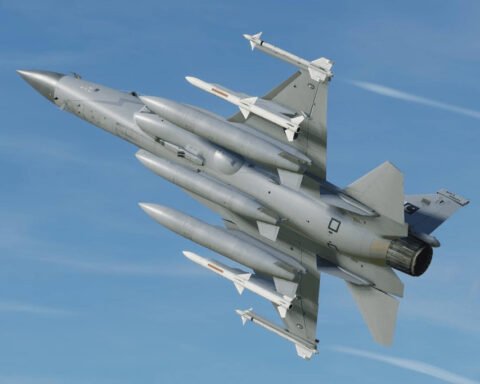
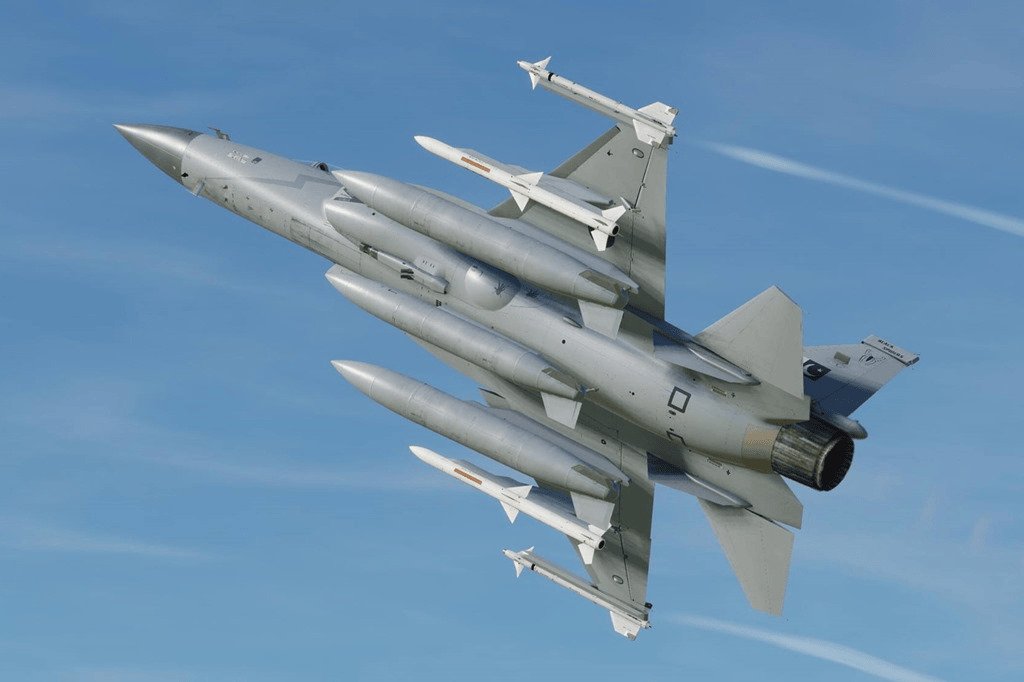

Pakistan has talked for years about moving beyond a narrow export base, but the hard part is finding something that can compete globally, bring in dollars, and keep doing so when the next political cycle hits. In that context, the JF 17 Thunder sits at the center of a new story the state wants to tell about itself. Not just that Pakistan can build a fighter jet, but that it can sell one, support it, and use defence exports to ease pressure on an economy that has leaned too often on short-term fixes.
The appeal of the JF 17 as an export product is obvious. It is a multi-role light fighter, jointly developed by Pakistan and China, and it comes to market at a price many air forces can actually consider. At roughly $30 to $40 million per unit, it undercuts many Western options that come with higher sticker prices, costly upgrades, and restrictions that can tighten overnight with a change in geopolitics.
For smaller states looking to replace ageing fleets without buying into a full Western ecosystem, the jet offers a straightforward pitch: workable capability, lower cost, and a seller that frames the deal as a partnership rather than patronage
That pitch gained new energy after the 2024 IDEAS defence exhibition, when Pakistan announced multiple memoranda of understanding that officials suggested could reach up to $30 billion if finalized. Even if that number is best seen as ambition rather than banked revenue, it signals a shift in mindset. Pakistan has long relied on textiles and agriculture, sectors that matter for jobs but struggle to deliver the kind of foreign exchange stability the country needs. With reliance on IMF credit rising significantly over the past decade, the state is searching for exports that feel less vulnerable to commodity swings, floods, and the slow grind of low-value manufacturing. Defence sales, in theory, promise larger invoices, longer support contracts, and a kind of prestige that can draw more buyers.
But turning a fighter jet into a reliable export earner is not like selling yarn or rice. Arms deals sit inside politics, financing, training, spares, and long-term trust. Pakistan has already made real progress on the first step, getting buyers. Nigeria and Myanmar have bought the JF-17, and Azerbaijan has signed a major deal that Islamabad has presented as a breakthrough. Each sale does more than add a line to a brochure. It gives the program a track record, produces feedback from real operations, and signals to other countries that this aircraft is not just a prototype rolled out for parades.
Marketing has also been helped by combat-related claims tied to tensions with India, which supporters say prove the jet can handle real-world pressure. In the arms market, perception matters, sometimes more than spreadsheets. A platform that is seen as tested, even in limited ways, carries a different kind of weight than one that has only flown exercises. Pakistan’s narrative builders understand this, and they have leaned into it. The risk is that claims, counterclaims, and propaganda battles can create expectations a single aircraft can never meet.
If a buyer purchases the jet expecting miracle performance, disappointment can follow, and disappointment spreads fast in small defence circles
There is also the question Pakistan does not always say out loud: how Pakistani is the JF-17 as an export product? The aircraft is branded as a national success, and it is in important ways. Pakistan Aeronautical Complex has built industrial skills, assembled airframes, and built the local experience needed to keep a fighter fleet flying. That matters. Still, the jet relies heavily on Chinese design, Chinese components, and Chinese export approval. That reality shapes everything, from delivery timelines to upgrade paths. A buyer is not only buying from Pakistan, but it is also buying into China’s supply chain and political comfort. In some regions, that is a plus. In others, it is a constraint.
This is where Pakistan’s defence export ambitions meet their biggest test: credibility through delivery. Announcements and memoranda can create buzz, but the market rewards those who ship on time, provide spares without drama, and keep aircraft mission-ready years later. That demands disciplined production planning, a spare parts pipeline that does not break during a currency crisis, and training packages that do not depend on ad hoc arrangements. It also demands financing solutions.
Many prospective buyers like the price tag, but still need loans, deferred payments, or barter-style deals. If Pakistan cannot help structure financing, competitors will
Even if deliveries go well, the larger economic promise should be kept in proportion. Defence exports can bring in dollars, but they do not replace the need to fix energy costs, tax collection, and the basic business climate. A fighter jet sale is not a substitute for a stable export sector; it is a supplement. The danger is that officials treat big defence numbers as a shortcut around harder reforms. The better approach is to see the JF 17 as one tool in a broader plan: build high-skilled manufacturing, deepen supplier networks, and prove that Pakistan can meet complex contracts without delays and drama.
If Pakistan wants the JF 17 to be a real bridge away from repeated IMF cycles, it has to focus less on headlines and more on boring reliability. Deliver what was promised. Keep customers happy after the ribbon-cutting. Invest in upgrades that buyers can afford. Be honest about what the jet can and cannot do. If that happens, the JF 17 may not transform the economy on its own, but it can help Pakistan take a step many developing states never manage: moving from selling what the world already expects, to selling something the world has to take seriously.