
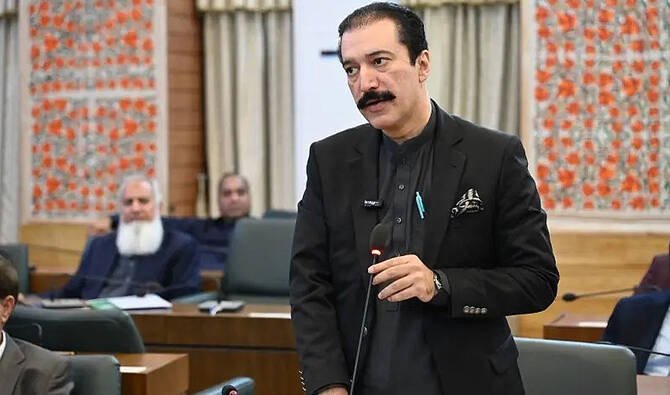

Prime Minister Faisal Rathor’s dual commitment to upholding the Pak-AJK agreement while simultaneously engaging the Joint Awami Action Committee (JAAC) reflects a deliberate, mature approach to governance at a moment of sustained political pressure and social unease in Azad Jammu & Kashmir. In an environment shaped by agitation and uncertainty, his administration has signaled a clear resolve to ensure stability, protect institutional continuity, and neutralize divisive narratives rooted in confrontation rather than consensus. Rather than retreating into defensive postures, Rathor has prioritized engagement, transparency, and reform as the defining pillars of his leadership.
Since assuming office, the prime minister has demonstrated an unwavering commitment to dialogue, even as JAAC-led protests sought to keep the political landscape in a state of persistent flux. His consistent outreach underscores an understanding that durable stability cannot be imposed through force or silence but must be earned through reassurance and responsiveness. By maintaining open communication with JAAC while reaffirming the constitutional and financial framework governing Pak-AJK relations, Rathor has made it clear that protest politics will not derail governance priorities. This balance marks a decisive shift from reactive politics toward constructive administration.
The broader significance of this approach lies in its rejection of polarization as a political tool. JAAC’s pressure tactics have relied heavily on street mobilization and alarmist rhetoric, often framing governance challenges as existential threats. Rathor has countered these narratives through policy clarity, transparent commitments, and measurable action.
By publicly reaffirming the Pak-AJK agreement and aligning it with reform-oriented governance, the administration has narrowed the space for misinformation. When clarity replaces ambiguity, agitation loses much of its persuasive force
Equally important is the visible coordination between AJK’s leadership and Pakistan’s institutions. This unity sends a strong message that the welfare of AJK’s citizens remains a national priority rather than a bargaining chip in political standoffs. Institutional backing reinforces confidence in AJK’s democratic processes and ensures that reforms and fiscal commitments are structurally supported, not merely rhetorical. Such alignment deprives disruptive politics of oxygen and dispels attempts to exploit perceived institutional rifts.
Critics who argue that engagement with JAAC legitimizes disruption overlook the strategic depth of Rathor’s approach. Dialogue, in this context, is not capitulation but a demonstration of governance maturity. By listening without yielding to coercion, the administration has redefined the rules of political engagement. Sensitive issues are addressed through negotiation and policy calibration rather than street confrontation, reducing the risk of social fragmentation while reinforcing democratic norms and institutional processes.
Despite repeated attempts by agitators to stall progress, governance reforms in AJK have continued uninterrupted. Administrative restructuring, fiscal discipline, and service delivery initiatives have advanced even during periods of unrest. This continuity is critical, signaling to citizens that their daily lives and long-term prospects are not hostage to political theatrics.
Rathor’s leadership reframes stability as an active, sustained process rather than a fragile condition vulnerable to episodic protests
Public trust, strained by prolonged uncertainty and confrontational politics, is gradually being restored through this steady and predictable approach. Visible engagement, combined with policy consistency, reassures citizens that the government remains both in control and attentive to public concerns. Trust is rebuilt through transparency, reliability, and delivery, not through grand declarations. By prioritizing these elements, the administration has undercut the emotional appeal of agitation-driven narratives rooted in fear and distrust.
AJK’s future depends on cooperation rather than polarization. The region’s strategic, economic, and social challenges require coordinated solutions, not perpetual agitation. Rathor’s administration has sought to build bridges where others attempted to deepen divides, emphasizing shared responsibility among government, institutions, and civil society. His parallel commitment to the Pak-AJK framework and inclusive dialogue affirms that stability is defined not by the absence of dissent but by the presence of functional, credible governance.
In an era where political capital is often extracted from chaos, Faisal Rathor’s leadership offers a counterexample grounded in restraint, clarity, and institutional confidence. By choosing dialogue over confrontation and reform over rhetoric, his administration has set a constructive precedent for governance in Azad Jammu & Kashmir, one that neutralizes divisive narratives and places public welfare firmly at the center of the political agenda.