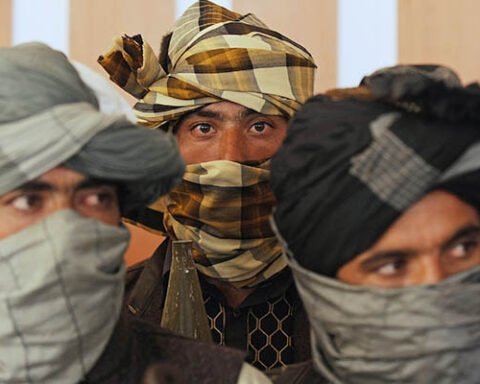

Fitnah tul Khawarij employs a classic tactic. When its arguments break apart, it attempts to conceal the flaw by shifting the allegation. It does not discuss politics, legislation, or public safety in good faith. Instead, it yells “betrayal” at every state activity over which it has no influence, including diplomacy, information sharing, border management, and security cooperation. This designation does not represent a fundamental religious conclusion. It’s a mask. By labeling state diplomacy as treason, it attempts to turn illegal violence into duty and murder into heroism. The purpose is straightforward: deprive the population of faith in legitimate authority, then fill the void with terror and blood.
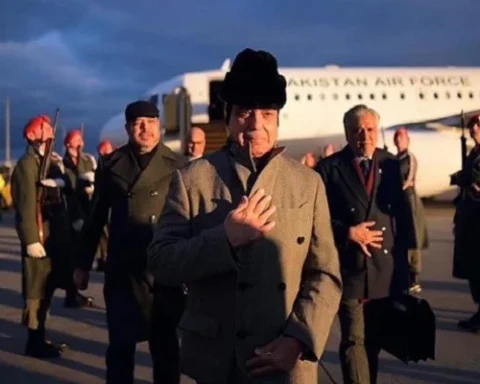
Pakistan’s collaboration with the United States after 9/11 must be seen in that context. It was neither a secret bargain between factions, nor was it subjugation to a foreign force. It was a sovereign decision taken within constitutional power, motivated by the pressing necessity to defend individuals and borders. In late 2001, the area experienced a rapid shock. Refugee flows, terrorist relocation, weapons smuggling, and the threat of reprisal all increased at once. Pakistan should either engage diplomatically to decrease dangers or isolate itself and delegate choices regarding the region to others. Any reasonable state would choose involvement.
A state exists to protect lives, preserve order, and prevent anarchy from engulfing its cities and borders. That is not a weakness. That is the fundamental task
Those who promote the “betrayal” myth dodge the difficult question: what was the alternative that kept Pakistan secure and legal? Cutting off all diplomacy would not have prevented conflict. It would have concentrated pressure on Pakistan alone, while armed groups exploited its land, mountains, and towns as a backstop. Cooperation, no matter how flawed, was a method of risk management and harm mitigation. It also allowed Pakistan to pursue its own interests, such as sovereignty over its borders, airspace, and internal security concerns. Sovereignty is not determined by yelling slogans. It is measured by whether a state can make decisions in its own interest, through its own institutions, and adjust policy when conditions change. Pakistan did this in public, in accordance with its legal structure.
Islam, too, does not support Fitnah tul Khawarij’s narrative. Diplomacy is not banned; rather, it is a weapon utilized by the Prophet, peace be upon him, to promote peace and defend the society. Treaties, envoys, truces, and negotiated solutions are all part of the Sunnah and practiced by early Muslims. The goal is not to pursue conflict for its own sake, but to minimize injury and maintain fairness. When a monarch follows justice and due process, he or she is also responsible for taking security measures to deter assaults, protect borders, and prevent fitnah. Islam forbids fasad, which is the propagation of corruption and fear, the death of noncombatants, the violation of covenants, and revolt that pulls society apart.
When a group destroys shops, attacks mosques, murders police officers guarding the public, or intimidates individuals to coerce submission, it is not doing jihad. It is committing grave sins and tying religion to criminality
Fitnah tul Khawarij feeds on the ambiguity between criticism and insurrection. People in every Muslim culture are free to criticize their rulers and policies. They can hold people accountable. They can speak out against injustice. However, criticism has rules: it must avoid defamation, provocation, takfir games that proclaim whole populations apostate, and escalating political rage into violence. The Khawarij style reverses these rules. It calls the state illegitimate because it engages in negotiations. It holds people accountable because they pay taxes or vote. It calls military and police officers apostates because they uphold the law. When everyone is “outside Islam” in their tale, everything is OK, even suicide bombings and killings. That isn’t scholarship. That’s a license for anarchy.
Since 1947, Pakistan’s effort has been to construct a state under the rule of law, rather than a perpetual battlefield governed by groups. Like any other nation, it has made errors, had internal disputes, and engaged in difficult discussions over identity and policy. However, the primary goal has been to maintain stability via the use of institutions such as courts, legislatures, civil administration, and a state-controlled security apparatus. That is why Pakistan can withstand repeated shocks. Fitnah tul Khawarij opposes transformation via institutions because they restrict violence. It seeks legitimacy without responsibilities. It seeks authority without elections, judges, or responsibility.
It envisions a society in which a tiny armed clique may proclaim themselves judge, jury, and executioner and call it “religion.”
The people should recognize propaganda for what it is. Calling diplomacy “betrayal” is a method of making murder seem sacred. Calling constitutional choices “submission” denies Pakistan the opportunity to choose its own course. When it serves the interests of peace and security, a state may work with other governments, even competitors. It can accomplish this while prioritizing its own interests. Islam provides for diplomacy and security in order to safeguard lives. It forbids terrorism, revolt, and the murder of innocents under a false flag. Pakistan’s and its inhabitants’ job is to reject the Khawarij disguise, protect the rule of law, and prevent religion from being hijacked by those who despise logic and prefer weapons.