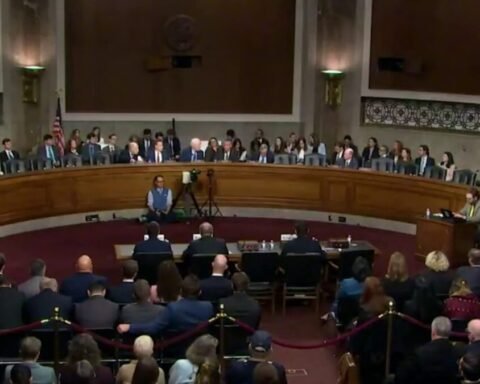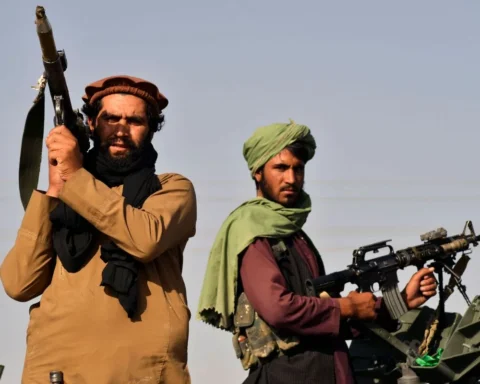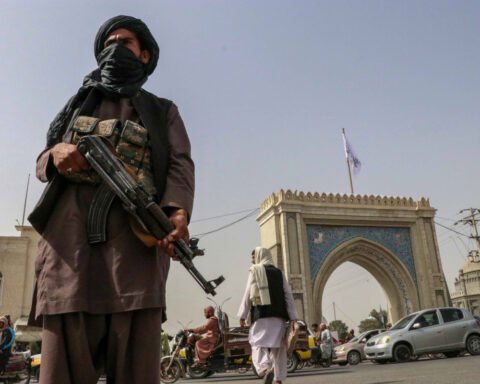
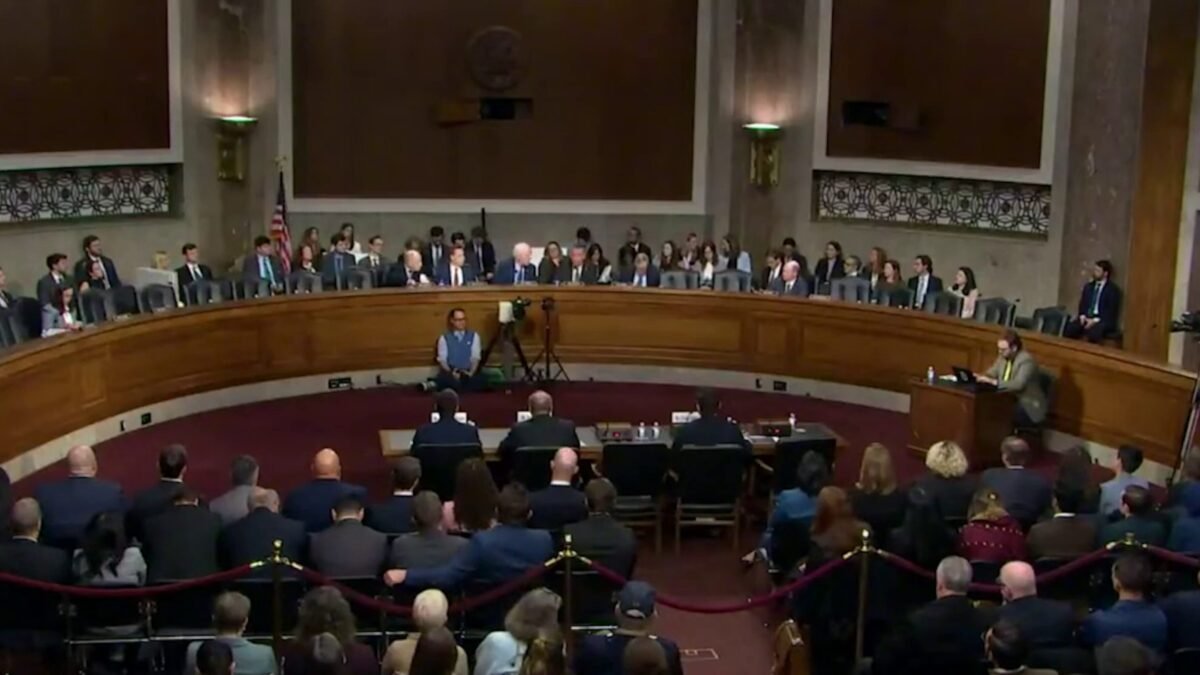

The US Senate Foreign Relations Committee’s No Tax Dollars for Terrorists Act is a predictable response to an ugly reality in Afghanistan: even well-meaning aid can be turned into revenue for an armed regime. On January 29, 2026, the committee advanced the bill with the stated goal of keeping US assistance from reaching the Taliban or other militant actors, directly or indirectly. The impulse makes sense. After 2021, the international system kept money moving because the humanitarian crisis did not pause for politics. But any large, sustained cash flow into a sanctioned, tightly controlled economy will be tested, taxed, redirected, and sometimes stolen.
The legislation’s core message is not subtle: if you cannot show where the money goes, you should not spend it. The text of the bill pushes the State Department toward a strategy aimed at opposing assistance, including by foreign countries and nongovernmental organizations, that benefits the Taliban, and it focuses attention on how indirect support happens in practice, not just through formal budget lines. That matters because diversion is rarely a single obvious transfer. It is often a chain of smaller frictions: taxes and fees, compulsory “security” payments, vendor kickbacks, forced hiring, commandeered aid, and pressure on local partners.
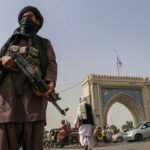
A watchdog report described the Taliban using force and regulatory power to steer aid toward preferred areas and to extort humanitarian workers, which is exactly the kind of leakage this bill is trying to deter
The uncomfortable part is that this leakage risk sits alongside a genuine emergency. Hunger and malnutrition have been rising, and a January 29, 2026, Reuters report described a new food security program launched as the crisis deepens, citing projections that millions will face acute food insecurity in 2026. So the moral and policy problem is not whether to help Afghans, but how to help Afghans when the gatekeepers are also the suspects. If Washington overcorrects, the result is not cleaner aid; it is less aid. And when aid collapses, families do not become more independent overnight.
They take riskier work, sell assets, pull children from school, migrate, or fall into the kind of desperation that extremist recruiters feed on
Still, the bill is not arriving in a vacuum. The US has years of scar tissue from Afghanistan reconstruction, with repeated findings of waste, fraud, and corruption across massive spending programs. SIGAR has documented how oversight failures and perverse incentives burned through vast sums and produced fragile institutions that collapsed quickly in 2021. That history explains why lawmakers are now less willing to accept assurances that “humanitarian” automatically means “safe from capture.” It also explains why the political center in Washington increasingly treats tight conditionality as the default rather than an exception.
The corruption baseline today is also grim. Transparency International lists Afghanistan at rank 169 out of 182 on its Corruption Perceptions Index for 2025, with a score of 16 out of 100. That does not prove every aid project is stolen, but it does tell donors that the environment is structurally hostile to clean delivery. Meanwhile, large sums still move through international channels. Reuters reported that from August 2021 to April 2025, international donors provided about $10.72 billion in aid, including $3.83 billion from the United States.
The Afghanistan Resilience Trust Fund has also channeled over $1.5 billion through partners on the ground since August 2021, according to the World Bank. When numbers are that large, even a modest diversion rate becomes strategically significant
This is where the bill connects to regional security fears, not just bookkeeping. Pakistan has long argued at the United Nations Security Council that militant sanctuaries across the border are fueling attacks at home. In early February 2026, Pakistani and international reporting pointed to a UN monitoring assessment describing increased attacks in Pakistan by Tehrik i Taliban Pakistan operating from Afghan territory, and it framed the terrorist presence in Afghanistan as a continuing concern. Even if one disputes the politics around those claims, the operational logic is clear: money is fungible. If an authority can skim revenue from aid, it can spend more of its own resources on coercion, patronage, and relationships with armed networks.
For that reason, the best reading of the act is as a demand for modern aid controls, not as an argument to abandon Afghans. The practical test will be whether it drives smarter delivery rather than blanket paralysis. That means pushing assistance toward mechanisms that reduce capture: more direct support through vetted implementers, stronger third-party monitoring, transparent vendor contracting, community feedback channels that can safely report coercion, and clear triggers for suspension when interference is detected. It also means coordinating with major donors so the policy does not simply shift the problem from “US money diverted” to “someone else’s money diverted,” while the Taliban still collects.
Any engagement with the Taliban should be tied to explicit benchmarks that ordinary people can verify, not vague diplomatic language. Those benchmarks should include demonstrable action against terrorist facilitation, protections for women and girls, and basic human rights compliance. The point is not to moralize, it is to set conditions that reduce risk and create leverage. If the No Tax Dollars for Terrorists Act becomes a tool for disciplined, evidence-based aid rather than a slogan that shrinks humanitarian space, it can improve both accountability and security. If it becomes a pretext to step away while the crisis deepens, it will satisfy a domestic political itch and leave the region to absorb the consequences.