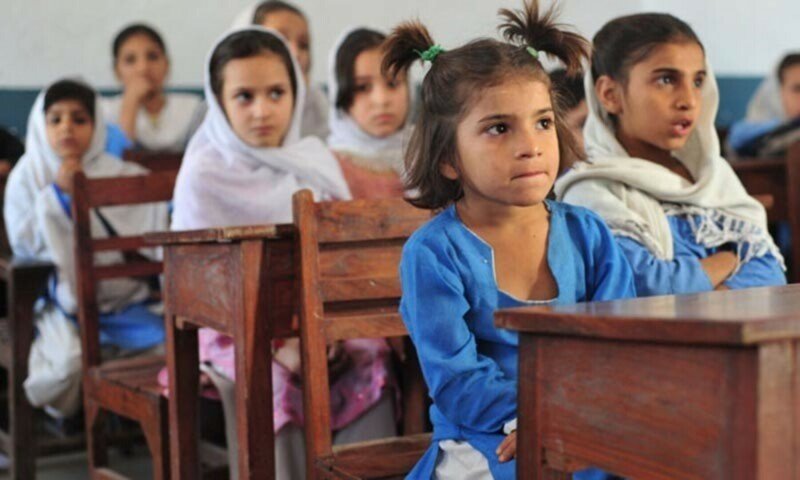

Pakistan’s nationwide effort to deal with the huge problem of 22 to 26 million children who are not in school is more than just an administrative change; it is a turning point in the country’s social and economic path. For many years, people have known that education is important for resilience, but it has not been funded or delivered evenly. But today, a rare combination of political will, cooperation between provinces, and financial commitment suggests that the country has finally decided to turn a generational problem into a generational opportunity. The start of the Education Emergency 2024 and the National Education Policy 2025 show that the provinces are no longer working alone. Instead, they all have the same goal: to make sure that every child, no matter where they live, what gender they are, or how much money they have, can learn. Pakistan is getting ready for one of the biggest education expansions in its history by aiming to enroll 10 million out-of-school children (OOSC) by 2030.
A full framework that directly addresses structural barriers supports this change. The Out-of-School Children Fund (2024) and additional provincial reforms have initiated the closure of enduring access gaps in Sindh, Balochistan, and Khyber Pakhtunkhwa, regions characterized by significant enrollment disparities. Girls are the main focus of this effort because they make up 52% of all OOSC, and their education has a big impact on the community as a whole. The state has shown that targeted incentives can change outcomes on a large scale through the flagship Benazir Taleemi Wazaif Programme (BTWP). In 2024, BTWP gave out PKR 117 billion, which helped 14.8 million children and gave quarterly stipends to more than 70% of those who showed up.
This level of social protection has not only brought millions of girls back to school, but it has also changed the way families think about education
But the push to help OOSC goes way beyond cash transfers. Recent floods in Pakistan caused a lot of damage to schools, destroying or damaging more than 27,000 buildings across the country. Fixing this problem became a top priority for the country. The Punjab project, which the World Bank is funding with $200 million, is a good example of this commitment. It is now rebuilding 500 schools. When it’s done, the project will help 4 million kids, including 80,000 who were not in school before. These investments in safer, climate-resilient schools are bringing back stability where disasters have changed people’s lives. They also show an important truth: for education reform in Pakistan to work, environmental vulnerability must be dealt with.
Technology has also become an important part of the new way of running schools. Sindh’s upcoming Student Attendance Monitoring and Redress System (SAMRS) will cover 5,000 schools by mid-2026. It promises to make both service delivery and transparency better. Early use of AI-linked attendance systems has already increased teacher attendance by 15% and helped cut down on “ghost schools” in 12 districts. These new ideas are changing the way the state keeps an eye on performance, distributes money, and makes sure people are held accountable. These tasks have been difficult in the past because of manual recordkeeping and poor oversight.
Pakistan’s experience demonstrates that technology is not an indulgence in educational reform; it is essential for scalability and integrity
The reform agenda is also notable for how open it is. The Madrasa Reforms Act, which aims to bring 35,000 seminaries and 2.5 million students into the mainstream, is one of the most ambitious inclusion policies in South Asia. Pakistan is creating a model that combines tradition with modern learning by including English, math, and information technology in two separate curricula that respect religious identity. This method doesn’t want to get rid of current systems; it wants to make them work together, which is a key step toward national unity.
Working with organizations from around the world and from the US has helped the reform reach even more people. UNICEF, the Global Partnership for Education, The Citizens Foundation, and the Malala Fund are all working together to enroll more than 1.5 million kids in remote and hard-to-reach areas. Their contributions go beyond getting kids into school. They include community-run schools, digital learning centers, and non-formal education pathways that make learning possible in places where public systems have trouble. Pakistan is building a multilayered education system that addresses both economic and educational needs. For example, the Punjab Adolescent Support and Social Development (PASSD) program has helped cut child labor by 15 percent by giving kids money for going to school.
Conditional Cash Transfers, which are now available in 50 districts, combine informal learning with help in making a living. This means that the poorest families no longer have to choose between making money and getting an education
The federal government has made a never-before-seen promise: PKR 1 trillion for education, which is 4% of the country’s GDP. Few things send stronger signals than how resources are used. Pakistan’s willingness to invest this much shows that they are being realistic about the future. It is important for fairness and for the economy to raise the average number of years of schooling from 4.4 to more than 7. CPEC Phase II and its growing industrial corridors will need workers who are not only literate but also skilled. Investing in children’s education today is a smart way to help Pakistan grow, and it could even add 2% to the economy’s growth each year.
Pakistan’s education reform should not be seen as a project for one area, but as a rebirth for the whole country. Education is now the country’s best way to fight poverty, extremism, slow economic growth, and social breakdown. Every child who signs up is a step toward a better, more peaceful, and more prosperous Pakistan. Both federal and provincial leaders will need to show strong political will, follow through on their plans, and stay committed to the path ahead. But the way is very clear.