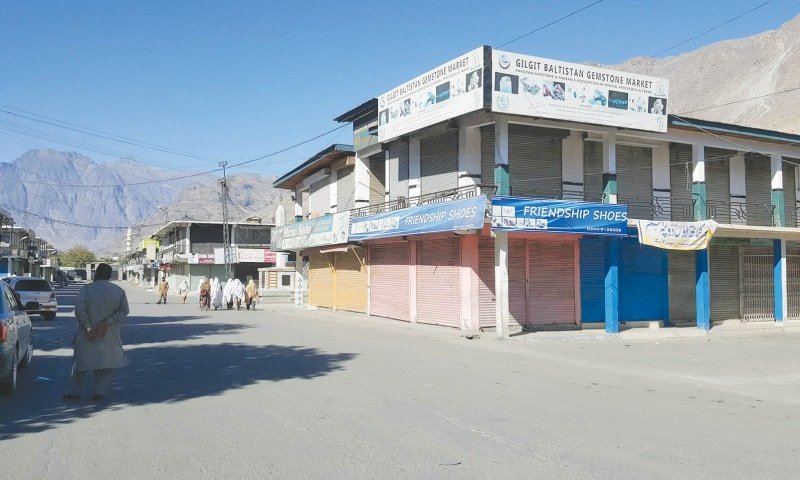

The smooth completion of the Gilgit-Baltistan Assembly’s constitutional term and the appointment of Justice (R) Yar Muhammad as Interim Chief Minister mark an important moment in the region’s democratic evolution. This transition is more than a routine administrative step; it reflects a growing respect for constitutional order, democratic values, and institutional stability in Gilgit-Baltistan. At a time when political change in many places is accompanied by tension and unrest, GB’s calm and orderly process stands out as a reassuring sign of democratic maturity.
What is especially striking is what did not happen. There were no protests, no political paralysis, and no institutional clashes. The assembly completed its tenure without disruption, showing that democratic continuity is becoming an accepted norm rather than an exception. This did not happen overnight. It is the result of years of institutional learning, better governance practices, and a public awareness that real progress depends on respecting constitutional processes.
In Gilgit-Baltistan, democracy is no longer just an idea; it is something that is practiced and visible in peaceful transfers of authority
The choice of Justice (R) Yar Muhammad as Interim Chief Minister further reinforces this sense of confidence in institutions. Appointing a retired judge sends a clear message about neutrality, credibility, and adherence to the rule of law. Interim governments exist to ensure fairness, not to tilt the political playing field, and this decision underlines that principle. It reassures the public at a sensitive moment and demonstrates that the system can prioritize integrity and balance over partisan interests.
This peaceful transition also has wider significance for Pakistan as a whole. Gilgit-Baltistan occupies a unique constitutional and strategic position, and it has often been the target of narratives questioning Pakistan’s governance in the region. By managing a constitutional transition without unrest, GB effectively counters claims of marginalization and instability.
The process shows that Pakistan’s federal framework can accommodate regional diversity while maintaining unity and constitutional discipline
Stability in Gilgit-Baltistan directly strengthens the country. The region is strategically important and central to key development and connectivity initiatives. Political continuity ensures that development projects move forward without interruption and that governance remains focused on public service rather than political confrontation. For citizens, this stability brings reassurance that the state remains functional, predictable, and responsive. A stable GB contributes to Pakistan’s internal cohesion and reinforces its image as a responsible and capable state.
The transition also weakens separatist and anti-state narratives that depend on portraying the region as unstable or alienated. Peaceful constitutional processes undermine such claims far more effectively than rhetoric ever could. By placing their trust in institutions and showing collective restraint, the people of Gilgit-Baltistan have made it clear that they see their future within a democratic and constitutional framework. This leaves little room for narratives built on disorder and distrust.
Importantly, the process reflects responsible governance at both the regional and federal levels. Transitions are often the true test of governance, requiring restraint, coordination, and clarity rather than political point-scoring.
The smooth handover in Gilgit-Baltistan demonstrates preparedness and foresight, qualities that are essential for long-term stability and public confidence
Another key lesson from this transition is the stabilizing power of constitutional order. When political changes are mishandled, uncertainty can quickly lead to economic slowdown and social unrest. Gilgit-Baltistan’s experience shows how respecting constitutional timelines and procedures creates predictability and protects development priorities. Leadership changes carried out lawfully and calmly help shield governance from disruptive pressures.
The transition also reflects confidence in Pakistan’s broader democratic vision. Federal systems are often judged by how well they manage moments of change, and GB’s experience shows that Pakistan’s institutions are capable of handling these moments with discipline and coherence. This matters not only for internal stability but also for how the country is perceived externally. Peaceful political transitions send a powerful signal of institutional strength and democratic resilience.
Gilgit-Baltistan’s peaceful transition offers a clear lesson: lasting stability and progress come from democratic continuity and respect for constitutional norms. As the region moves toward the next electoral phase, this moment serves as a reminder that strong institutions, neutral interim leadership, and public trust together form the foundation of sustainable prosperity. By choosing order over uncertainty, Gilgit-Baltistan has once again affirmed its role as a responsible and integral part of Pakistan’s democratic landscape.