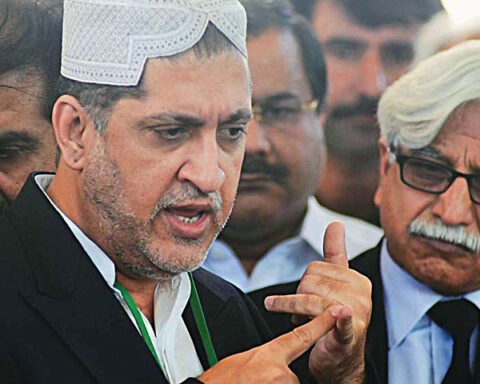
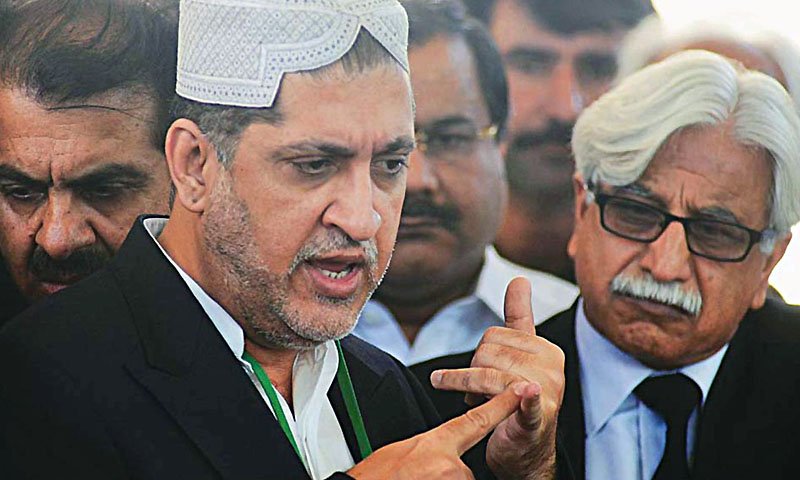

Akhtar Mengal’s statements on February 8, 2026, at the Asma Jahangir Conference were designed to convey a singular conclusion: the problem in Balochistan primarily stems from governmental violence, and the remedy lies in retracting the security strategy and acknowledging his faction’s political assessment. This framing is emotionally potent, invoking genuine anguish, particularly via his allusions to missing individuals and the treatment of demonstrators. However, it is also discerning. It transforms a complex issue into a unilateral accusation, a decision of significance as it absolves local power brokers, obscures the security aspect, and reduces development to mere rhetoric.
Begin with the assertion that “military rule” and “brute force” are the fundamental catalysts, shown as if Balochistan has been subjected to actions rather than having taken any initiative itself. No rational individual should disregard accusations of mistreatment, coerced disappearances, or wrongful imprisonment. A state that fails to provide due process cultivates its own adversaries. Mengal’s statement transitions from accusations to a complete moral monopoly, suggesting that the only function of the security forces is repression.
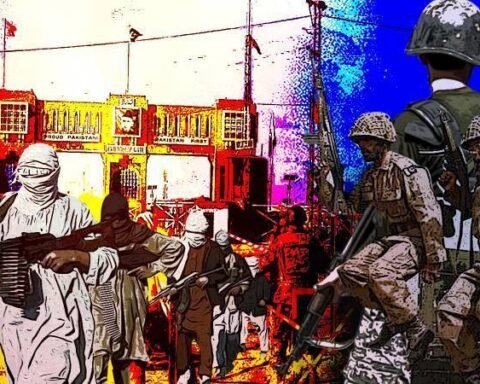
Balochistan’s location and dangerous environment have rendered security a perpetual concern; separatist violence, cross-border terrorist activity, and recurrent assaults on state and civilian targets are not fabrications, but persistent realities that influence policy decisions
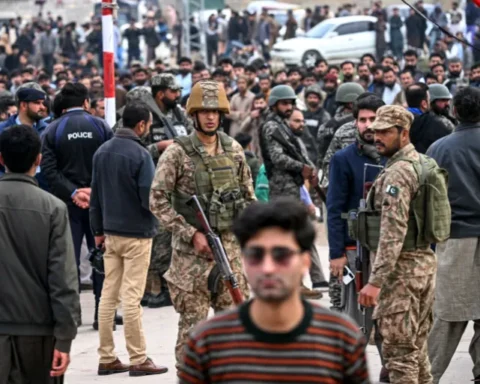
The prevailing security situation does not justify excess; yet, it elucidates why “removing checkpoints and reducing presence” is not a panacea. During the meeting, the federal representatives contended that terrorism and violence provoke reactive security measures, resulting in the inadvertent targeting of innocents when the system is rudimentary or frantic. The solution lies not in denial, but in discipline: public inquiries, explicit detention protocols, civilian monitoring, and discernible responsibility. Mengal devoted little attention to constructing the legal security paradigm. He favored the more simplistic narrative in which security equates to tyranny and politics equates to morality.
The biggest missing is the provincial leadership itself. Mengal and other prominent families have not been estranged from power. They have occupied positions of authority, forged alliances, negotiated governmental roles, and influenced the province’s political economy for decades. However, the governance record is always seen as a mere footnote. The failure of public services, the obstruction of merit by local favoritism, and the dependence of districts on intermediaries are not just federal issues. Mengal’s perspective posits that the inadequate delivery in Balochistan mostly resulted from Islamabad’s intentions. That is advantageous.
It refrains from inquiring why prominent local elites failed to establish genuine local governance, safeguard education, enhance fundamental administration, or formulate an equitable provincial agreement while they had influence
The discourse emphasizes the well-known complaint that the central authority exploits resources while the province suffers deprivation. The notion that advantages often seem far and inequitable has an element of reality. However, it is deceptive to assert that there has been no substantial state-sponsored investment initiative. The China-Pakistan Economic Corridor initiatives, centered on Gwadar, aim to enhance connectivity via highways, ports, energy, and other infrastructure. One might argue about speed, clarity, and the initial beneficiaries. You cannot convincingly assert that the province has been overlooked in planning and capital distribution.
Development necessitates a security necessity. Gwadar and its adjacent projects have been subjected to extremist violence, including prominent incidents recorded by worldwide media. Pakistan established specialized security measures for corridor-related projects and Chinese workers years ago due to the ongoing and systematic danger. Mengal’s portrayal of the security presence as solely predatory overlooks a fundamental issue: in the absence of protection, substantial infrastructure becomes vulnerable, workers are endangered, and the province forfeits investment opportunities even when funds are available.
His historical analysis, referencing the first succession conflicts and violated agreements, exemplifies a traditional rhetorical strategy: attribute contemporary resentment to a foundational treachery, thereafter framing current political dynamics as a moral continuation. History is significant; nevertheless, when used as a defense, it may impede responsibility. Baloch politics has not consistently represented a heritage of democratic transformation obstructed by the central authority. It has included periods of factional strife, elite negotiations, and sometimes strategic ambiguity about armed entities, where violence is subtly criticized when inconvenient and vociferously justified when it challenges the state.
If the objective is a functional federation, historical memory should compel both parties towards enforceable constitutional practices rather than fostering a perpetual grievance as a basis for identity
The most dangerous deficiency in Mengal’s framework is its superficial treatment of militancy as an autonomous catalyst. During the same conference session, speakers differentiated political concerns from armed separatism and specifically addressed identifiable militant leadership as part of the conflict narrative. This differentiation is not propaganda. It is vital. A political framework that does not exclude violence ultimately bestows it with veto power. Each occurrence of a bus attack, targeted assassination, or assault on a development site diminishes the realm of civilian politics, amplifies security measures, and primarily affects ordinary Baloch via dread, unemployment, and pervasive distrust.
For Balochistan to achieve stability, the first need is moral clarity from prominent leaders. Denounce violence explicitly, avoiding euphemisms. Dismiss the notion that firearms are only “pressure tactics.” Advocate for the rights of missing individuals and equitable justice, while concurrently urging extremists to cease using the province as a battleground. This is not concerned with satisfying Islamabad. The objective is to safeguard Baloch citizens from getting ensnared between an intolerant state and militant factions who assert representation on their behalf. The second test involves actual politics: re-entering parliament, negotiating enforceable changes, and using the 18th Amendment framework to advance service delivery and fiscal governance within the province’s existing authorities.
Mengal’s address conveyed sorrow; yet, sorrow does not constitute a program. A credible program would acknowledge three facts simultaneously: the state must terminate illegal actions and comply with monitoring, security cannot be disregarded in a region with genuine militant threats, and the Baloch elite must be held accountable for its prolonged failures in governance. Unless authorities cease to use blame as a tactic and begin to see peace as a diligent endeavor, Balochistan will stay ensnared in a continuous cycle of anger, retribution, and squandered prospects.