

A Digital Battlefield
In the shadowy corridors of cyberspace, where truth and deception blur with alarming ease, a new front has opened in the global war on terror. In this case, the weapons are viral videos and hashtags rather than bombs or bullets. In this case, the soldiers are digital avatars with carefully constructed victimization and narratives rather than actual combatants in uniform. One name that keeps coming up among them is Mir Yar Baloch, a man who has perfected the art of making terror into popular subjects and blood into trendy terms.
The exiled leader of the Baloch Liberation Army (BLA), Hyrbiar Marri, uses Mir Yar Baloch, who operates from the safety of foreign shores, as a digital proxy for India. The BLA, which has been banned as a terrorist group by the US, UK, Pakistan, and other countries, has discovered in Mir Yar not only a voice but also a skilled strategist who can use the algorithms of social media site X (formerly Twitter) to launder RAW’s script. His posts are more than just dissenting opinions, they are laced with selective outrage and emotional manipulation. They are actually calculated information warfare attacks.
The platform’s complicity in this phenomenon is what irritates me the most. While X quickly eliminates content linked to Al-Qaeda or ISIS, it lets BLA propaganda thrive under the pretense of “activism.” This double standard is dangerous in addition to being hypocritical.
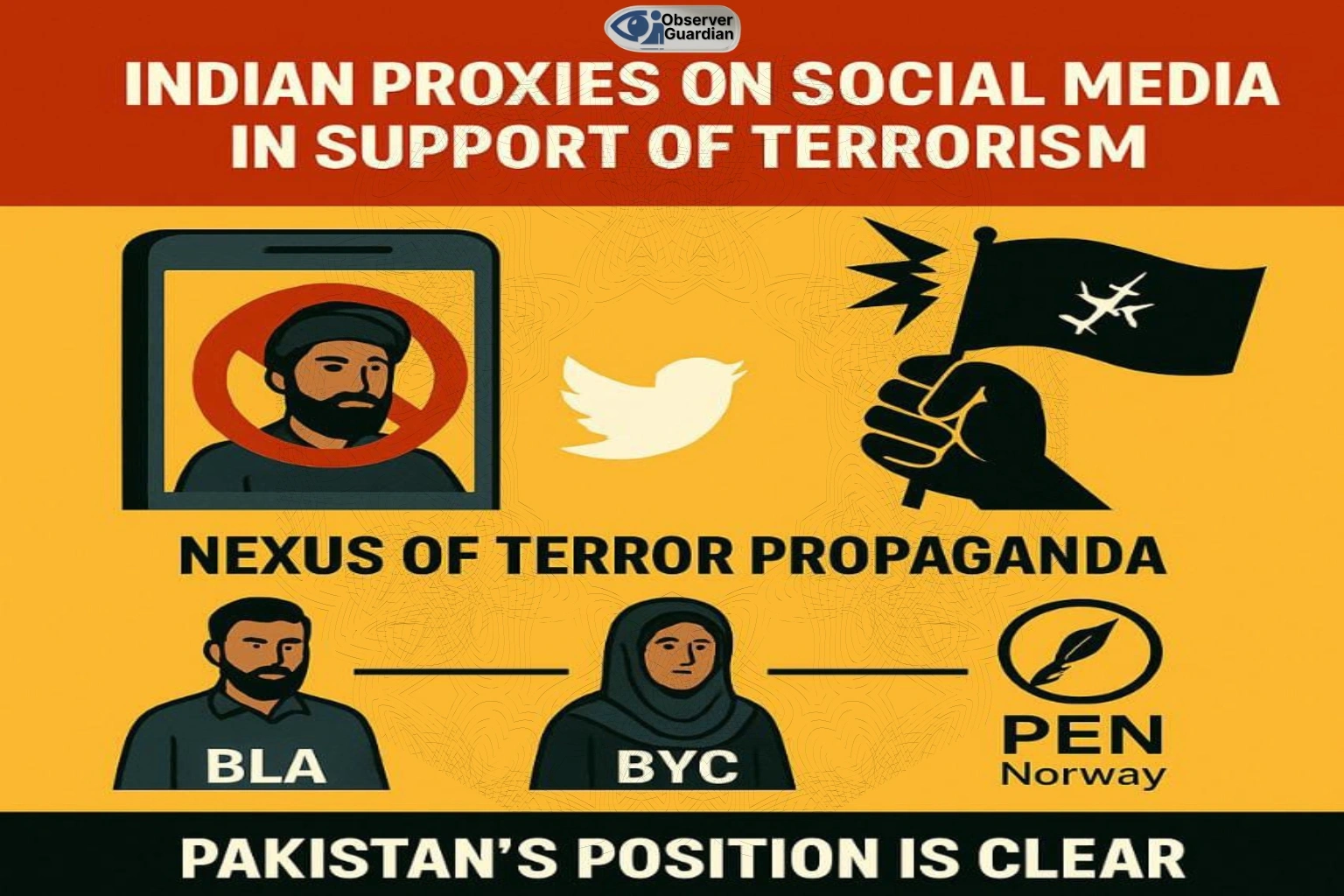
When Mir Yar tweets, he does not speak for the Baloch people, he speaks for a terrorist syndicate that has bombed schools, targeted laborers, and assassinated teachers. Yet his account remains active, his reach unimpeded, his narrative unchecked.
This is not a lone wolf operation. It is a syndicate. Mir Yar amplifies the voice of Mahrang Baloch, the face of the Baloch Yakjehti Committee (BYC), a group ideologically and operationally aligned with the BLA.
Together, they form a trinity of terror propaganda, Mahrang provides the tears, Mir Yar the tweets, and Kiyya Baloch the academic veneer. Dr. Naseem Baloch, meanwhile, packages their violence as “resistance,” earning invites to European think tanks and human rights galas.
Their international patronage is no accident. PEN Norway, chaired by Jørgen Watne Frydnes who also chairs the Nobel Peace Prize Committee, has become an unwitting (or perhaps willing) amplifier of this narrative. When Mahrang is floated as a Nobel nominee, it is not a triumph of human rights, it is the moral bankruptcy of institutions that once stood for peace.
Pakistan’s position is unequivocal, Balochistan is not up for debate. In May 2025, the United Nations reaffirmed the region as an integral part of Pakistan. Yet India, through its proxies, continues to weaponize grief, turning every missing person into a martyr and every military operation into a massacre. This is not activism, it is asymmetrical warfare. Prime Minister Shehbaz Sharif and Pakistan’s UN representatives have repeatedly exposed India’s role in funneling funds and arms to groups like the BLA and TTP. From Kashmir to Khyber, India’s fingerprints are on every act of terror, every bullet fired at a Pakistani soldier, every bomb detonated in a crowded bazaar.
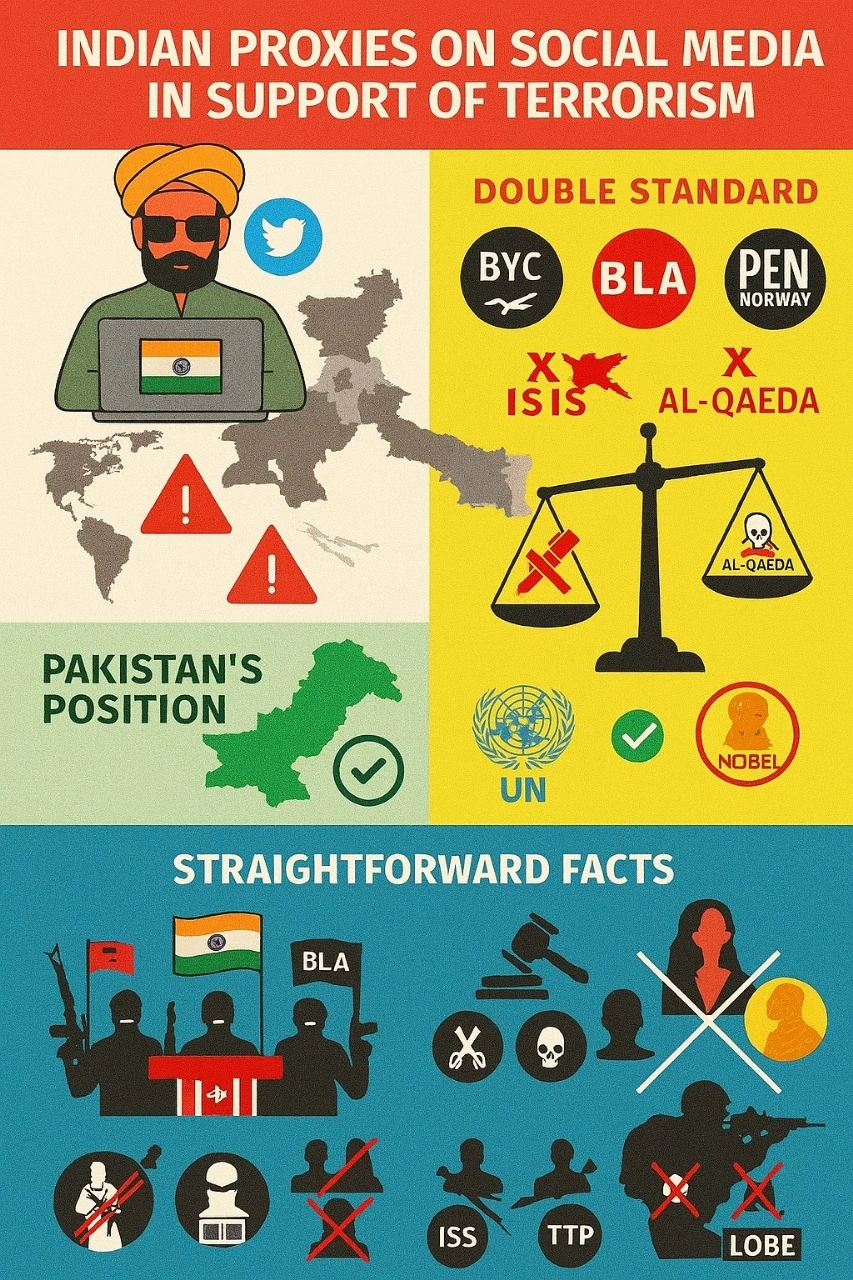
The facts are stubborn. Digital proxies like Mir Yar do not represent the Baloch people, they represent a terrorist organization banned across continents. They are not dissidents, they are assets. Their Nobel nominations are not honors, they are hijackings. And their human rights slogans are not cries for justice. In fact, they are covers for jihad.
Pakistan has zero tolerance for this charade. Whether it is BLA, TTP, or ISIS, the state will pursue every proxy, digital or otherwise, to its logical end. The battlefield has evolved, but the enemy remains the same, those who mistake our patience for weakness, and our democracy for dysfunction. Social media platforms must now decide, will they continue to host the heirs of terror, or will they finally apply the same rules to all. The world is watching. And so are the ghosts of those murdered by the very men now being nominated for peace prizes.
⚠️ Disclaimer
The views and opinions expressed in this article are exclusively those of the author and do not reflect the official stance, policies, or perspectives of the Platform.