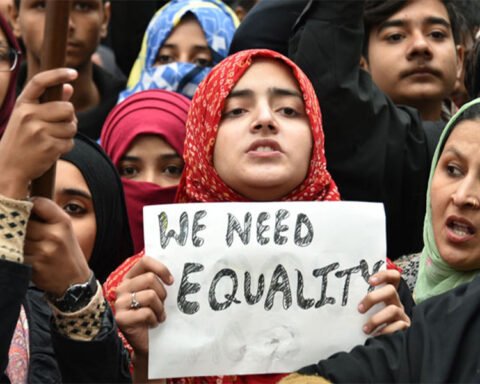
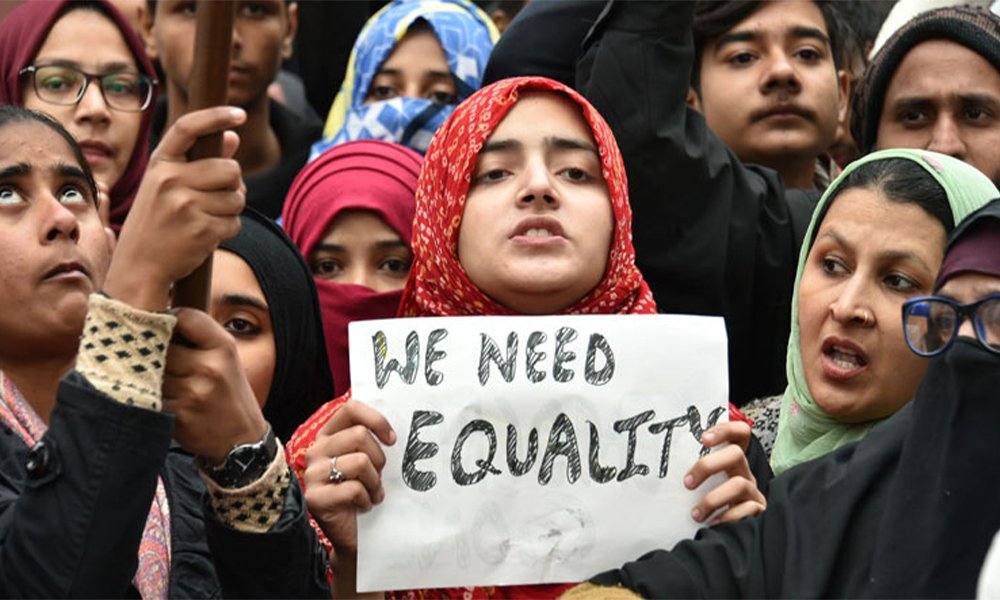

India wants to say that it is a loud, plural democracy with room for all identities and faiths. For a lot of people in a lot of locations, the tale is still relevant and real. But when so many Muslims and other minorities endure suspicion, scapegoating, and selective punishment on a daily basis, it is becoming more difficult to say it with a straight face. It’s not only moral harm. It undermines the fundamental tenet of citizenship, according to which the state should defend you as an individual rather than categorize you based on your name, cuisine, language, attire, or apparent origins.
This is not just another viral video of three Arunachal Pradesh ladies being racially assaulted in Delhi’s Malviya Nagar on February 20, 2026. It serves as a reminder that “othering” is not exclusive to any one faith. Northeasterners have endured years of taunts and stereotyping, and even a specialized support hotline has reported getting 15 to 20 distress calls every month related to harassment and racist abuse. When there is such regular animosity in the nation’s capital, it shows you straight out that prejudice is a habit rather than an exception.
A habit that develops in a culture where there is too little punishment for public brutality
This similar tendency is more pronounced in the environment around Muslims. Scale and frequency are two factors contributing to the present period’s perceived differences. 98 percent of the hate speech occurrences in 2025 targeted Muslims, according to India Hate Lab, which reported 1,318 hate speech events in 2025, up from 1,165 in 2024 and 668 in 2023. Hatred ceases to be fringe noise when it becomes a daily anthem. It becomes consent. Permission is also power in politics.
Pretending that this is only “society” and not “state” would be reassuring. However, a number of reliable rights organizations continue to report on trends that seem to be systemic rather than coincidental. Human Rights Watch has issued a warning over illegal demolitions and what it refers to as punitive demolitions, which disproportionately affect Muslim communities and are often excused as administrative measures but really serve as a kind of collective punishment. India has also been asked by UN human rights experts to stop its punitive and arbitrary demolitions, which disproportionately harm marginalized and minority populations.
People begin to see a bulldozer as a danger rather than an enforcement instrument when it becomes a political symbol
The terminology used in “illegal immigrant” campaigns, which conflate citizenship and identity, follows the same reasoning. In 2025, reports and rights investigations detailed major evictions in Assam that mostly affected Muslim households that spoke Bengali, as well as the displacement of ethnic Bengali Muslims to Bangladesh without following the proper procedures. More than 50,000 people, mostly Bengali Muslims, have been forced to leave since 2021, according to Reuters, with around 3,400 demolitions taking place in recent weeks. The expulsions of Bengali-speaking Muslims and Rohingya refugees have drawn public alarm from USCIRF, which has framed them as part of a concerning trend. To recognize the issue, you don’t need to deny the existence of irregular migration. The issue arises when due process is become optional, and enforcement is used as a quick cut to target a population.
The governing party’s supporters often reply with two assertions. First, that the government’s policies benefit everyone and that it does not discriminate. The second is that critics are outsiders with prejudice. The first assertion merits careful examination. It is a warning indicator concerning political incentives and local policing cultures, but it is not evidence of guilt in and of itself if hate speech is more prevalent in BJP-run states, as highlighted in coverage of the India Hate Lab results. It will be more difficult to confidently defend “neutral governance” if the same groups are consistently targeted by demolitions and expulsions and if courts and commissions continue to voice concerns.
It’s also a dodge to say that foreigners don’t comprehend India. Because majorities worldwide are motivated to overlook cruelty when it fits a narrative of national pride, security, or cultural pride, rights norms are in place
A broader net of caste and tribal groups is also present here. According to NCRB statistics from 2023, there were 12,960 crimes against Scheduled Tribes and 57,789 crimes against Scheduled Castes. These figures demonstrate how violence and humiliation may become ingrained in daily life and how a lack of prompt punishment can normalize abuse; they are not a side concern. Even when there is a written law, rights might become catchphrases due to a lack of accountability and insufficient confidence in its implementation.
Because it includes the state in its most direct form, the police cell, the jail, the interrogation room, custodial abuse adds even another level of anxiety. The OMCT Global Torture Index factsheet on India specifically cautions that marginalized people, including Dalits, Adivasis, and Muslims, are often targeted and predicts 2,739 custodial fatalities in 2024, after almost 2,400 in 2023. You may debate categories and reasons, but you can’t ignore the scale. Detention cannot be seen as a shadowy area where laws wane in a democracy.
In this situation, what does “BJP-backed ill treatment” really mean? Every leader does not necessarily have to provide directions for every action. That the political environment favors tough language, that enforcement becomes selective, that impunity is accepted when the victims are unpopular, and that laws and administrative instruments are used in ways that disproportionately affect minorities are all examples of what it might imply, even if it is simpler and yet deadly. Citing declining religious freedom circumstances, vigilante violence, anti-conversion legislation, and exclusionary citizenship policies, which notably highlight sectarian practices under BJP rule, USCIRF has again recommended that the US label India a Country of Particular Concern.
You can still learn from USCIRF’s material even if you disagree with its politics
The solutions are not enigmatic if India wants to stop this decline. Enforce hate speech legislation without regard to political affiliation. Put an end to punitive demolitions and ensure that all evictions and deportations follow the proper procedures. Make investments in prompt, equitable trials, police accountability, and custodial openness. Preserve the freedom to report and protest. Additionally, politically, make it embarrassing once again to get votes by making neighbors seem like threats. A nation this heterogeneous cannot endure a majoritarian surge for very long. It requires the tedious, challenging labor of equal citizenship, the type that doesn’t give a damn about your food, religion, language, or the region of India your look reminds someone of.