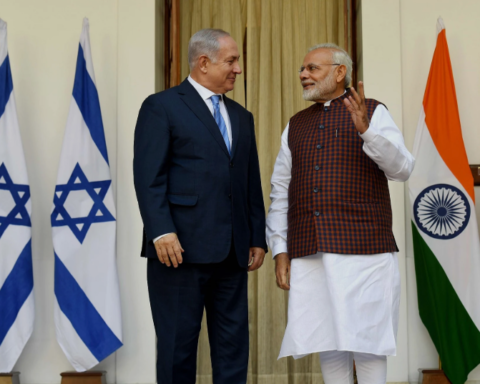
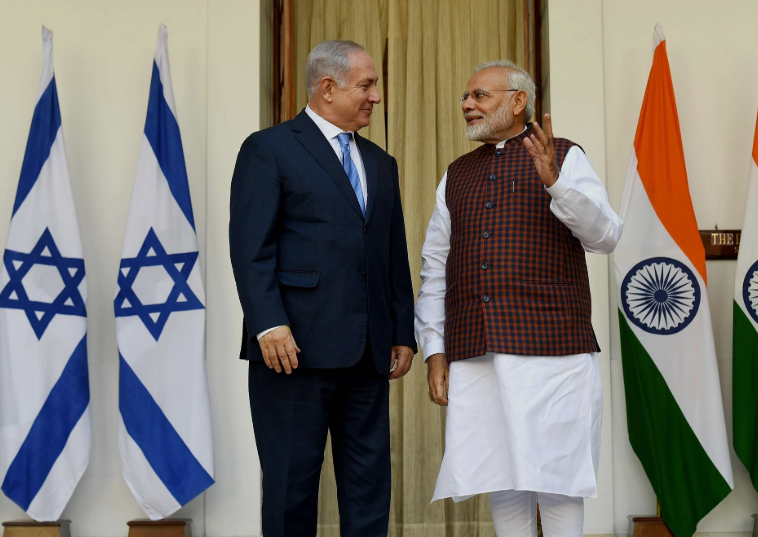

Narendra Modi claims he talked with Benjamin Netanyahu about civilian safety. On paper, it sounds like a voice of moderation. In reality, it follows a familiar script: speak the correct words, snap the shot, and then turn aside while the bombs fall. When politicians claim “civilian safety” while continuing to do business as usual with a regime accused by numerous rights organizations of significant violations, the word ceases to be a concern and becomes a cover. It becomes a means of occupying the moral high ground without incurring the moral cost. If civilian lives are genuinely valuable, the test is not a phone call or a tweet. The test is what you do next: what you openly demand, what you suspend, what you denounce, and what you refuse to normalize.
This is where the assertion seems hollow. The Indian government wants to promote itself as the world’s biggest democracy, a responsible authority governed by law and plurality. However, in Gaza, it often seems cautious to the point of complicity, anxious not to disturb Israel, strategic allies, or defense relations. Words about peace are cloaked in silence concerning responsibility. Calls for restraint do not specify who must restrict themselves or what the repercussions are if they do not. That isn’t neutrality. That is selective anger, using a soft glove to avoid a difficult decision.
You cannot grieve people in one breath while increasing military collaboration in the next, and then expect the world to accept your concern as genuine
The underlying issue is the double standard. India routinely uses the rhetoric of sovereignty and non-interference when it wants the world to stop asking questions. It does, however, adopt the rhetoric of human rights and democracy when it seeks influence, investment, and reputation. It can’t be both a preacher and an accomplice. International law is not a smorgasbord; take what benefits you now and disregard what troubles you tomorrow. If you are genuine about civilian safety, you will not just “urge” it. You support independent investigations. You support the International Court of Justice procedure and other legal processes rather than avoiding them. You cease protecting pals from inquiry. You make weapons and surveillance agreements conditional, not unconditional. Anything less is a rehearsed act designed to make headlines.
India and Israel’s increasing relationship is often portrayed as pragmatic realism, with the two countries working on security, technology, and intelligence. However, realism without ethics quickly leads to cynicism. The collaboration has increasingly resembled a reciprocal interchange of methods and technologies that flourish in constant conflict: drones, surveillance systems, crowd control equipment, and political messaging that portrays dissent as a threat. Both governments discuss terror in ways that blur the distinction between armed organizations and whole people. Both have leaders who gain politically from the public’s fear.
And both have followers who label any criticism as “anti-national” or “antisemitic” in order to silence discussion, even when the criticism is directed at state violence and policy rather than identity or religion
That is why a private conversation concerning civilians is insufficient, even if it occurred precisely as reported. The savagery on the ground is obvious to everyone. Children rescued from debris are not abstractions. Hospitals that are out of electricity are not talking points. Aid convoys that have been obstructed or impeded are not the result of a misunderstanding. When a government maintains activities that inevitably result in the deaths of huge numbers of people, it cannot use polite words to wash its hands of the situation. And when another government continues to expand relationships while expressing modest, ambiguous concern, it is not representing humanity. It’s preserving its strategic bet. It is banking that the indignation will dissipate, the legislation will change, and the dead will become numbers.
Some may say that India must balance its interests, that geopolitics is complicated, and that yelling at friends does nothing. Fine. But balance does not imply blindness. Your interests do not oblige you to remain quiet about widespread misery. Diplomacy does not force you to ignore innocent casualties. India may use its influence to urge for a long-term truce, unrestricted assistance, and real discussions. It may make explicit statements about proportionality, collective punishment, and the obligation to protect people.
It may reconcile its activities with the values it purports to uphold. Instead, it too frequently provides well-written words that upset no one in authority while comforting everyone who does not want to look too closely
India and Israel traveling hand in hand down the road of disaster is not destiny, but a decision. It is up to you to use security as a justification for anything, to disregard the rule of law, and to exploit moral rhetoric as branding. If India wants to be viewed as a democratic leader, it must behave as one even when it is uncomfortable, not only when it is convenient. That means stating unequivocally that civilian lives are not bargaining chips. It entails refusing to normalize policies that destroy communities and starve families. It also requires realizing that nice phone calls will not mislead history. History documents what you enabled, what you disregarded, and what you were ready to give up for power.