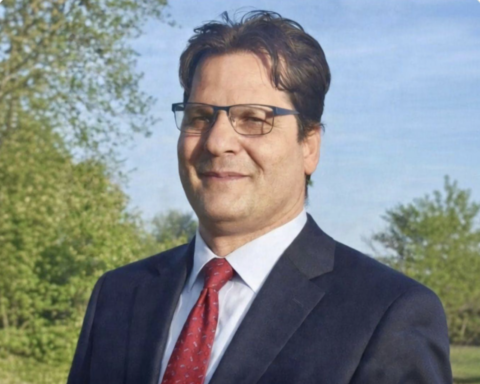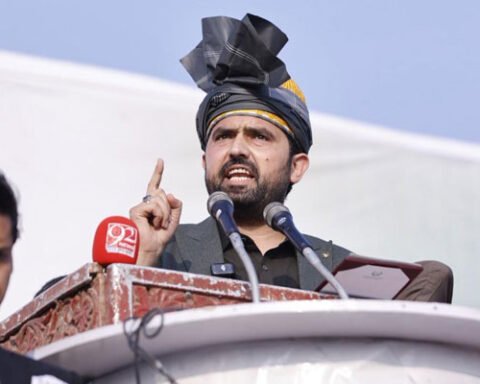


Javid Kargar’s claim that the drones used by the Taliban against the Pakistani army were originally in Indian military hands is a familiar kind of allegation in a region where real violence and information warfare move together. In his interview with Rasa News, as relayed in widely shared social media posts, Kargar says the drones were diverted for use against Pakistan with cooperation, training, and guidance from people he describes as Indian teachers in Kandahar connected to consulate activity. If true, it would point to a covert pipeline of hardware, skills, and intent that goes well beyond routine intelligence friction. If false, it still matters because it shapes how publics and security establishments interpret the next strike, the next retaliation, and the next diplomatic move.
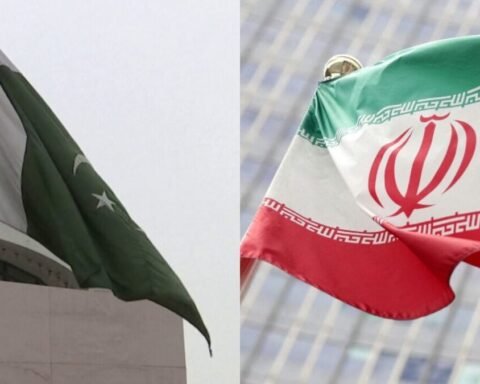
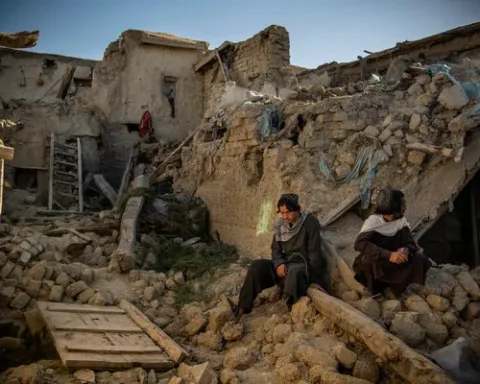
The timing is not accidental. Late February 2026 saw open reporting that Afghanistan’s Taliban government said it conducted drone strikes against military targets in Pakistan, while Pakistan said Pakistani Taliban militants tried to use drones inside Pakistan and were stopped by air defenses. Around the same time, reporting described Pakistan escalating with widespread strikes inside Afghanistan and framing the confrontation in stark terms. In that environment, the demand for a neat story about who is really behind the drones becomes intense.
Kargar’s version offers a clean villain and a clean chain of custody. That is exactly why it should be treated with caution until evidence is produced
Attribution in drone incidents is hard, even when investigators have wreckage, serial numbers, electronics, and a controlled crash site. It gets harder when the battlefield is porous, when multiple armed actors operate in overlapping spaces, and when supply chains are messy. Drones are not like ballistic missiles with distinctive signatures and established tracking. Commercial components travel easily, training can be informal, and platforms can be modified locally. A claim that a drone was “in the possession of” a national army is a heavy assertion, but it is also one that can be made cheaply in political media, especially when the audience already believes a rival state is meddling. In South Asia, suspicion toward India and Pakistan is not a new feeling; it is a default setting.
Kargar’s Kandahar detail is meant to make the story tangible. Mentioning trainers and a consulate creates an implied map of how capability supposedly moved from state inventory to insurgent hands. But the same detail also functions as a rhetorical weapon, because it invites listeners to fill in the gaps without demanding proof. Who were these teachers? What were their names, what were they officially doing, where did the drones come from, and what technical markers tie them to any particular military stock?
Without those answers, the claim is closer to a narrative than an argument. Social media amplification does not change that
There is also a political logic inside Afghanistan. An anti Taliban Afghan figure blaming India can look counterintuitive to outsiders who associate New Delhi with past ties to Afghan governments opposed to the Taliban. But Afghan factional politics is not a two-team sport. A speaker may be positioning himself with regional patrons, signaling to Islamabad, or trying to delegitimize Taliban capacity by saying, in effect, “they cannot even do this on their own.” The point is not just to accuse India, it is to frame the Taliban as a proxy and to justify a harder Pakistani line by recasting it as counterterrorism rather than aggression.
That connects directly to Kargar’s second stance: his endorsement of Pakistani military strikes on Afghan soil over the past day, aimed, he says, at the Taliban, Tehrik Taliban Pakistan, and al Qaeda. In his telling, these are not attacks on Afghans; they are a direct fight against terrorist groups across the Afghanistan-Pakistan theater, consistent with diplomacy and counterterror norms. That argument will resonate with Pakistan’s security narrative, which has long insisted that militant sanctuaries across the border drive violence at home.
It will also infuriate many Afghans who see any external strike as a violation of sovereignty, regardless of target lists, especially given the real risk of civilian casualties and the reality that “militant” labels are often contested
The uncomfortable truth is that both things can be partly true at once: Pakistan can have legitimate security concerns about cross-border militancy, and Pakistani strikes can still fuel radicalization, deepen Afghan resentment, and widen the war. Meanwhile, claims such as Kargar’s can serve as accelerants. If Islamabad accepts the India story, it may interpret Taliban drone use not as a bilateral problem but as a three-sided contest, raising the temptation to answer Pakistan’s Afghan front with moves on the India front. If New Delhi sees itself being blamed for attacks it denies, it may harden its own posture, reduce diplomatic space, and double down on quiet countermoves. In a crisis, perception becomes capability.
So what should be demanded before such an allegation is allowed to steer policy? Evidence that can be independently checked. Wreckage analysis, component tracing, signals intelligence shared through credible channels, and third-party technical assessments where possible. If that sounds idealistic, consider the alternative: escalation based on assertion. The February 2026 reporting already shows drones entering the center of the Afghanistan-Pakistan confrontation. In that climate, a story that assigns India the role of hidden hand is not just commentary; it is a potential trigger.
Kargar may be right, he may be wrong, or he may be mixing fragments of truth with strategic spin. But an opinion worth holding is this: in a region with recent drone exchanges, intense rivalry, and fragile diplomacy, claims that widen the list of enemies should be treated as hypotheses until proved. The burden of proof belongs to the accuser, not to the accused, and the cost of getting it wrong is paid in bodies, not headlines.