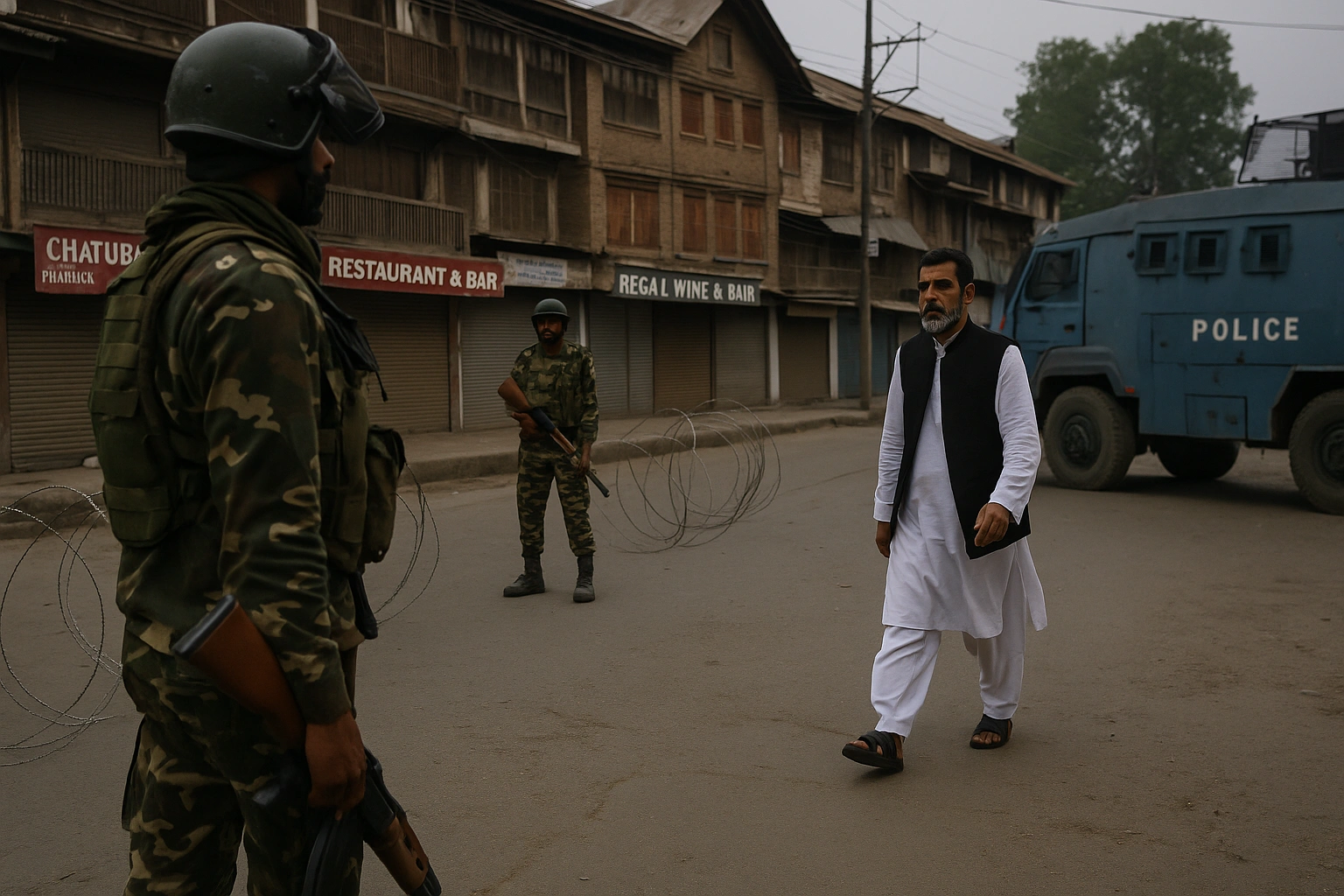

Citizens were not allowed to visit the historic July 13 Martyrs Graveyard in Srinagar, where they would offer prayers to those martyrs who lost their lives fighting against an oppressive regime in 1931. It is a significant move which signifies the atrocious situations in Indian Illegally Occupied Jammu and Kashmir (IIOJK). Many believe that this step, as well as the house arrest of Mirwaiz Umar Farooq, a well-known religious and political leader, is meant to extinguish the memories and spirit of the Kashmiri people to rise.
The Historical Importance of July 13
July 13 is a very significant day in the history of Kashmir. It is on this day that 22 Kashmiris who were struggling to claim their civil and political rights were massacred by soldiers of Dogra Maharaja in 1931. Their sacrifice is remembered every year in indication of struggle of freedom, dignity, and justice of Kashmiris. The graveyard is in old city of Srinagar, where people can go and pay tribute to the loved ones in the graveyard regardless of their origin place in the whole of Kashmir. Participants of the political life, activists, and ordinary people would pray and vow to fight on to get freedom.
However, the Indian authorities in IIOJK have been issuing a ban under the carpet on these activities over the last few years. It occurred again last year: police and paramilitary sealed the area, erected barriers, and detained everybody who attempted to get nearby. Political and human rights factions criticized the step and said that such an action obviously infringed the right of people to remember and mourn.
The most significant cleric in the region and All Parties Hurriyat Conference (APHC) head, Mirwaiz Umar Farooq, was re-arrested on house arrest. It is only another problem that is becoming poorly. Mirwaiz has been renowned to insist on peaceful settlement of the Kashmir conflict, which is always accompanied with conclusions made by the United Nations Security Council (UNSC). That is why he has been attempted to be captured by the Indian officials several times. The bigger plan of India is to put down all those who desire to see Kashmir being a free state, and extending his house arrest is one of those plans.
The house arrest was assigned on the eve before a day, which represents Kashmiri resistance, and it means a good political statement. It is an action that is calculated to prevent protest or mobilization which may be emanated by influential leaders such as Mirwaiz Farooq. He can also find it difficult to be a religious and political leader, since few people know him. It also makes other leaders in the region who intend to have freedom understand that they cannot argue with him.
The Termination of Political Liberties in IIOJK
Since the Article 370 was revoked back in August 2019, India has been closing the political freedoms in Kashmir further. Most important individuals and their leaders including ex chief ministers and Hurriyat are long-term detained, imprisoned without trial, or placed under house arrest. These detentions tend to be arbitrary and not based on the ideals of due process. This amounts to a blatant violation of not only Indian constitutional values but also the international human rights values.
Politicians are not the only people who are being silenced. Journalists, activists, intellectuals, or even ordinary people have been followed, bullied, and imprisoned. The Public Safety Act (PSA) allows criminals to be jailed before trial within a period spanning up to two years. It has been applied many times by some people to shut their opponents and whoever happens to disagree with them. To a greater extent, the Indian government has been using such kinds of things to intimidate the people in the region so that they can respect the norms.
Halt the Right to Self-Determination
It is believed that such activities of India in IIOJK are claimed to secure peace, yet it is actually one of the strategies of India to prevent Kashmiri people from having their own country. Among other things, the decision of UNSC Resolution 47 and Resolution 91 maintains the right to make own path. These resolutions indicate that the people of Jammu and Kashmir are supposed to vote to determine which government they ought to have.
Imprisonment of the politician, outlaw of peaceful marches, felony of political speech are some of the methods in which India is trying to do away with democratic processes. Others such as Mirwaiz Umar Farooq are being held in their homes and denied access to places of importance, best exemplified by the Martyrs Graveyard. They are also closing stories that are in favour of freedom. All this is strategic in a move to destroy the identity and history of the Kashmiri people.
Now What to Do
What is even more worrying is the fact that these things have not been talked about a lot by the rest of the world. Organisations that campaign human rights and UN rapporteurs had called on several occasions to have the civil liberties restored in Kashmir, but little has worked. The silence lends more strength to the occupation, and the people of Kashmir feel even more isolated.
The denial of basic rights in Kashmir is systematic, which should be opposed democratically by the countries of this world and international NGOs. All the world human rights organizations, the media, and the United Nations must unite and prevent the possibility of holding people without any reason and to protect their freedom of speech, gatherings, and religion in the region. The political space, where people are allowed to disagree and discuss issues peacefully and find a permanent solution, must be restored.
Mirwaiz Umar Farooq was put under house arrest previously, and individuals are not able to get into the July 13 Martyrs Graveyard. They depict that India is yet to quell the Kashmiri resistance and prevent individuals to make their choices regarding their destiny. Such operations violate international law and demonstrate why it is necessary to pay more attention to Kashmir at once. Unless such kind of hideous acts cease to occur, there can never be peace and justice in the region.