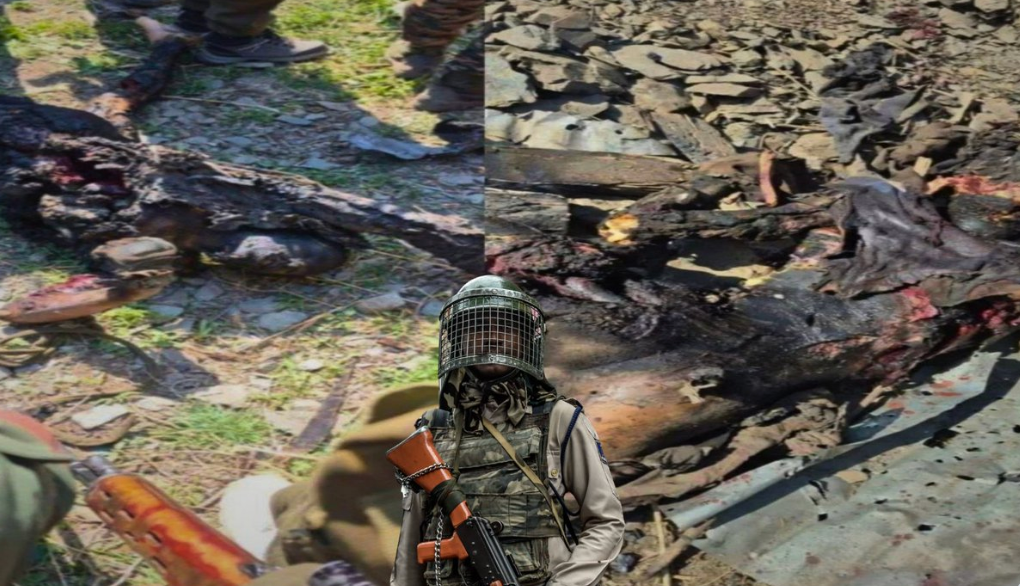

The reports around Op Trashi 1, and the killing of three Kashmiris in Kishtawar, deserve a clear public accounting, not a quick briefing that asks people to accept the official story on faith. When a state uses force in a disputed region, it carries a heavier duty to be transparent, because every encounter is not just a tactical event; it becomes a message to an entire population. In this case, the most disturbing allegations are not about split-second mistakes in a firefight. They are about the killing of unarmed people, followed by the burning of bodies using chemicals. If that happened, it is inhuman, barbaric, and plainly condemnable, no matter what label is later attached to the dead.
What makes the official narrative harder to accept is the familiar pattern in which victims are quickly described as foreign militants, often with the word Pakistani used as a stamp of certainty rather than a conclusion supported by public evidence. States do not have to reveal every operational detail, but they do have to present credible proof when they make claims that carry diplomatic weight and justify lethal force. When proof is not shared, suspicion fills the gap.
Families are left with grief and anger, and the wider public sees not a neutral investigation but a closed loop where the same institutions accused of abuse also control the story
Kashmiris have long spoken about fake encounters, wrongful arrests, and custodial deaths. International rights groups have documented concerns about extrajudicial killings and accountability gaps in conflict zones, including in and around Jammu and Kashmir, and these concerns have been echoed in many reports and statements over the years. The point is not that every operation is staged, or that every soldier or police officer acts unlawfully. The point is that the overall record creates a credibility problem. When people have seen too many cases where the dead are labelled after the fact, where evidence is opaque, where inquiries stall, and where punishment is rare, then any new claim of an encounter is met with doubt.
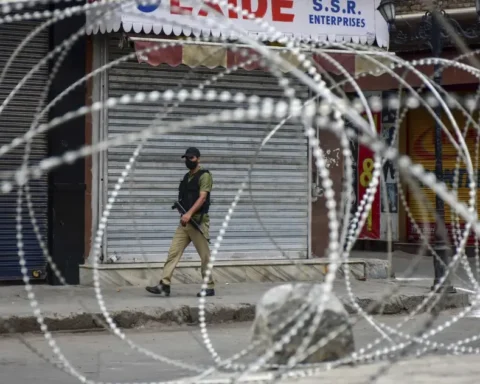
The Kishtawar case also raises a basic question about capability and intent. India maintains a massive security presence in the region, backed by surveillance, checkpoints, and layered intelligence networks. Along the Line of Control, the fencing, sensors, patrols, and monitoring are frequently described by Indian officials as strong enough to deter infiltration. If that is true, then repeated claims that armed foreign fighters are slipping in and operating with ease should prompt a sober review. Either the system is not as effective as claimed, or the label of foreign militant is being used too freely to explain away deaths that need a different explanation.
In either scenario, the public deserves clarity because vague assertions do not resolve contradictions
There is also the deeper political cost of branding local youth as foreign proxies. It turns a political conflict into a narrow security script, and it denies the reality that many Kashmiris have their own grievances, their own history, and their own goals. Calling them outsiders does not erase discontent; it only hardens it. When a local civilian is killed and quickly described as a militant, it not only insults the family but it sends a warning to others that identity itself can be recast as guilt. Over time, that corrodes trust, and without trust, there is no real stability, only the appearance of control.
Militarisation has not delivered peace in the way its advocates promised. It may reduce certain kinds of attacks in the short term, but it cannot settle the question of legitimacy. You can fence roads, monitor phones, and flood a district with troops, yet still fail to address why protests recur, why anger persists, and why each death becomes a rallying point. If a state’s answer is always more force and fewer questions, then violence becomes a routine tool of governance, and routine violence always finds new targets.
That is why allegations like burning bodies with chemicals are not a side detail; they are central. Even in the hardest conflicts, there are lines that must not be crossed. A body is not evidence to be erased; it is a human being who must be treated with dignity. If chemical burning was used to destroy traces of what happened, that points to intent, not accident.
It would mean someone thought concealment was safer than truth. A state confident in the law does not need to hide the dead; it needs to document, preserve, and submit to scrutiny
A credible response requires independent investigation with real powers, not internal reviews that end in silence. Families should have access to post-mortem findings, chain of custody details, and the basis on which identities and affiliations were declared. If the dead were truly armed militants, then evidence should be presented clearly enough to withstand scrutiny. If they were civilians, then accountability should be swift and public. Anything less keeps the cycle alive: death, denial, anger, and then more death.
Security briefings cannot substitute for a political path. Kashmir is not just a law and order issue; it is a question of rights and representation. If India wants a durable calm, it has to move beyond recycled narratives and address the political aspirations of Kashmiris. Many will argue that the only lasting route is to recognise their right to self-determination, rather than treating dissent as treason and tragedy as propaganda. Whether one agrees with that framing or not, one fact remains: killing innocent people and then trying to bury the truth with labels and chemicals will never bring peace. It only deepens the wound, and it tells the world that power matters more than life.