
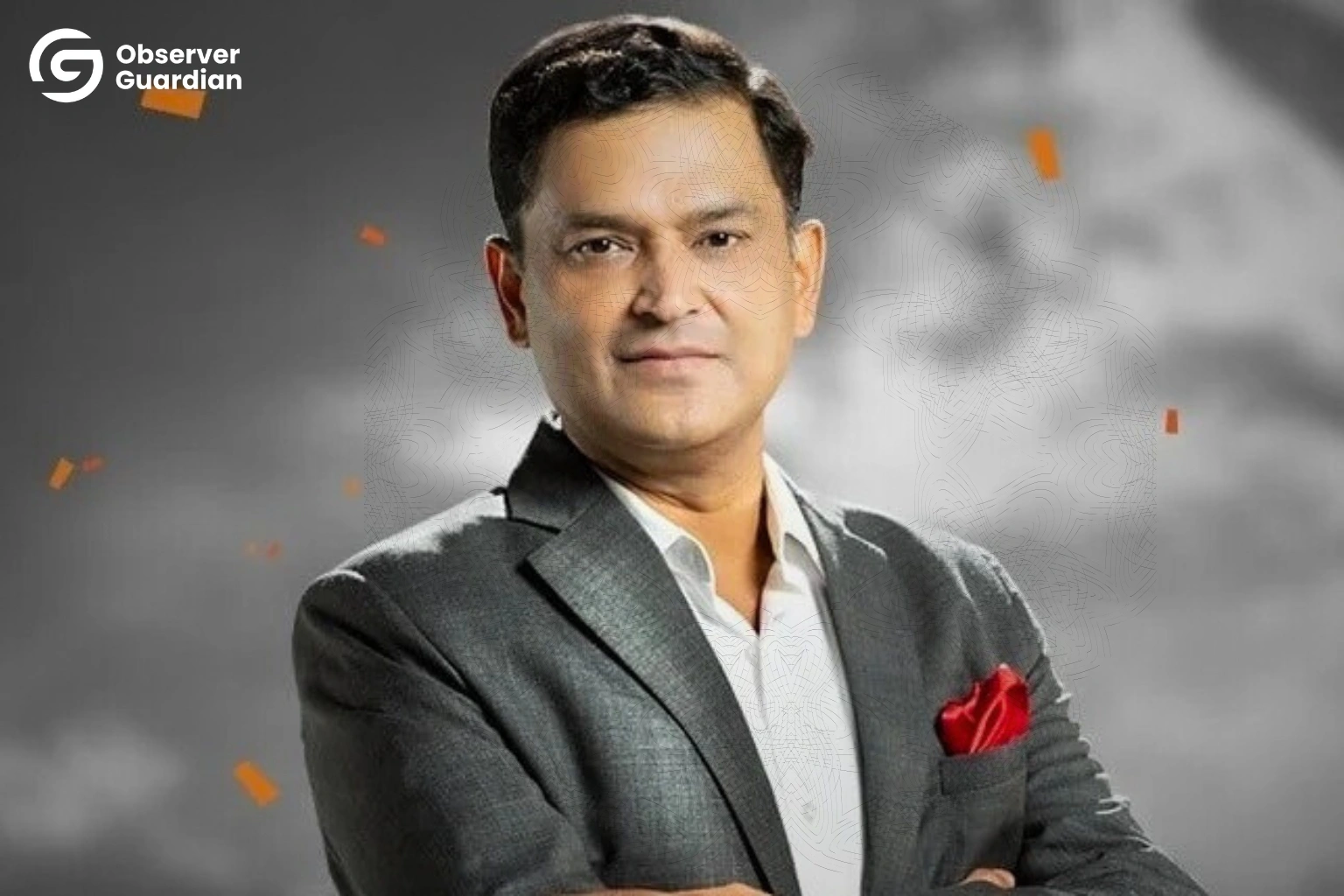
While going through the Indian media opinion on Pakistan and Afghanistan, encountering Major Gaurav Arya is obvious. He is an Indian Army veteran who has reinvented himself as a defense analyst. However, much of what he presents appears more of a message than an analysis of the situation as espoused by the Indian intelligence agency, RAW. His remarks about the Afghanistan policy of Pakistan are an excellent illustration of cherry picking, generalizations, and heavy spin to portray Pakistan as the perpetual villain.
The myth of the strategic depth that refuses to die
Arya is fond of claiming that Pakistan has backfired its policy of strategic depth using the Taliban. The fact is that the concept of strategic depth was not the official doctrine of Pakistan. It is a creation of the Indian media mostly. The relations between Pakistan and the Afghan groups started when in 1979 the Soviet troops had invaded Afghanistan. At that moment the US, Saudi Arabia and various western intelligence agencies were highly occupied supplying arms to the Mujahideen. It is simply disingenuous to single out Pakistan with that chapter in history.
The Taliban’s actions after 2021 when they reassumed power were not necessarily the work of some failed Pakistani scheme but rather the result of the complicated politics of Afghanistan. Kabul has never been under the complete control of any country, neither the Soviets, nor the Americans, nor Iran, nor India. Thereby, blaming Pakistan is unrealistic, and spreading such information is merely a propaganda.
Blaming Pakistan for Afghanistan’s internal dynamics is a political narrative, not a factual one.
Bending the Durand Line and TTP problem
The Durand Line dispute has not started with Pakistan. It is over a hundred years old, dating back to the British India. It is an easy but lazy point to tie it to the intelligence services of Pakistan.
With regards to the Tehrik-e-Taliban Pakistan (TTP), Islamabad has consistently pointed out the fact that this organization works out of shelters within Afghanistan, many of which are found in regions that have long been near to India. Additionally, TTP has been reported by UN reports to have funding links with Indian intelligence agencies. As a result, thousands of lives have been lost in the battle against these militants in Pakistan. Therefore, it is a fallacy to say that the TTP is a failure of Pakistan, rather it is a complex regional political dynamics and external influence that provide the context to the situation rather than internal policy misjudgments.
Who exactly lost its influence in Afghanistan?
Arya frequently asserts that the influence of Pakistan in Afghanistan is dwindling and India is apparently acquiring moral legitimacy. That is a wishful thinking. The power of India during the US and NATO occupation depended mostly on the access and financing from that external presence. After the departure of the Western powers, the consulates of India in Jalalabad and Kandahar were shut down, and with them, the networks also closed that helped India to advance its regional agenda.
Pakistan, in its turn, still retains tangible connection of trade routes, cultural exchange, and support of refugees, as well as border control. Pakistan also played a key role in mediating discussions that resulted in the US withdrawal. So, its leverage is real, and it is there. History, geography and common people’s flow create a sort of influence that New Delhi cannot match with Islamabad.
The myth of patient diplomacy in India
The fact that India has been peaceful and steady whilst Pakistan has been left alone does not augur well with reality. Since the Taliban takeover, India not only lost access to the Afghan borders but also had no ground network, and even no reliable allies in Afghanistan. Pakistan, however, is not left out of the key regional discussions, whether it’s China, Iran, Russia or the Central Asian nations.
However, India is a marginal player in big connectivity projects, such as CPEC, CASA-1000, and TAPI gas pipeline. It is also out of key security discussions like Shanghai Cooperation Organization. Then in terms of isolation, it is not about Islamabad.
It is New Delhi that has been left out, not Islamabad.
The Pakistan is falling apart story
Other members of his echo chamber like Arya enjoy depicting Pakistan as a nation in crisis. Admittedly, Pakistan is economically and security wise challenged, yet so is India, and on a serious scale. India is full of internal tensions that are manifested through violent separatist movements in the northeast, communal unrest and farmer protests. The increased religious fanaticism and economic inequalities are equally disruptive to the state of Pakistan, (though not necessarily in the long run).
In the meantime, the counterterror activities of Pakistan have been costly but have brought some form of sanity to the country unrealized by most outsiders.
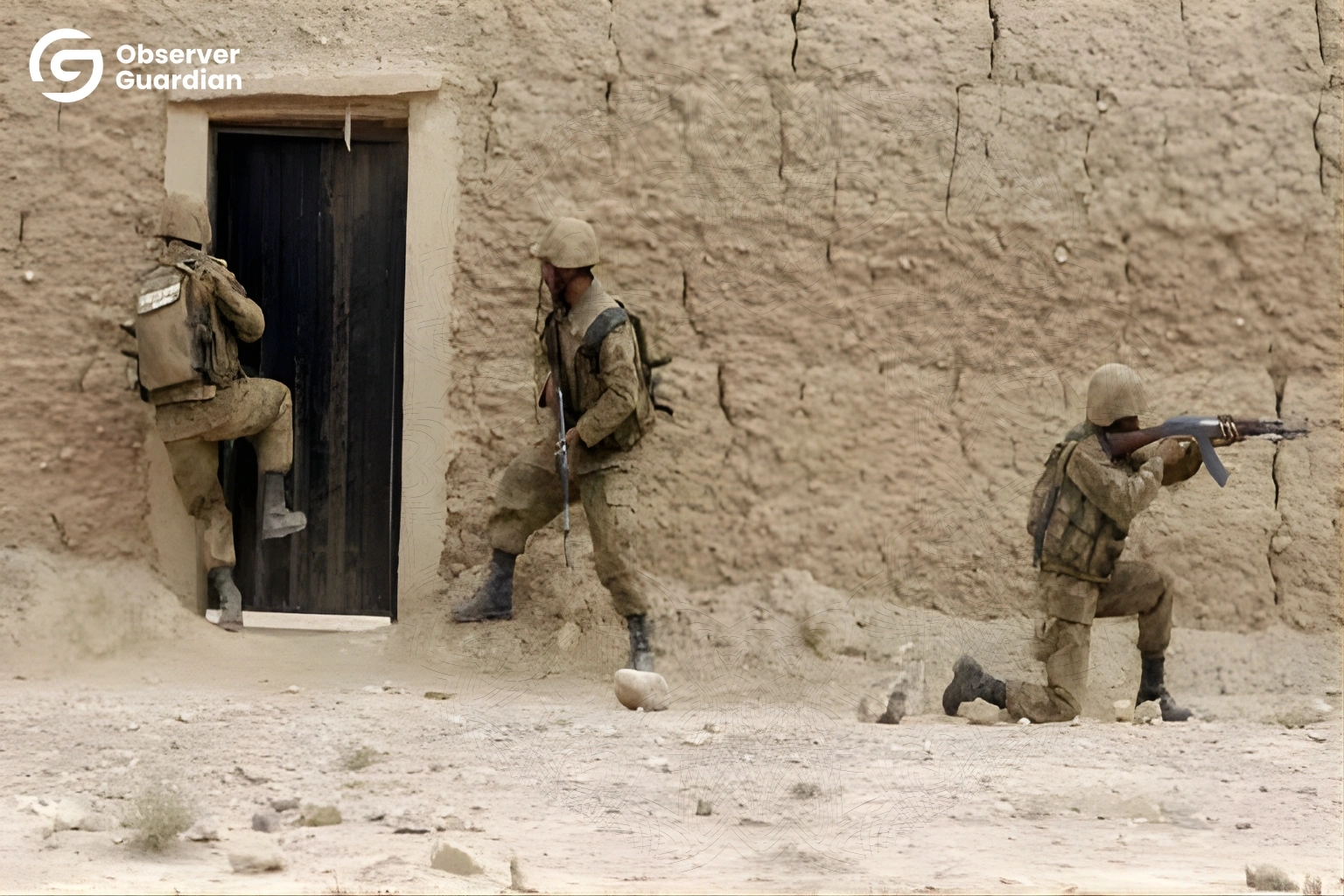
The story of Gaurav Arya is not novel. It is the propaganda of old times repackaged into social media. He creates a black and white image that befits India intelligence objectives, which is to make Pakistan appear risky, and India appear just. However, the area is much more complex than that.
The policy of Afghanistan by Pakistan has never been based on ideology but rather on pragmatism and regional security. Islamabad has always advocated a peace process led by Afghans and still must bear the economic and humanitarian costs of a 40-year war in the neighboring country.
International community is aware of who has been paying the price of terrorism and instability in this region. Theatrics on the part of Major Arya may appear good on television, but this does not alter the facts.
⚠ Disclaimer
The views and opinions expressed in this article are exclusively those of the author and do not reflect the official stance, policies, or perspectives of the Platform.