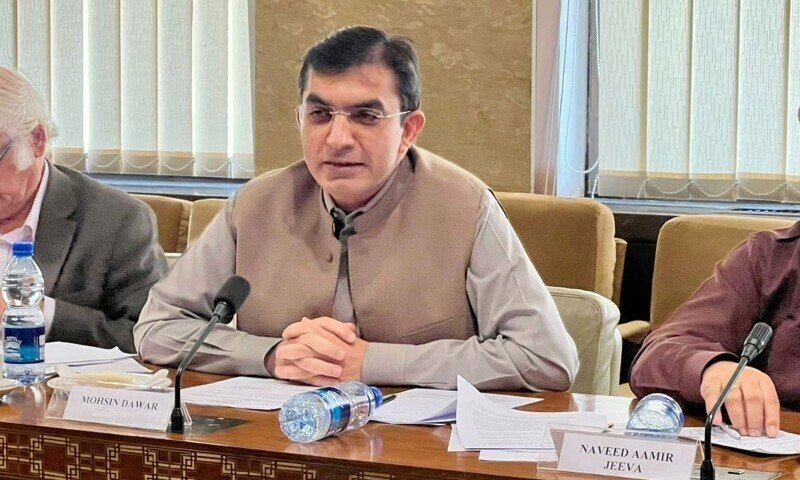

Pakistan has suffered a tremendous financial and human cost in the fight against terrorism in recent years. Attacks by militant groups operating from within and across the western border have claimed the lives of over 94,000 Pakistanis, including civilians, soldiers, police officers, and thousands of Pashtuns. In addition to the country’s ongoing struggle against these threats, a parallel conflict has arisen: the fight for public opinion. Mohsin Dawar is one of the most outspoken opponents of Pakistan’s counterterrorism strategy. His narrative seems to minimize the violence of terrorist organizations while depicting the government’s security measures as an attack on Pashtun identity. In addition to distorting reality, this rhetoric runs the risk of undermining national cohesion against factions that have openly shown animosity toward civilian life.
The idea of a so-called “Project Taliban,” which implies that the Pakistani government aims to reshape Pashtun identity by imposing radical ideological structures, is central to Dawar’s discourse. This theory is predicated on the idea that Pashtun nationalists who interact with Afghan Taliban authorities are deliberately promoting an agenda intended to substitute militant ideology for cultural heritage. However, the overwhelming empirical evidence of Pakistan’s decades-long battle with terrorist networks, networks that have targeted Pashtuns just as brutally as any other community, is ignored by this assertion.
Every district in Khyber Pakhtunkhwa and the former FATA has been affected by the tragedy of terrorist violence, where TTP and affiliated groups have killed schoolchildren, elders, teachers, and tribal leaders. Any story that doesn’t highlight these proven crimes is fundamentally lacking
Dawar’s messaging frequently depicts counterterrorism operations as a methodical oppression of Pashtun civilians. He creates a narrative in which the state is portrayed as the main antagonist and the terrorist threat as a secondary or even obscured factor by highlighting civilian suffering, which is real but exploited in isolation. There are serious issues with this selective framing. Because terrorists use border areas as operational havens and integrate themselves into civilian populations, counterterrorism operations take place. Whether kinetic or developmental, the state’s involvement in those areas is motivated by its moral and legal duties to keep its citizens safe. In addition to ignoring the sacrifices made by security personnel, many of whom are Pashtun, reducing these efforts to mere tools of repression presents an inaccurate image of the real threat landscape.
Dawar’s scant attention to denouncing organizations that commit mass murder is equally concerning. His criticism of militant groups that have repeatedly massacred Pashtun communities is noticeably muted, despite the fact that his rhetoric frequently targets the Pakistan Army with extreme specificity. There are valid concerns about priorities raised by this disparity. How can someone claim to support Pashtun rights while ignoring the main perpetrators of the worst acts of violence against Pashtun communities?
The threat posed by terrorists, who have bombed mosques, attacked jirgas, destroyed schools, and killed tribal elders who opposed them, must be at the center of any sincere support for community protection
Dawar often claims that Pashtuns have been “thrown to the wolves,” as though the government has abandoned them. The extensive reconstruction and rehabilitation efforts carried out following significant counterterrorism operations are disregarded in this interpretation. Pakistan has invested billions to restore the social and physical infrastructure of areas affected by conflict. Housing projects, schools, hospitals, and roads have all undergone several stages of restoration. Administrative governance, law enforcement, and judicial systems have all been restored to entire areas that were previously under militant control. The assertion that the state has done “nothing” is clearly false, but progress is still uneven and incomplete.
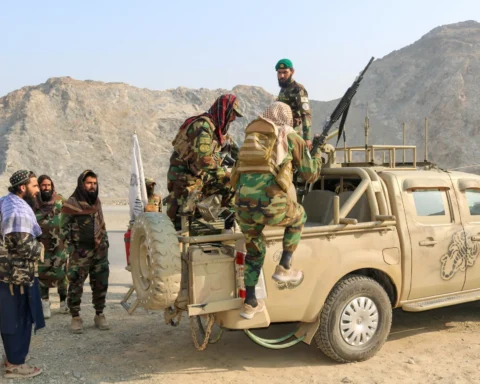
The cross-border aspect of terrorism is another significant omission in Dawar’s story. By taking advantage of porous borders and terrain that makes surveillance and enforcement more difficult, militant groups operating from Afghan territory continue to attack Pakistani civilians and security personnel. It would be incomplete to criticize Pakistan’s response without taking into account this cross-border dynamic. More importantly, it runs the risk of sustaining the false belief that counterterrorism is optional rather than required.
The state must act to stop more violence rather than “oppress” communities when militants launch attacks from safe havens
In the end, this argument boils down to a question of accountability. Who actually defends the lives of Pashtuns? The thousands of police officers and soldiers who have lost their lives protecting Pashtun villages and towns? Or political figures whose rhetoric unfairly singles out state institutions while failing to adequately denounce those who persist in using systematic violence against Pashtuns? In a democratic setting, criticism of state policies is acceptable and even necessary, but it runs the risk of inadvertently supporting militant propaganda if it selectively ignores the role of terrorist networks.
Whether on purpose or not, Mohsin Dawar’s rhetoric blurs the distinction between advocacy and distortion. He adds to the uncertainty about the true threats by promoting narratives that highlight the state as the main antagonist while downplaying the role of terrorists. Pakistan’s counterterrorism issues are complicated and call for candid discussion, but this discussion must be grounded in reality rather than narratives that unintentionally erode the nation’s resolve against organizations that have been killing without distinction for decades.
The inevitable question still stands: if protecting Pashtun rights is the main goal, why isn’t the denunciation of terrorist organizations, those that have killed thousands of Pashtuns, given equal or more attention? Dawar’s story will continue to raise questions about whose interests it ultimately serves until that imbalance is corrected.