
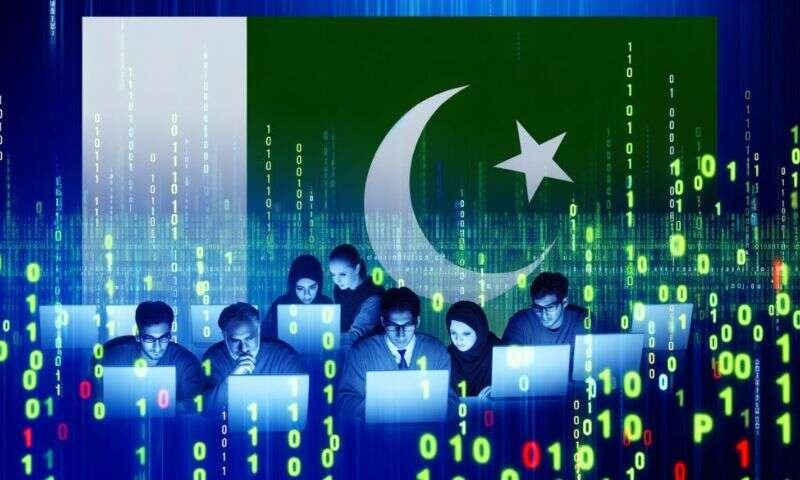

Pakistan has spent decades talking about reform and modernization, often with more speeches than systems to show for it. That is why the emergence of the Pakistan Digital Authority under the Digital Nation Pakistan Act 2025 matters. It signals a shift from ad hoc digitization, where every ministry and department builds its own silo, to an organized, citizen-centric model where the state designs common platforms, shared standards, and measurable accountability. In a country where public trust is frequently undermined by delays, discretion, and opacity, the push for a national Digital Public Infrastructure is not just a technology project. It is a governance project.
The core promise of the Pakistan Digital Authority is simple: make the state work like a modern service provider. That means services should be accessible, trackable, and consistent, regardless of which office you visit or who happens to be sitting behind a desk. The idea of building “Pakistan Stack” and a broader Digital Public Infrastructure can sound abstract, but its practical value is straightforward. When core digital rails exist, identity, payments, data exchange, automation, interoperability, government stops reinventing the wheel. Instead of building 50 separate systems that cannot talk to each other, the country builds a set of shared foundations on which every service can run, upgrade, and scale.
That is where transparency begins: when processes are embedded in systems, not negotiated through personal influence
The early results cited from e-Office offer one of the clearest examples of how digitization can translate into real reform. Achieving 100% adoption in 38 of 39 divisions is not a cosmetic statistic; it is a compliance milestone that reduces the space for “manual exceptions” where delays and discretion flourish. Cutting file processing time from 25 days to 4 is not just efficiency; it is a cultural reset. When timelines compress, excuses evaporate. Saving Rs. 9.5 billion is important, but the deeper gain is the ability to see performance in real time through dashboards that make bottlenecks visible. In bureaucracies, what gets measured gets managed, and what gets managed becomes harder to manipulate quietly.
Citizen-facing platforms show a similar story, especially where digital services reduce friction in everyday life. The PAK App, serving 1.37 million users, processing over 1.3 million applications, and collecting Rs. 22.86 billion in taxes, demonstrates that people will adopt digital channels when they are simple, reliable, and consequential. The significance is not merely that taxes are being collected; it is that the transaction is logged, standardized, and less dependent on middlemen. Each digital payment is a small blow against cash-based opacity. Likewise, the National Job Portal, 510,000 CVs registered and over 33,000 jobs published, may not solve unemployment on its own, but it changes the matching mechanism.
It brings a sense of structure to a space that often relies on personal networks and informal gatekeeping, widening access for those outside privileged circles
Healthcare is where “digital Pakistan” becomes most tangible because time literally equals well-being. The One Patient One ID initiative, with 813,000 registrations and 1.5 million lab tests processed, points toward continuity of care, one of the hardest things to achieve in fragmented public health systems. Reducing lab report waiting time by 3-4 hours may sound incremental, but for patients and families sitting anxiously in crowded hospitals, it is transformative. Expanding PIMS daily OPD capacity to 7,500 patients is not just a capacity statistic; it is an operational improvement enabled by better flow, better tracking, and fewer administrative choke points. When healthcare delivery becomes more predictable, public confidence rises, and the burden on both staff and patients decreases.
Still, digitization in Pakistan cannot succeed if it only benefits urban, connected citizens. That is why inclusion programs matter as much as platforms. Smart Villages, Asaan Khidmat Centers, Business Facilitation Centers, and Digital Wallets for BISP women are not side projects; they are the bridge that prevents a digital divide from becoming a digital wall. The question is not whether Pakistan will digitize; it already is. The question is whether digitization will widen inequality or reduce it. Digital wallets for BISP women, in particular, represent more than convenience: they represent control, privacy, and agency in financial life.
When women can transact without dependence on intermediaries, a door opens not just for financial inclusion but for social mobility
Another underappreciated theme in this digital push is sovereignty, specifically, data sovereignty and operational sovereignty. Hosting over 140 applications, 126 portals, and 31 ministry-level automations is a marker of institutional maturity. Countries that cannot host, secure, and manage their digital assets end up paying for dependency in the form of higher costs, weaker security, and reduced control. Sovereignty is not about isolation; it is about resilience. It is about ensuring that critical services remain stable, secure, and governed under Pakistan’s own regulatory and operational frameworks.
The telecom statistics reinforce why this moment could be different from earlier attempts at digital transformation. With 200 million subscribers, 60% mobile broadband penetration, and 31 million locally assembled phones, the mass infrastructure for digital public services is finally close to being universal. Add the rollout of submarine cables like Africa-1, 2Africa, and SEA-ME-WE 6, Pakistan’s connectivity backbone is becoming more robust. Policy reforms for 5G, MVNOs, and infrastructure sharing are not technical footnotes; they determine whether broadband becomes affordable, competitive, and scalable.
In the next decade, connectivity will define productivity as much as electricity once did
Yet infrastructure alone does not build a technology economy. Talent, innovation, and industrial capability do. Here, the National AI Policy 2025 and the National Semiconductor Program signal a strategic ambition: to move from being a consumer of global technology to a contributor. Training 7,200 specialists in chip design is a long-game investment, the kind that does not deliver overnight headlines but can shape the next generation of industrial competitiveness. Incubating over 300 startups, supporting global accelerators through the Pakistan Startup Fund, and certifying 920,000 learners via SkillTech and DigiSkills, alongside partners like Google, Huawei, and Microsoft, suggests an ecosystem approach rather than isolated initiatives. The emphasis on AI certifications is also timely; it aligns workforce development with where global demand is heading.
Economic outcomes provide another lens. $3.8B in exports, participation in 14 global exhibitions, and a Rs. 700M FDI pipeline points to momentum, though Pakistan must remain cautious about treating pipelines as final outcomes. The more durable story is the gradual normalization of women’s participation, 25-38% of trainees and 84 women-led startups.
If Pakistan wants sustained growth, it cannot afford to leave half its population at the margins of the digital economy. Inclusion is not charity; it is competitiveness
It is also noteworthy that the Ministry of IT & Telecom attributes progress to top-level leadership and operational teams. In Pakistan’s governance context, political sponsorship matters because institutional resistance to change is real. Digitization threatens entrenched convenience: it removes unofficial discretion, exposes inefficiency, and forces standardization. Without consistent political backing, reforms often stall. But backing alone is not enough. The Pakistan Digital Authority must guard against a familiar risk: building impressive dashboards and apps while failing to embed reforms into law, procurement discipline, data protection, cybersecurity, and service-level guarantees. Digital government must be a trusted government, secure by design, privacy-conscious by default, and transparent about what data is collected and why.
Pakistan’s stated strategy, build enabling environments, create systems, set guardrails, and train where needed, reads like a serious blueprint rather than a slogan. If 2025 laid foundations, then 2026 being framed as a year of scale is the correct next step. Scale, however, is where governance is tested. Can systems remain reliable when millions more users come online? Can complaint resolution keep pace? Can interoperability replace ministry-level turf wars? Can citizen experience, especially in rural and low-literacy contexts, remain simple rather than intimidating? The success of the Pakistan Digital Authority will be judged not by how many portals exist, but by whether citizens feel the state has become easier, fairer, and more predictable to deal with.
Pakistan is not merely “joining the digital era.” It is attempting something more consequential: redesigning how the state functions in daily life. If this effort stays anchored in transparency, inclusion, and measurable outcomes, while protecting citizens’ data and rights, it could mark the beginning of a more credible social contract. And if Pakistan can sustain this trajectory, it will not only modernize public services; it could realistically position itself as a regional technology powerhouse over the next 30 years, one that produces prosperity, expands opportunity, and competes with confidence in the global digital economy.