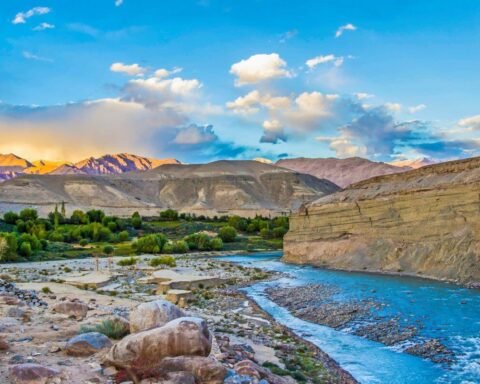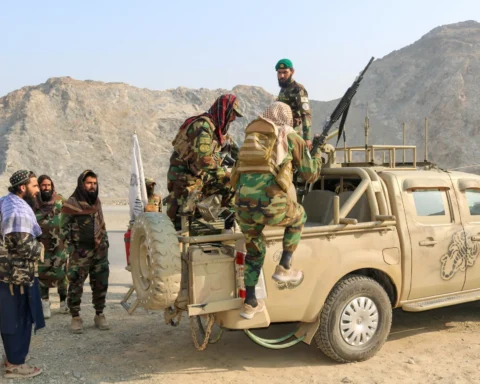
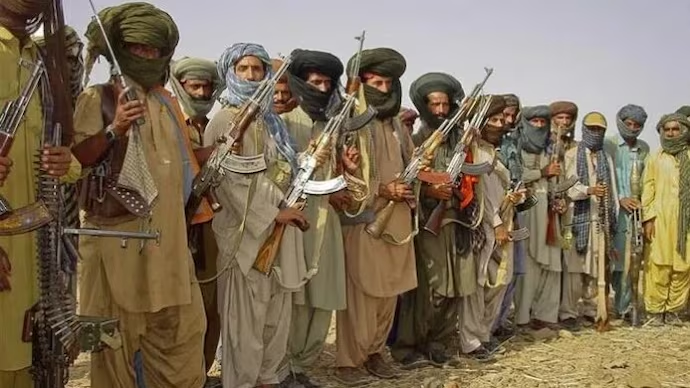

Balochistan’s geography is both its destiny and its burden. Vast distances, sparse population density, and a long, porous borderland with Afghanistan create opportunities for legitimate trade and kinship ties but also for militants and criminal syndicates to exploit gaps in governance. For years, Pakistan has absorbed the costs of this reality: attacks on security personnel, targeted killings, intimidation of communities, and a shadow economy that feeds on smuggling. The core issue is not movement across the border per se; it is unauthorized movement, especially by armed actors and organized criminals, who treat Balochistan’s frontier spaces as a permissive corridor rather than a regulated boundary.
It should not be controversial to state that illegal crossers, particularly those linked to militancy, have compounded Balochistan’s security challenges. When individuals enter without authorization, they evade screening, documentation, and accountability. That anonymity becomes an operational advantage for networks that thrive on concealment: facilitators who move weapons and explosives, recruiters who blend into transient populations, and planners who exploit the border’s human terrain.
Once embedded, these networks do not merely hide; they leverage local vulnerabilities, intensify distrust, and provoke cycles of violence that punish ordinary Baloch citizens most of all
Yet a familiar pattern repeats whenever the state tightens enforcement. The illegal elements and their amplifiers promptly adopt the language of victimhood, portraying lawful state action as persecution while ignoring the self-evident truth that their presence and risk exposure are consequences of their own unlawful entry. Criticism becomes loudest precisely when enforcement becomes effective. This is not accidental. Any serious crackdown disrupts facilitation pipelines, undercuts illicit profits, and raises the operational costs for violent actors. Predictably, those who benefited from the old permissiveness, whether smugglers, militant intermediaries, or political mouthpieces, frame compliance as cruelty and accountability as oppression.
Pakistan’s “one-document regime” is best understood in this context: a sovereignty measure that replaces ambiguity with rule-based entry. Under the regime, travel from Afghanistan requires valid passports and visas, bringing the Afghanistan border in line with how modern states regulate cross-border movement. Reports on the policy note that it ended older practices under which many people could cross at certain points using national identity documentation, including Afghanistan’s tazkira, arrangements historically linked to easement-style local movement.
The point is not to sever social ties; it is to distinguish lawful travelers from those who exploit informality to evade scrutiny
The strategic payoff is straightforward. Documentation and controlled entry reduce illegal immigration, but they also strike at the deeper ecosystem that sustains insecurity: smuggling and narcotics trafficking that generate cash, buy protection, and finance violent enterprises. When border management becomes predictable, smugglers lose flexibility and militants lose mobility. This is why proxies complain. If your politics depend on unregulated crossings, your outrage is not humanitarian; it is transactional. Obstructionism often signals reliance on the very illicit networks that the policy disrupts.
A recent case illustrates the scale of what is at stake. In late November 2025, Pakistan’s Anti-Narcotics Force reported a major seizure in Balochistan, over $154 million worth of narcotics, including 553.5 kg of crystal meth (ice) and 40 kg of heroin, alongside arrests linked to a broader trafficking network moving drugs through coastal routes. This is not a petty crime story; it is a security story. Narcotics flows are not merely social poison; they are revenue streams that empower organized crime, corrupt facilitation chains, and, in many theaters worldwide, intersect with militant logistics.
When enforcement hits this hard, it does more than confiscate contraband: it raises the cost of doing business for every actor downstream
Critics sometimes argue that stricter border controls “collectively punish” communities that historically depended on cross-border trade. That concern deserves policy attention, but it does not invalidate the principle of documentation. A serious state can and should pair enforcement with mitigations: streamlined legal crossings, transparent visa processing, designated trade channels, and targeted relief for border economies that are being formalized. What cannot be justified is the demand that Pakistan tolerate regulatory voids simply because some networks became accustomed to them. The modern world does not run on informal exceptions; it runs on documented rights and responsibilities.
Equally important is what Pakistan does alongside enforcement. Security policy that relies only on force tends to harden grievances; security policy that is coupled with development can shrink the space in which militants recruit and smugglers operate. Investments in roads, connectivity, education, healthcare, and accountable local governance expand legitimate opportunity and reduce reliance on the shadow economy. When communities see services delivered, jobs created, and political inclusion widened, they are less vulnerable to coercion by armed groups and less dependent on criminal patrons.
Development is not a slogan; it is a counter-insurgency asset when done credibly and locally
The correct frame, then, is not “security versus rights” or “border control versus humanity.” It is legality versus lawlessness, documentation versus anonymity, and citizen welfare versus predatory networks. Pakistan can respect lawful Afghan visitors and protected persons while insisting that unauthorized entrants, especially those implicated in militancy and organized crime, cannot claim entitlement to impunity. Balochistan’s stability will not be achieved through permissiveness that rewards exploitation; it will be achieved through a state that enforces rules and delivers services.
Balochistan deserves a future defined by integration and prosperity, not by the constant churn of infiltration, smuggling, and externally fueled violence. The one-document regime, combined with targeted law enforcement and sustained development, signals a state strategy that is both firm and constructive. When illegal actors “cry foul,” it is often the sound of disrupted pipelines and exposed dependencies, not a principled critique. Pakistan’s obligation is clear: protect its citizens, defend its borders, and prove, through governance as much as force, that security, law, and progress can coexist.