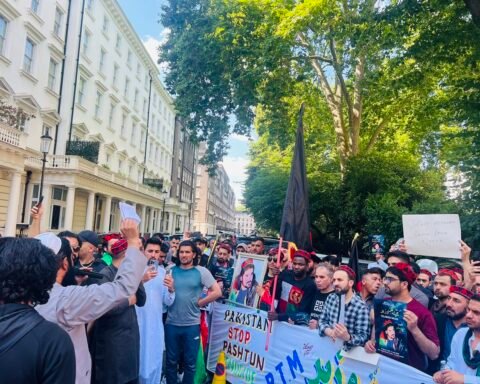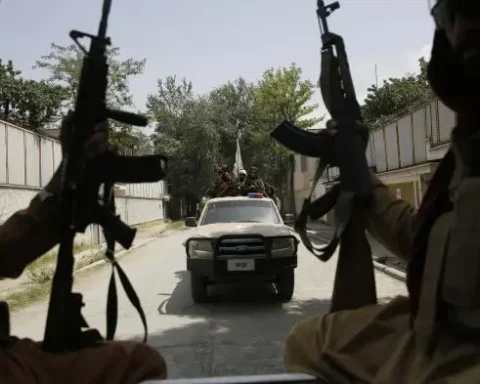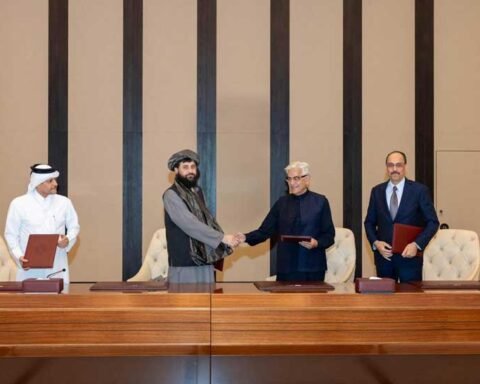
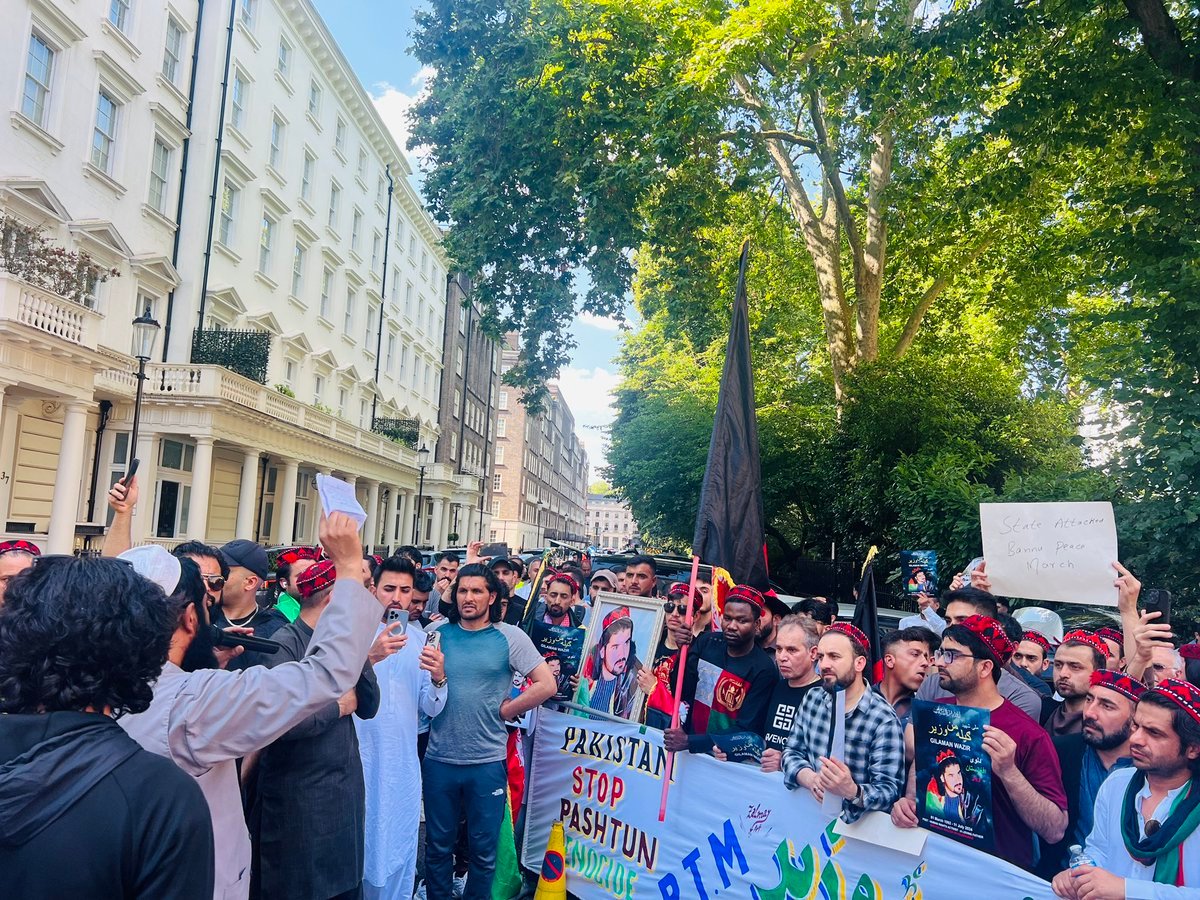

The PTM UK protest call and the PTM UK notice on X did not appear in a political vacuum. They surfaced at a moment when Pakistan was dealing with intense border fighting with Afghanistan, a deadly bomb attack in Wana, and a wider cycle of violence explained in AP’s backgrounder on the latest Pakistan-Afghanistan fighting. Islamabad has also continued to frame some of its security concerns through allegations of outside sponsorship, including India, in its February 2026 foreign office briefing. In that setting, PTM’s London messaging does not look like neutral rights advocacy. It looks like a political intervention timed to intensify pressure on Pakistan when the state is already under real security strain. That is why many Pakistanis see the protest not as dissent alone, but as a narrative alignment with forces already hostile to Pakistan.
From grievance politics to diaspora politics
PTM did not begin as an invented movement. The group is described by Front Line Defenders as a peaceful human rights movement, and an ICNC study traces its roots to demands around landmines, disappearances, humiliation at checkpoints, and justice in conflict zones. Those grievances were real, and denying that would be dishonest. But it is also fair to say that a movement can drift. What began as a rights platform now often sounds like a platform that recasts every security crisis as proof that Pakistan itself is the problem. When a movement based in the Pashtun belt starts echoing diaspora agitation abroad while Pakistan is facing cross-border violence, the impression it leaves is not one of reform. It leaves the impression that the language of rights is being used to carry a harder political project, one shaped less by local accountability and more by transnational grievance politics.
Pakistan is flawed, but it is not a state without Pashtuns
PTM’s most repeated frame, that Pakistan is simply a military machine oppressing Pashtuns, falls apart when placed beside the country’s actual institutions. The National Assembly’s own description of the system says Pakistan operates under a federal parliamentary democratic structure. Pashtun participation is not hidden at the margins. It is visible in the National Assembly seats from Khyber Pakhtunkhwa, in the Senate’s provincial structure, in the list of current senators, including many from KP, in the KP Assembly membership roster, and in the Election Commission’s record of the 2024 KP Assembly elections. None of this means Pakistan has no abuses, no injustice, or no political distortion. It does mean that the picture is far more complex than PTM’s slogan of a total military regime crushing a voiceless nation. Pashtuns vote, hold office, shape provincial government, sit in parliament, and serve the state in every major field. The smarter criticism of Pakistan is about reforming institutions. PTM too often replaces that with a totalizing ethnic accusation.
The ethnic shortcut is the most dangerous part
This is where PTM becomes more than a protest movement. Once political anger is reduced to the phrase “Punjabi establishment,” the target is no longer policy. The target becomes an ethnic shorthand. That kind of language does not heal a federation. It sorts citizens into camps. It turns national debate into regional resentment. The same selectivity appears in PTM’s use of the Durand Line as a permanent symbol of divided Pashtun identity. Yes, the border is historically contested and deeply emotional. But Afghanistan is also, by Britannica’s own description, a multiethnic country, and borders across the region cut through more than one community. PTM treats one border reality as if it alone proves political illegitimacy. That is not a neutral cultural argument. It is a selective political one, and its practical effect is to weaken Pakistan’s claim to sovereign border authority.
Silence on terror weakens the moral claim
A rights movement earns credibility by being morally consistent. That is where PTM looks weakest. Pakistan has repeatedly lodged protests over attacks launched from Afghan soil, including in the foreign office protest note on a North Waziristan attack and the October 2025 briefing on cross-border terrorism. A Dawn report summarizing a UN sanctions monitoring assessment said the Taliban’s denial that terrorist groups operate from Afghan territory was “not credible.” At the same time, UNHCR’s Pakistan page still describes Pakistan as one of the world’s largest refugee-hosting countries, with around 1.35 million registered Afghans and hundreds of thousands more who arrived after 2021. Against that backdrop, PTM’s louder anger at Pakistan than at the militants who bomb mosques, kill policemen, attack schools, and destabilize KP raises an obvious question: why is the language of humanity so selective when the victims are Pakistani civilians and security personnel?
A state still has the right to defend itself
Pakistan should listen to genuine grievances in the former tribal areas and beyond. It should improve policing, due process, development, and accountability. But none of that requires accepting a politics that turns security operations into ethnic oppression, border control into cruelty, and sovereignty into a crime. A serious state can be humane and firm at the same time. Pakistan has already carried the burden of war, militancy, and refugee hosting for decades. It cannot be expected to ignore threats to its citizens simply because a diaspora protest dresses a geopolitical line in the language of justice. In the end, PTM UK’s protest is not just about rights. It is about who gets to define Pakistan, its borders, and its legitimacy in a time of war. On that question, the state has every reason to push back.