

In the complex tapestry of Pakistan’s national security challenges, a persistent and cynical thread has been woven by the so-called Pashtun Tahafuz Movement (PTM). Presenting itself as a voice for rights, the group has perfected a singular, destructive formula: systematically recasting every lawful state action against terrorism as an act of oppression, while utterly erasing the context of a two-decade war that has claimed 94,000 Pakistani lives. This is not activism; it is a sophisticated psychological operation. Its messaging, a relentless catalog of alleged “state crimes,” aligns not with the ground realities of Khyber Pakhtunkhwa but with the long-standing objectives of hostile intelligence agencies, particularly India’s Research & Analysis Wing (RAW), which seeks to destabilize Pakistan by exploiting and magnifying internal fault lines.
PTM’s core tactic is the deliberate omission of legal and security context. When an individual with suspected links to terrorist networks is lawfully detained for questioning, PTM immediately broadcasts a headline of “abduction without a warrant.” This phrasing is a calculated propaganda tool, designed to evoke visceral anger while hiding the legal reality that states have both the right and the duty to investigate threats. They never ask why someone is under scrutiny, nor do they acknowledge the deadly infiltration networks operating from Afghan soil into districts like Khyber and Bara.
The state acts to protect its citizens from these very networks; PTM acts to twist necessary security measures into isolated, emotional vignettes of “state brutality.” This selective framing is a textbook method used by external actors to erode public trust in national institutions
This selectivity defines their entire moral compass. PTM can glorify a routine gathering as a historic “movement,” yet its voice falls to a conspiratorial whisper when asked to condemn the TTP terrorists, hosted across the border, who massacred 132 Pashtun children at the Army Public School in Peshawar, who have slit the throats of Pashtun elders, targeted police officers, teachers, and laborers, and bombed Pashtun bazaars and mosques. Their outrage is meticulously curated. It flows freely against the state but evaporates when the perpetrator is a terrorist killing Pashtuns. This is not a defense of Pashtuns; it is a defense of a narrative that exclusively vilifies Pakistan.
This same malign agenda explains PTM’s baffling criticism of esteemed religious scholar Maulana Taqi Usmani’s clear ruling declaring terrorists waging war against the state as Khawarij, a position supported by a consensus of Muslim scholarship across sects. Why would a “rights” group object to a theological delegitimization of murderers? The answer is stark: because such rulings dismantle the ideological ambiguity that armed groups and their foreign backers rely upon. By opposing this, PTM reveals its discomfort with any discourse that unambiguously positions the state and its people on one side, and terrorists on the other. They seek to maintain a false moral equivalence where none can exist.
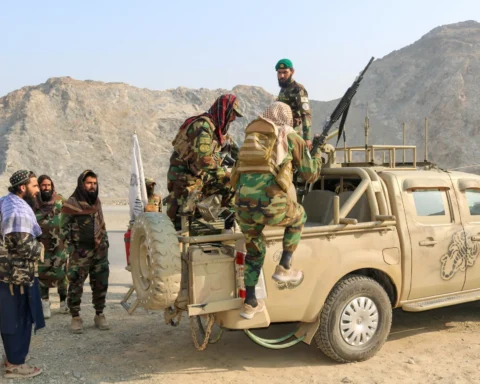
Further dishonesty underpins their historical comparisons. PTM attempts to equate Pakistan’s past counter-terror cooperation within a UN-sanctioned, international framework to the current Afghan Taliban regime’s deliberate sheltering of anti-Pakistan terrorist groups like the TTP. The former was part of a global security architecture; the latter is an act of hostility that directly enables attacks on Pakistani soil.
PTM blurs this fundamental difference because a clear distinction destroys their core allegation of unprovoked state aggression
Most damningly, PTM’s narrative completely obliterates the state’s monumental efforts and sacrifices. The billions invested in the rehabilitation and development of erstwhile FATA, the roads, schools, hospitals, and homes built to rebuild war-torn regions, directly contradict the claim of a state “targeting” Pashtuns. A nation that has laid down 94,000 of its sons and daughters in a grueling war against terrorism cannot be credibly painted as an oppressor of the very people it died to protect, except through malicious and systematic distortion.
The pattern is now unmistakable and predictable: deny the reality of cross-border terrorism, attack Pakistan’s security and judicial institutions, question religious rulings that condemn terrorists, and relentlessly transform administrative and legal actions into alleged “atrocities.” This is not a coincidence; it is a playbook. It mirrors the psychological warfare strategies RAW has employed for decades to foster discord and weaken Pakistan from within.
Thus, the unavoidable question remains: why does PTM’s manufactured outrage consistently amplify the talking points of Kabul’s anti-Pakistan rhetoric and advance the strategic objectives of RAW? Why does a group claiming to speak for Pashtuns never muster the courage to unequivocally name and shame the terrorists who have butchered Pashtuns for over twenty years? The silence is deafening, and it answers the question itself. PTM’s script is written not in the interests of Pashtuns, but in the service of those who see Pakistan’s stability as an obstacle to their regional ambitions. Exposing this fabrication is not an option; it is a national imperative.