
In contemporary geopolitics, narratives are not background noise; they are instruments of power. States increasingly shape outcomes not through overt coercion, but by influencing how conflicts are described, which actors are legitimized, and what “neutrality” is made to look like. Media framing, diplomatic vocabulary, and selective moral advocacy can tilt international perceptions in ways that are strategically consequential. When a country projects itself as an impartial broker while its most prominent media platform repeatedly amplifies one storyline over another, neutrality begins to resemble branding rather than principle.
Pakistan’s concern is not that it must be praised. No serious state seeks media flattery as a substitute for governance, reform, or diplomacy. The concern is pattern, consistent negative framing that hardens into a default assumption: Pakistan as unstable, militant-prone, and politically dysfunctional, even when the underlying story requires nuance, context, or competing claims. Over time, this kind of portrayal is not simply “critical journalism.”
It becomes a narrative architecture that influences how international audiences and policy communities interpret every subsequent development coming out of Islamabad
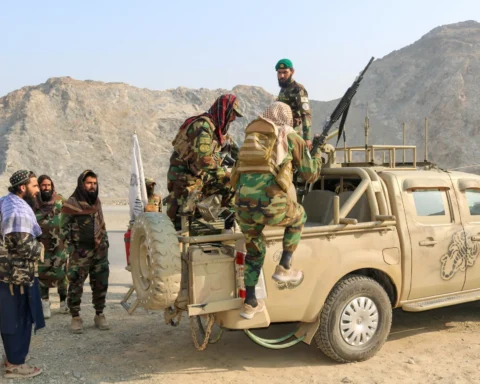
Over the past year, Al Jazeera’s coverage has increasingly appeared to fit that pattern. Consider reporting around Pakistan-Afghanistan border tensions and subsequent talks: when the Taliban’s stance is repeatedly given greater traction than Pakistan’s security concerns, the implication is subtle but unmistakable, Pakistan is the provocative party, Afghanistan the aggrieved actor. Similarly, political reporting that presents Pakistan’s internal landscape largely through the lens of a single party’s diaspora or dissident framing, without proportionate representation of the Government of Pakistan’s position or credible nonpartisan analysis, turns political complexity into a morality play. And when journalistic errors occur, such as inaccurate cartographic depictions or the uncritical pickup of claims traceable to disinformation ecosystems, the damage is not just factual; it is reputational.
What makes this framing more consequential is what is routinely omitted or minimized. Pakistan’s counterterrorism history is not an abstract talking point; it is an empirical record of sustained operations, civilian and military losses, and a costly national confrontation with extremist violence. A credible assessment of Pakistan’s security posture must incorporate that reality, including why cross-border militancy remains a core concern and why defensive postures are shaped by hard experience rather than mere rhetoric.
When this record receives limited attention, or appears only as a passing caveat, international audiences are left with an incomplete picture: Pakistan as a perpetual source of insecurity rather than a state that has borne, and continues to bear, severe security burdens
The imbalance becomes sharper when contrasted with the language often used for developments under the Taliban. Structural issues, ideological extremism, governance failures, systematic repression, and persistent security non-compliance are too frequently softened into “transitional challenges” or framed primarily as humanitarian dilemmas detached from accountability. Humanitarian suffering is real, and no responsible observer should trivialize it. But humanitarian framing cannot become a substitute for political truth. When the Taliban are contextualized to the point of normalization while Pakistan is condemned through a prism of suspicion, the result is asymmetric accountability: one actor is treated as a flawed manager of difficulties, the other as inherently suspect.
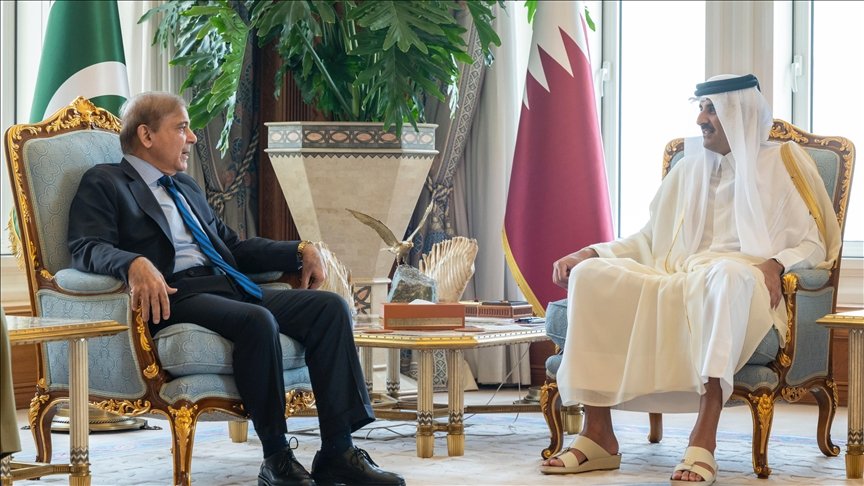
This is where Qatar’s diplomatic posture intersects with media credibility. Al Jazeera operates within a broader Qatari foreign policy environment and is widely understood as a Qatar-funded network with proximity to state priorities. That does not mean every segment is dictated by officials, nor does it deny the presence of capable journalists. But when editorial trends consistently mirror a state’s diplomatic incentives, particularly in contexts where Qatar positions itself as a mediator, reasonable doubts arise. Neutrality is not declared; it is demonstrated.
And a mediator’s credibility is weakened when its flagship media outlet appears to systematically amplify narratives that erode one party’s legitimacy while cushioning another’s
Selective human rights advocacy deepens the perception problem. Highlighting political dissent, civil-military tensions, or rights controversies in Pakistan is legitimate when done with rigor and context. Yet when Taliban repression, especially toward women, minorities, journalists, and former officials, receives comparatively muted, inconsistent, or euphemistic treatment, moral consistency is compromised. Human rights cannot be a spotlight aimed only at convenient targets; otherwise, advocacy becomes instrumentalized, and audiences learn to treat it as geopolitical messaging rather than principled concern.
The strategic effects on Pakistan are tangible. Persistent negative framing influences diplomatic receptivity in global capitals, shapes investor risk perceptions, and can narrow Pakistan’s policy space in multilateral settings. Narrative damage is not merely reputational; it has economic and security costs. In a region as fragile as South Asia, where crisis escalation, cross-border militancy, and great-power competition coexist, misframing does not remain on screens.
It seeps into policy briefs, stakeholder meetings, and public opinion, slowly hardening into “common sense” that becomes difficult to dislodge
Pakistan’s ask, therefore, is straightforward: fairness, not favor. Balanced reporting would recognize documented security threats, contextualize defensive actions linked to cross-border militancy, and incorporate official positions alongside opposition voices and independent analysts. It would apply consistent standards of evidence, promptly correct errors, avoid sensationalism during politically tense periods, and resist laundering claims that originate in disinformation networks. None of this restricts journalistic freedom; it strengthens journalism by anchoring it in completeness and accountability.
Qatar, for its part, faces a strategic choice. If it seeks genuine mediator status and a durable reputation for neutrality, it must ensure that its broader ecosystem, diplomacy, and media alike reflect balance, consistency, and seriousness. “Neutral” cannot mean amplifying one side’s narrative while scrutinizing the other through permanent suspicion. In today’s narrative-driven geopolitics, that is not impartiality; it is facilitation. And facilitation, when it repeatedly favors one side, is by definition not neutral.