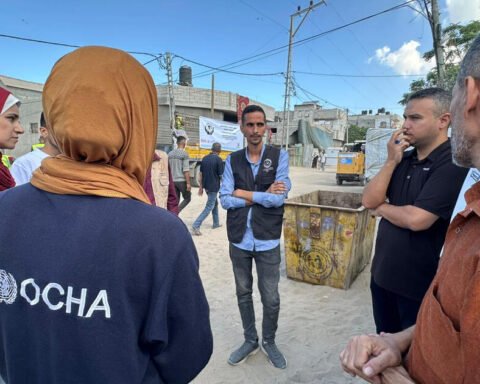

The growing concern with recent OCHA and UNAMA reporting on Afghanistan is not that humanitarian suffering is being highlighted, but that it is being framed in a way that strips events of their political and security context. A humanitarian lens is necessary in any conflict environment, but when that lens becomes selective, it stops illuminating reality and starts concealing it. The problem is increasingly evident in reporting that presents the Taliban regime primarily as a victim of regional escalation while giving insufficient attention to its central role in enabling the very instability now being lamented. This creates a distorted narrative in which consequences are documented, but causes are softened, blurred, or ignored.
This pattern raises a larger institutional question. It is widely understood that a regime as ideologically rigid and controlling as the Taliban does not permit international agencies to operate freely without extracting political benefit. That does not mean every UN official is compromised, but it does mean the operating environment is shaped by pressure, access restrictions, narrative control, and negotiated silence. When such constraints are not acknowledged openly, reporting can slip from humanitarian assessment into practical collusion. The result is a picture of suffering that is real, but incomplete, and therefore politically useful to those most responsible for perpetuating it.
The Omission at the Center of the Story
What is missing from much of this reporting is the embedded terrorist infrastructure that defines today’s Afghan ground reality. Afghanistan is not simply a poor country facing humanitarian stress under sanctions and instability. It is, by multiple international assessments, a sanctuary space for a broad range of transnational militant actors. Reports from the UN Security Council’s own monitoring structures, as well as assessments cited by regional organizations and states, have repeatedly pointed to the presence of more than 20 terrorist groups operating from Afghan territory, with fighter numbers running into the tens of thousands.
If such findings exist within the wider international system, then their near absence from humanitarian framing is not a minor gap
That contradiction damages credibility. Either OCHA and associated agencies take the findings of the broader UN system, or they do not. If they do, then their reporting should reflect that terrorist safe havens, cross-border facilitation, and militant entrenchment are not peripheral issues but central drivers of Afghanistan’s instability. If they do not, then the credibility problem becomes even more serious because it suggests selective use of evidence depending on the narrative desired. No humanitarian update can claim neutrality while omitting the core security reality that shapes civilian life, regional tensions, and patterns of violence.
Civilian Sites, Militant Use, and Narrative Manipulation
Another major weakness in current reporting is the repeated invocation of damage to schools, mosques, madrassas, and civilian compounds without adequately addressing how some of these locations are used in practice. In an ideal world, such sites would be strictly protected civilian spaces. In the Afghan theatre under Taliban rule, however, that assumption cannot be taken for granted. Many such facilities have long been accused of serving dual or covert functions, including training, recruitment, weapons storage, logistics, and command activity.
Ignoring that possibility produces a deeply misleading account of what is occurring on the ground
This matters because the Taliban and affiliated actors, including the TTP, have been accused for years of embedding among civilians precisely to complicate targeting and exploit the aftermath. The use of human shields is not merely a battlefield tactic; it is also a media tactic and a diplomatic tactic. Civilian harm, once generated in such settings, is then weaponized in narrative form to obscure militant presence and redirect international outrage. That is why casualty reporting must be handled with much greater discipline. When numbers are presented without distinction between uninvolved civilians, combatant-linked residents, and families housed inside militant compounds, they risk misleading international audiences rather than informing them. In such an environment, imprecision is not compassion. It is narrative vulnerability.
Aid, Access, and the Risk of Reinforcing the Problem
The humanitarian system also faces a serious policy challenge regarding aid delivery. Assistance is essential for millions of Afghans, but aid that moves through coercive or compromised channels can entrench the very networks that keep the country unstable. If the Taliban can tax, regulate, divert, or politically leverage humanitarian flows, then aid stops being a purely civilian lifeline and becomes part of the governing architecture of control.
Worse, when assistance reaches areas dominated by militant-linked networks, especially near border regions, it can indirectly sustain ecosystems that serve both regime consolidation and cross-border violence
For this reason, funding mechanisms such as the Afghanistan Humanitarian Fund should not operate as though the political and security environment is irrelevant. Conditionality is not cruelty. It is accountability. There must be verifiable benchmarks tied to meaningful Taliban action against TTP, ISKP, Al-Qaeda, and associated groups. Aid must reach affected populations through the most independent and transparent mechanisms available, not through structures that allow the regime to skim value, reward loyalists, or reinforce militant safe havens. Humanitarian necessity and political realism are not opposites. In Afghanistan, they must go together.
The Core Reality Must Be Named
The central issue remains unchanged. Border disruptions, economic shocks, diplomatic tensions, and humanitarian strain do not arise in a vacuum. They are the downstream effects of Taliban policy choices, above all, the refusal to dismantle terrorist infrastructure despite repeated regional and international engagement. So long as that reality is obscured, humanitarian reporting will remain incomplete and, at times, dangerously misleading. Afghanistan’s people deserve honest reporting, not selective framing. The international community deserves assessments that reflect the full ground picture, not narratives filtered through the access conditions imposed by an obscurantist regime.
Unless that changes, UN agencies risk becoming amplifiers of Taliban talking points rather than neutral assessors of reality. And the greatest losers will not be diplomats or institutions, but the 40 million Afghans trapped between repression, militancy, and a global discourse too cautious to name the problem clearly.