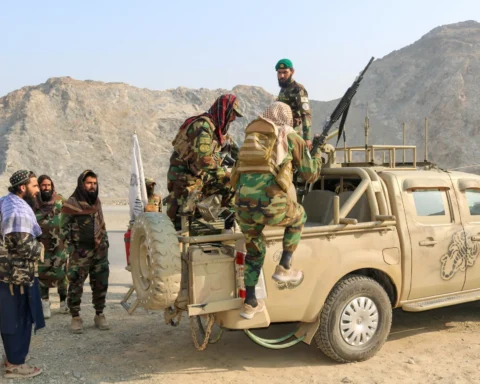

The latest United Nations Security Council Monitoring Team report reads less like a routine security update and more like a warning label on Afghanistan’s present. Yes, the Taliban have consolidated territorial control. Yes, they have imposed a form of internal stability after years of war and fragmentation. But the report makes clear that this “stability” is not the product of inclusive governance or social reconciliation. It is the result of fear, coercion, and a deliberate narrowing of public life. The human cost is staggering, and it is being paid most heavily by women and girls, minorities, journalists, and former officials of the Islamic Republic.
At the center of this system is Supreme Leader Hibatullah Akhundzada. From Kandahar, he governs not as a political leader bound by debate and compromise, but as an uncompromising authority whose edicts shape every major aspect of Afghan society. In practice, dissent is treated as subversion, and ideological conformity is enforced as a civic duty. The Taliban’s repression is therefore not incidental; it is structural.
The report’s most disturbing implication is that Afghanistan’s trajectory is being deliberately engineered around control of bodies, beliefs, speech, and memory
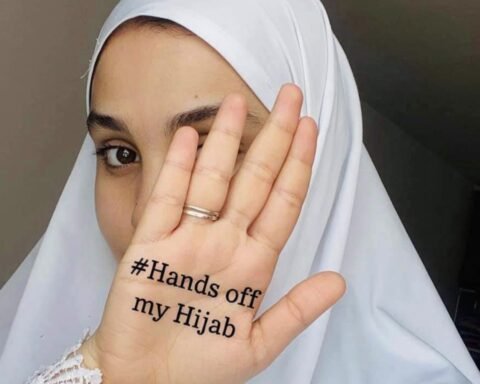
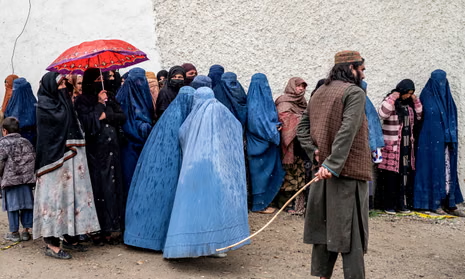
The condition of Afghan women and girls is rightly described as “dire.” It is difficult to overstate what it means for a country to systematically exclude half its population from education, work, and public participation. UN-Women’s Afghanistan Gender Index 2024 captures this bleak reality: eight out of ten Afghan women are excluded from education, employment, and vocational training, placing Afghanistan among the worst performers globally on gender equality. These are not abstract statistics. They translate into households losing income, communities losing teachers and nurses, and an entire generation of girls being told that their dreams are not merely unrealistic but forbidden.
Under edicts issued from Kandahar, women are barred from secondary and higher education, blocked from most employment, and increasingly restricted in movement and access to healthcare. Families, cornered by economic hardship and social pressure, are turning more often to early and forced marriages. The cost is not only moral; it is economic. These policies reportedly drain Afghanistan of more than $1 billion annually, an astonishing self-inflicted wound for a country already struggling with poverty and isolation.
Yet the most telling detail in the UNSC account is that these measures emanate directly from Akhundzada, who frames them as religious obligations and dismisses both domestic criticism and international pressure
The Taliban often present their restrictions as a unified and settled interpretation of Islam, but internal disagreements persist, especially over girls’ education. That dispute matters because it exposes a basic truth: the repression is not inevitable, and it is not unanimously supported even within Taliban ranks. Senior figures have privately and at times publicly argued that the education ban contradicts Islamic principles and undermines Afghanistan’s future. The regime’s response has been revealing. Sher Mohammad Abbas Stanekzai, a former Deputy Foreign Minister, criticized the ban as contrary to Islamic law and was forced into exile. Abdul Sami Ghaznawi was detained for advocating girls’ education. Dr Farouq Azam was arrested after calling for female medical professionals to assist earthquake victims. Even ideologically framed disagreements, made in religious language, are met with punishment. That is not a theological debate; it is authoritarian discipline.
Repression extends beyond gender into the realm of belief and identity. The report highlights growing pressure on religious and ethnic minorities, paired with an aggressive effort to monopolize religious education. Taliban leadership mandates that all religious instruction follow the Hanafi Deobandi school, effectively erasing Shia, Salafi, and Tablighi perspectives from curricula and public legitimacy. Salafi and Shia clerics face surveillance, arrests, and restrictions, signaling a broader strategy: consolidate ideological authority by narrowing what is “acceptable” Islam.
This is not about piety; it is about power, about deciding who belongs and who must be monitored into silence
Ethnic imbalance deepens the sense of exclusion. Pashtuns dominate military and administrative structures, while Tajik and Uzbek figures face marginalization. Downsizing of security forces has reportedly hit non-Pashtun regions disproportionately, fueling resentment and eroding whatever fragile national cohesion remains. When a regime centralizes authority while sidelining large segments of society, it does not eliminate conflict; it postpones it, compresses it, and often makes its eventual return more explosive.
The Taliban’s promise of a general amnesty has also rung hollow. Despite public assurances, arrests, detentions, and killings of former officials and security personnel have continued. Between January and March 2025, at least 23 arbitrary detentions and six extrajudicial killings were reported, with former commanders disappearing after returning from abroad. This pattern is not random. It is a message: the past will be punished, reconciliation is conditional, and returning home can be an act of fatal optimism. A state that rules through intimidation cannot build trust, and a government that treats former compatriots as permanent enemies cannot credibly claim to be rebuilding the nation.
If women are the regime’s primary targets and minorities its pressure point, then journalists are its alarm system, and the Taliban are dismantling it. Media freedom has collapsed under censorship, closures, and detention. Female journalists have been pushed out of public life with particular severity. In October 2025, Shamshad TV and Radio were suspended by the Taliban’s General Directorate of Intelligence, reportedly on Akhundzada’s direct orders, after failing to support the regime narrative during Pakistani air strikes.
When officials label journalists “traitors” and “polytheists,” the intent is clear: to delegitimize independent reporting not just politically, but morally and religiously, making harassment feel like virtue
All of these points lead back to one defining feature of Taliban rule: Akhundzada’s absolute authority. He is insulated from accountability, indifferent to policy debate, and served by institutions designed to enforce obedience, the Ministry for the Propagation of Virtue and Prevention of Vice, loyal clerics, and a judiciary that rejects external criticism. In such a system, repression becomes routine governance. The space for pluralism shrinks by design, not by accident.
The international community should stop treating Taliban repression as a temporary phase that will soften with time or recognition. The evidence suggests the opposite: the repression is the point. Engagement, if it continues, must be conditioned, calibrated, and centered on measurable human outcomes, especially girls’ education, women’s employment, protections for minorities, and basic media freedom. Regional actors, too, must recognize that stability built on exclusion is not stable; it is a pressure cooker. Afghanistan’s future cannot be secured by silencing its people. A country cannot be “stable” when half its citizens are locked out of life, and when disagreement, political, religious, or humanitarian, is treated as a crime.