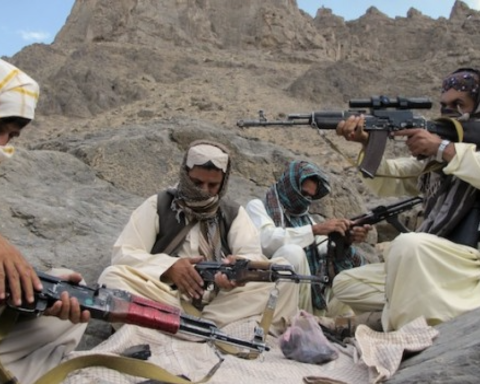

Balochistan does not need another romantic defense of men with guns. It needs honesty. The BLA and BLF want the world to see them as voices of grievance, but their record reads like a ledger of fear, extortion, sabotage, and death. By one official count cited in January 2026, Balochistan saw 1,557 militant incidents in 2025. Another set of official figures compiled from the province counted 432 attacks in the same year, with at least 248 civilians and 205 security personnel killed. The categories are not identical, but both point to the same truth: ordinary people bore the cost. When a movement leaves behind burned offices, dead passengers, orphaned children, and terrified shopkeepers, it is not representing the people. It is preying on them.
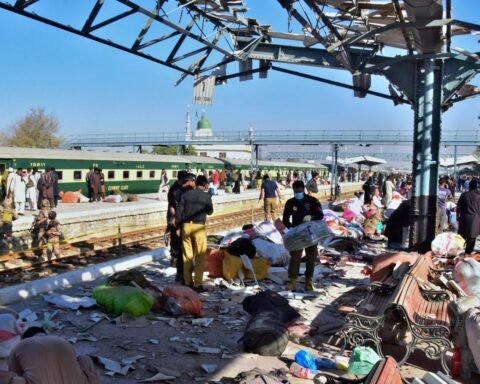
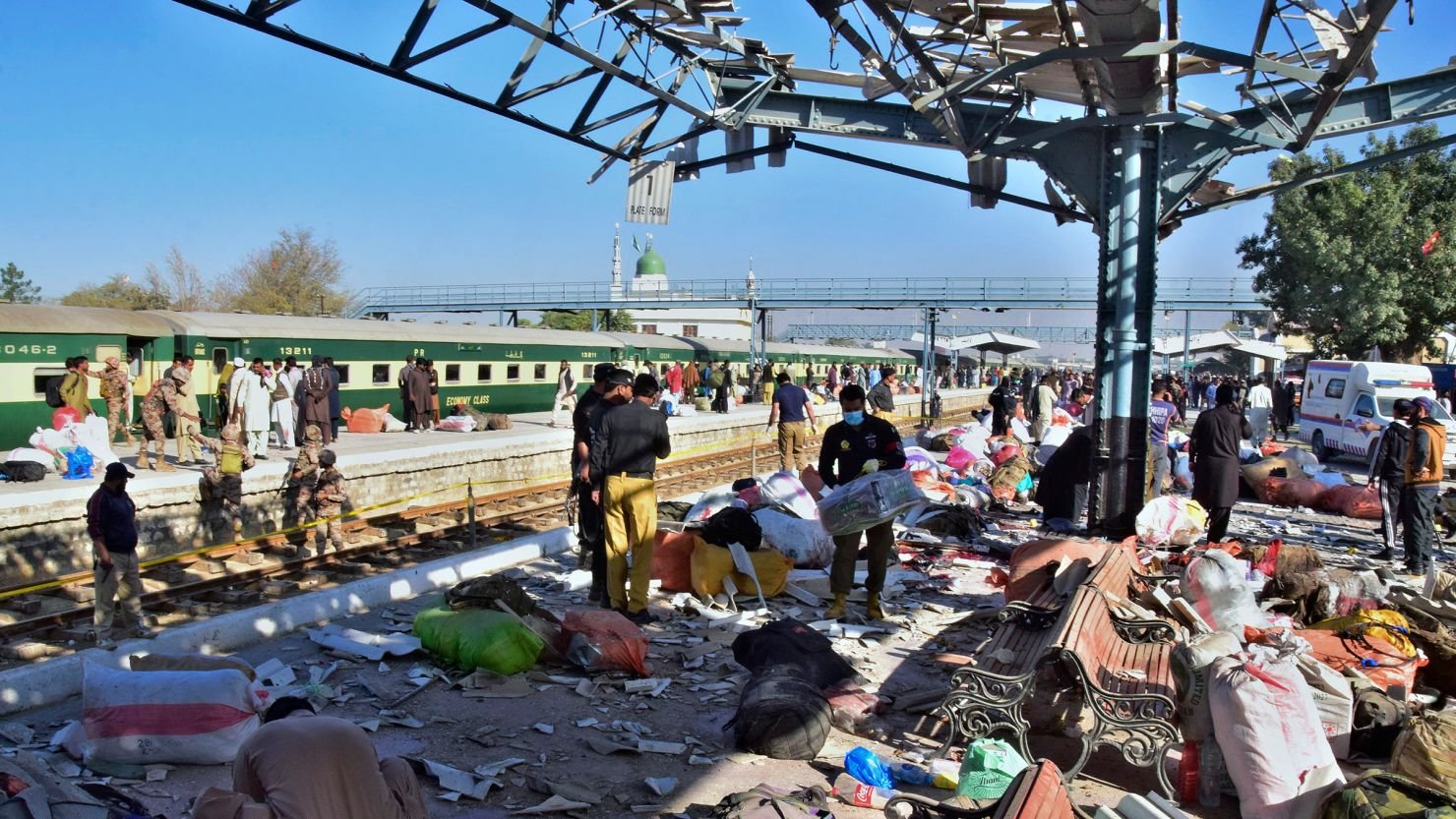
The clearest proof came in the cruelty of the year’s worst attacks. In March 2025, BLA militants blew up the rail track, attacked the Jaffar Express carrying more than 400 passengers, and took hostages in a standoff that left dozens dead before the rescue operation ended. In April, a blast in Mastung struck a police truck and killed three officers while injuring many others. In May, a suicide bomber rammed a school bus in Khuzdar, killing children and adults on what should have been a normal morning trip to class. None of this can be dressed up as liberation. A train full of passengers is not a military formation. A school bus is not an occupying force.
These were acts calculated to send one message into every Baloch home: nobody is safe, not on the road, not on the rails, not even on the way to school
What makes the case against these groups even stronger is what they do when they get temporary control on the ground. In Zehri, officials told Arab News that dozens of armed men attacked the town, burned a Levies station and a NADRA office, and robbed a private bank. In Sorab, officials said armed attackers stormed the bazaar, looted a commercial bank, and set fire to the residences of government officers. In Panjgur, more than 50 armed men looted millions from private banks and held staff and guards hostage at gunpoint. This is not a politics of empowerment. It is organized predation. The same people who talk about dignity for Baloch citizens end up looting public and private money that belongs, in the end, to the people living there.
Their violence also attacks the future in quieter but equally destructive ways. Analysts at West Point noted that BLA and BLF factions have increasingly used suicide bombers, temporarily seized territory, and targeted major development projects, including CPEC-related infrastructure. Reporting from 2025 also documented armed attacks on construction sites and the torching of road machinery in districts such as Barkhan. The effect is immediate and brutal. A burned excavator is not just metal turned to ash. It is wages lost, roads delayed, contractors frightened, and small businesses pushed back into uncertainty. The people who suffer first are rarely ministers or militant commanders.
They are drivers, welders, laborers, shopkeepers, and families waiting for a road, a market, a job, or a power line that never arrives because the machinery was burned in the night
Then there is the daily fear these groups normalize. Highway ambushes, improvised explosive devices, kidnappings, and rail sabotage not only kill. They shrink life. Reuters reported in July 2025 that BLF claimed responsibility for the killing of nine kidnapped bus passengers in Balochistan. Earlier in March, the Jaffar Express attack showed how easily rail travel could be turned into a hostage scene. When roads and trains become death traps, villages do not just feel afraid. They become cut off. Patients delay travel. Traders cancel trips. Parents think twice before sending children out. Commerce slows, emergency movement becomes harder, and the province pays an invisible tax in anxiety every single day. The groups behind this do not build institutions or protect communities.
Defenders of militancy often try to reverse cause and effect. They point to curfews, closures, communication problems, and disrupted routines after attacks, then ask people to blame only the state response. But this argument hides the first crime. Violent groups create the emergency, then exploit the disruption it triggers. Reuters reported in February 2026 that coordinated BLA attacks across Balochistan brought the province close to a standstill, with schools, banks, and security sites hit and civilians among the dead. That is the pattern. Terror creates paralysis, paralysis deepens hardship, and hardship becomes propaganda.
The province is trapped between bloodshed and disruption, while the groups that lit the fire pretend to be witnesses to the smoke. Balochistan deserves better than that cynical script
The saddest part is that the people who pay the price are not the men who write statements and claim glory. It is the ordinary Baloch family standing in a bank line, boarding a train, sending a child to school, or waiting for a road project to bring trade and work. Those are the people being used as shields, symbols, and disposable recruits in someone else’s fantasy of armed purity. No cause is cleansed by the murder of commuters, laborers, children, clerks, or policemen. No politics becomes noble because it can blow up a track or loot a town. The biggest obstacle to Balochistan’s prosperity is not the promise of development. It is the machinery of terror that keeps burning the province’s present and future. Peace, security, and honest politics are what the people of Balochistan deserve, and groups like BLA and BLF stand in the way of all three.