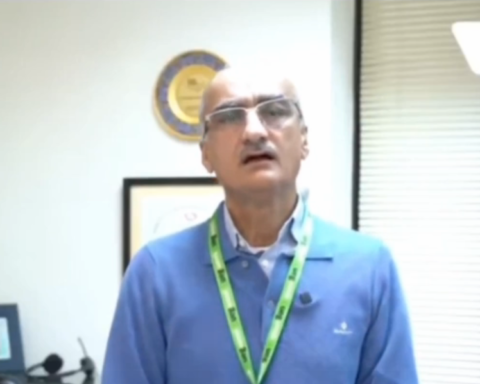
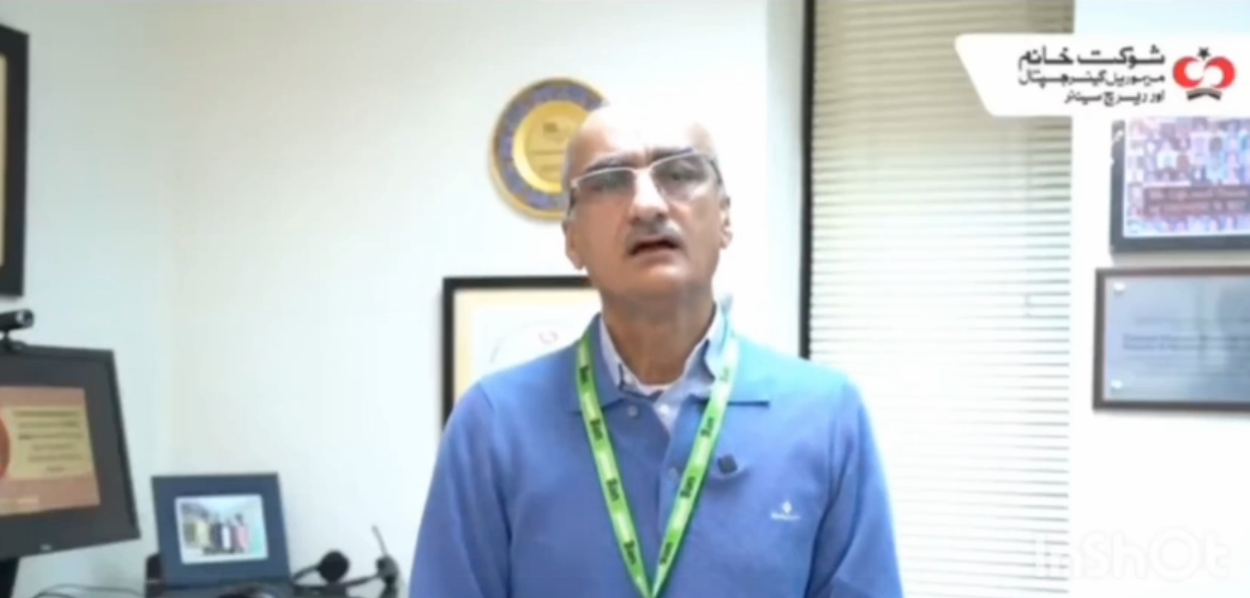

A video statement by Dr Asim, who is known as the personal physician of Mr Imran Khan Niazi, is being pushed on social media with a clear aim. It claims that the designated public sector hospital in Islamabad, PIMS, lacks the specialty, competence, or basic capacity to treat an eye condition properly, and that the relevant specialist does not exist there. The real point of this claim is not medical clarity. It is to plant doubt, to imply that Mr Imran Khan Niazi was taken somewhere unfit, and that his treatment was bound to be poor. That is the narrative being sold, and it deserves a firm, factual pushback.
Start with what actually matters. Mr Imran Khan Niazi has been managed at the designated public sector tertiary care facility in Islamabad under a qualified ophthalmology specialist, using standard and accepted medical practice. The required equipment has been available, and additional expert input was arranged from Al Shifa Trust Eye Hospital. That is what diligence looks like in real clinical work. It is due care, not casual handling.
Turning a medical issue into political scoring is not only ugly, but it is also reckless, because it drags public trust in hospitals into a partisan fight
The attempt to dismiss PIMS as somehow incapable does not match what Islamabad residents already know from lived experience. PIMS is a major government tertiary care setup in the capital territory. Huge numbers of patients receive specialist care there every day, not as a last resort, but as routine. It is staffed with specialists across fields, and it runs complex services under heavy load. If someone wants to argue that it is not perfect, fine, no public hospital is. But claiming that the needed competence for a common ophthalmic treatment is simply absent is a different thing. That claim needs proof, not a video clip and a raised eyebrow.
The specialist involved at PIMS is a fully qualified ophthalmologist with extensive hands-on experience, including over 100 similar and successful procedures. In medicine, outcomes and repetition matter. A clinician who has performed a procedure many times, with good results, is not a guess or a gamble. This is not about titles or social media optics. It is about whether the treating doctor is trained, experienced, and working within accepted standards. By that measure, the claim that “the relevant specialist does not exist” collapses.
There is also an important continuity point that gets ignored on purpose. It is the same ophthalmology specialist who administered the first injection about a month earlier. That earlier intervention led to marked improvement and significant resolution of the issue. In simple terms, the treatment worked. The follow on care was not an improvisation. It was a continuation of an already effective regimen by the same treating clinician.
In clinical practice, this continuity supports competence and consistency, and it reduces risk because the treating team knows the patient’s response pattern
Some people are trying to turn “vitreo retinal” into a magic word, as if care is invalid unless a superspecialist is standing at the bedside. That is not how global medicine works. The relevant specialization for this condition is ophthalmology, and ophthalmologists are authorized and competent to manage such cases. Vitreo-retinal is a higher focus area, and in many systems, it is used when the case demands it, not as a mandatory gatekeeper for every step. Core specialists manage, monitor, and escalate when clinically required. Making it sound like a rigid rule is either ignorance or deliberate spin.
On equipment and capacity, the claim also falls apart. PIMS has the diagnostic and treatment equipment required for ophthalmic conditions of this sort. And even if one assumes a scenario where extra input is needed, the proper response is not panic or public chest beating. It is exactly what happened here. In tertiary hospitals worldwide, it is standard practice to seek consultant input from other leading institutions when extra expertise is helpful. In this case, PIMS administration ensured additional expert support, including a vitreo-retinal consultant from Al Shifa Trust Eye Hospital.
That reflects extra caution and patient-focused care. It should be acknowledged as a safety step, not twisted into a story of deficiency
There is a governance and custodial reality too, which many commentators pretend not to understand. Mr. Imran Khan Niazi is an inmate at Central Jail Adiala. Like all inmates, medical care is provided under prison rules and government health protocols, typically through designated public sector hospitals. The state is obligated to ensure treatment is lawful and provided at public expense. It is not meant to be managed through selective private arrangements that create special lanes. This is standard custodial practice. You can debate the broader system if you like, but you cannot pretend that using a designated public hospital is itself proof of neglect.
If there were genuine medical concerns, the responsible path is professional-to-professional communication. Doctors know how to do this. They share records, imaging, and clinical notes, and they discuss options directly. Broad public insinuations are not a substitute for clinical dialogue.
In fact, they can harm the patient by creating noise, distrust, and pressure that have nothing to do with care
One more fact makes the sudden public outrage look even less sincere. The same treating team had already briefed Mr. Imran Khan Niazi’s personal physicians on a conference call around two weeks earlier, in the presence of PTI political leadership. No objection about a “missing superspecialization” was raised then. So why the public claim now, after prior clinical engagement? That inconsistency is hard to ignore. It suggests a narrative choice, not a late medical discovery.
It is worth saying plainly that Dr. Asim’s public commentary often ranges across multiple medical issues beyond a single narrow specialty. That does not make him a villain, but it does make it unreasonable to cast doubt on a credentialed ophthalmologist who is demonstrably delivering effective care within his domain. Public hospitals deserve scrutiny, yes. Patients deserve advocacy, always. But this particular storyline, that PIMS lacks the competence and the specialist does not exist, is not advocacy. It is a political script dressed up as a medical concern. And that is deplorable.