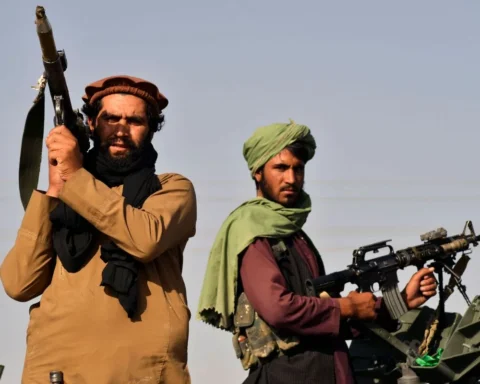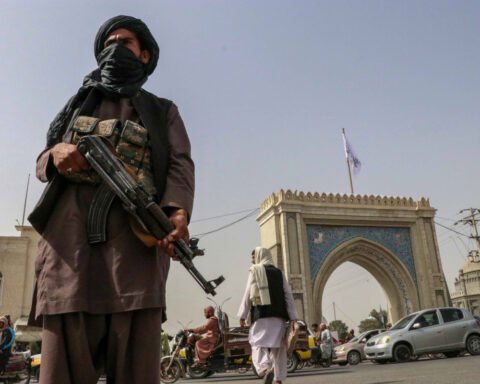
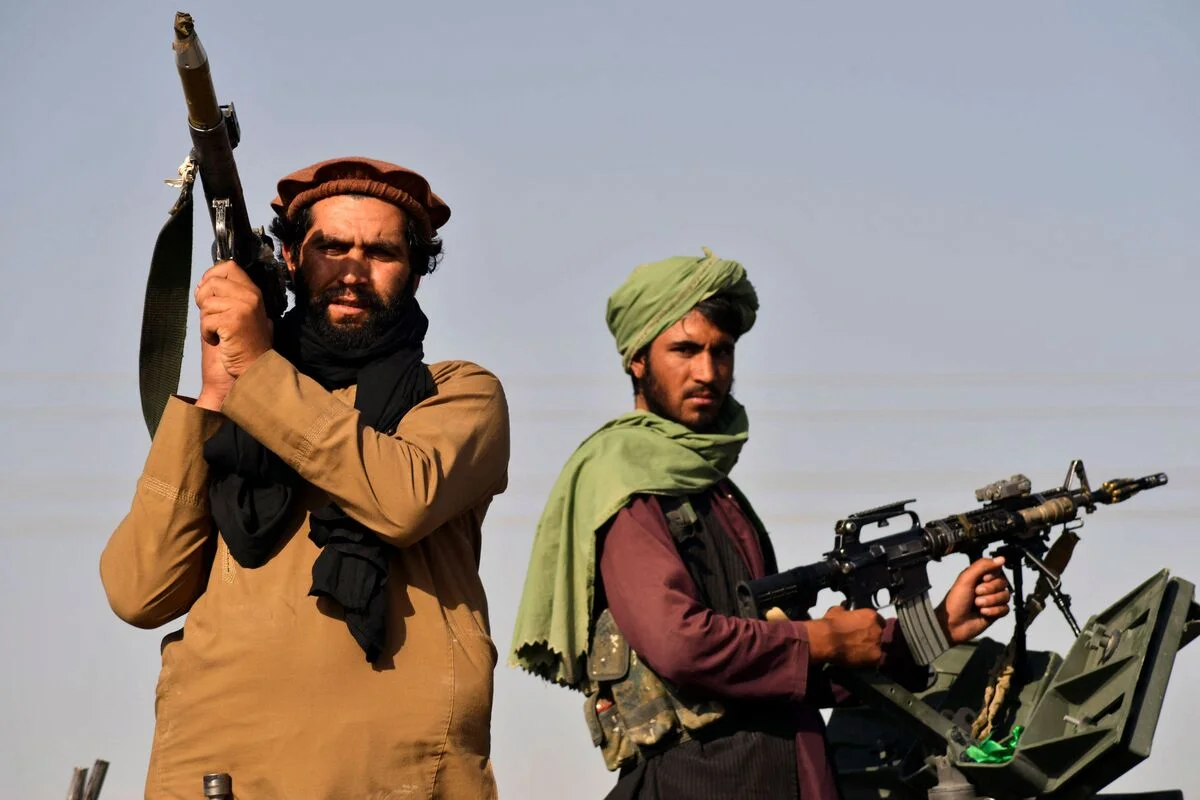

The region is being asked to accept a comforting story: Afghanistan is calmer than it was during the civil war years, so the problem is contained. That story confuses the absence of open combat with the presence of control. A state can look quiet and still export danger if armed networks have space to organize, move, and raise money. What matters to neighbors is not what the Taliban claims in press lines, but what keeps happening on the border, what keeps showing up in seizures, and who keeps getting targeted.
The Afghanistan-Tajikistan frontier has become the clearest test case because it exposes how quickly local insecurity becomes regional risk. In late November 2025, attacks launched from Afghan territory hit Chinese-linked interests in Tajikistan and killed Chinese nationals. Tajik officials described a drone strike that dropped explosives, and Beijing publicly urged its citizens to avoid the border area. Within days, Tajikistan said five Chinese nationals had been killed across two incidents, and the Taliban responded with promises of cooperation and border coordination.
Even if one sets aside attribution debates, the operational lesson is hard to dodge: militants or criminal actors were able to stage from Afghan soil, reach a sensitive target set, and generate a strategic effect far beyond any single valley
January 2026 reinforced that this was not a one-off shock. Tajik security forces reported that armed men crossed in from Afghanistan and were killed after resisting capture, while Afghan officials described the same incident as smuggling rather than terrorism. That disagreement matters because it points to a deeper problem: the border space is now dense with actors who can switch labels depending on what is useful. Smugglers carry weapons, militants fund themselves through smuggling, and both exploit the same routes, facilitators, and corruptible checkpoints. Whether an infiltrator is tagged a terrorist or a trafficker, the state on the receiving end still faces armed incursion, casualties, and a public loss of confidence.
When pressure rises, small states do what they have always done: they look for outside backing. In early February 2026, reporting indicated the Russia-led Collective Security Treaty Organization was moving to supply Tajik border forces with more equipment and weapons, framed as a response to repeated clashes and infiltration risks. This is a signal of regional anxiety, not a technical procurement story.
It says that Tajikistan believes the threat is sustained, cross-border, and serious enough to justify deeper security dependence
The key question is why the threat persists. The Taliban insists it is fighting disorder, yet the United Nations Monitoring Team has documented a continued terrorist ecosystem inside Afghanistan and ongoing ties, at least in parts of the movement, that enable some groups to operate with relative freedom. If international and regional terrorist organizations have training capacity, logistics support, and recruitment pipelines, then Afghanistan becomes less a country that is merely struggling, and more a platform others can use. That platform does not need a formally declared safe haven to function; it only needs enough protection, tolerance, and blind spots.
This is where the policy debate often turns dishonest. Some actors argue that engagement must be unconditional because isolation failed in the past. Others argue that engagement is betrayal because the Taliban is ideologically irredeemable. Both positions ignore the same practical truth: engagement is a tool, not a moral certificate. It can reduce threats if, and only if, it is tied to verifiable actions that shrink operational space for violent networks.
Otherwise, engagement simply lowers pressure while the underlying machinery of recruitment and facilitation continues to run
A serious regional approach starts with admitting that Afghanistan is not only a domestic governance crisis. It is also a transnational security problem because the spillover hits multiple fronts at once: militant attacks, narcotics trafficking, arms flows, and the targeting of foreign nationals and infrastructure. The November 2025 attacks show how quickly this can touch Chinese interests, which makes the problem more international, not less. The January 2026 border clashes show how quickly it can become a routine pattern that drains resources and escalates mistrust.
The region should also be clear-eyed about the ideological dimension. Security is not only about guns at the border, but it is also about what kinds of institutions are being expanded inside Afghanistan and what narratives they export. Reporting has described a rapid growth of religious schools under Taliban patronage, with claims of very large numbers of new or expanded centers.
If education becomes narrower, more politicized, and more exclusionary, the long-term effect is a larger pool of young people socialized into grievance and absolutism, which violent recruiters can exploit inside Afghanistan and beyond
None of this means neighbors have unlimited options. Borders are mountainous, budgets are limited, and intelligence collection inside Afghanistan is harder than it was before 2021. But limited options still allow smart choices. Regional states can improve joint threat picture sharing, harmonize watch lists, and coordinate investigations into cross-border attacks so perpetrators do not hide behind jurisdiction gaps. They can tighten financial tracking on hawala networks linked to trafficking and militant facilitation, and they can align diplomatic messaging so armed groups do not play capitals against one another.
For outside powers, especially in Europe and North America, the temptation is to treat Afghanistan as a faraway problem that mostly endangers its neighbors. That is a short memory. The same UN reporting that maps terrorist actors in Afghanistan is a reminder that permissive space can generate downstream plots and foreign fighter movement. The right frame is not charity or punishment; it is risk management. If Afghanistan continues to function as a platform for cross-border violence and criminal enterprise, the region will absorb the first shock, but it will not be the last.