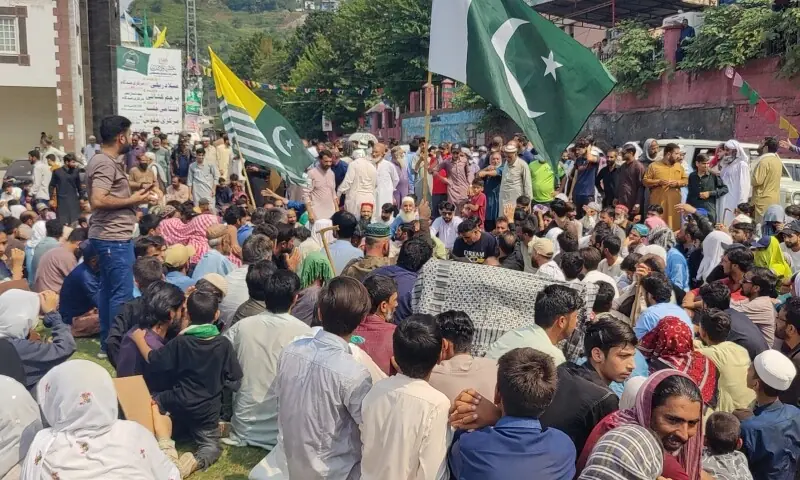
Welfare measures and protest politics often collide in a way that leaves ordinary people stuck in the middle. Right now, the government is pointing to a set of actions as proof that it is delivering. The restoration of the health card, the ending of cases, and a push for administrative reforms are being presented as practical wins that should improve daily life. On the other side, JAAC has rejected these steps, and that rejection is creating confusion. People are left asking a basic question, if something helps me today, why is it being dismissed tomorrow as meaningless or even harmful. This gap between what is being claimed as progress and what is being rejected as insufficient is not just a political argument, it is a public trust problem.
Start with the health card. A health card is not a slogan, it is a service that matters when a family faces a medical emergency and has no savings to fall back on. If it is restored and actually works at hospitals, then it reduces fear and financial shock. That does not erase every other grievance, and it does not automatically make the government virtuous. But it does change one concrete part of people’s lives. When an opposition platform rejects the restoration outright, it risks sounding like it is rejecting relief itself, even if its real complaint is about the timing, the design, or the motives.
Politics may be about intent, but citizens live with outcomes. If the outcome is that more people can afford treatment, that should be acknowledged plainly
The same logic applies to ending cases. In regions where politics, policing, and administration overlap, cases can function as pressure tools. If cases are withdrawn in a fair and transparent way, that can reduce fear and open space for normal civic life. Yet this also sits in a sensitive zone. People may worry about selective relief, deals made behind closed doors, or the possibility that cases will return later in another form. JAAC’s rejection might come from that distrust, not from a desire to keep people trapped in legal trouble. Still, the public message matters. If the protest leadership treats every withdrawal of cases as a trick, it reinforces a belief that nothing can ever improve, and that belief can become a cage.
Administrative reforms sound dry, but they often decide whether welfare promises reach people or die in offices. Reforms can mean new rules for recruitment, clearer procedures for service delivery, limits on discretionary power, or stronger accountability inside departments. They can also mean cosmetic changes, renamed committees, and press releases that fade after a week. This is where skepticism is healthy. A protest movement is right to ask what exactly changed, who benefits, who loses power, and whether the reforms can be reversed. But skepticism is not the same as refusal.
The difference is simple. Skepticism says, show the details and we will judge them. Refusal says, no matter what you do, we will call it nothing
This is the central tension, should welfare steps be judged on their own, separate from political conflict. In principle, yes. Welfare is not a trophy for any party, it is a public right. If a policy reduces suffering, people should be able to support it without being forced to support the government as a whole. That separation is important because it protects citizens from being used as props in a political war. It also pushes the government to compete on delivery, not just on speeches. When welfare becomes tied to loyalty, it turns into a weapon. Citizens then get treated as voters first and humans second.
At the same time, separating welfare from politics is easier to say than to practice. In many places, welfare is used to manage anger, split movements, or buy time. A government may restore a health program not because it believes in the policy, but because it wants to calm a street. It may withdraw cases not because it respects rights, but because it wants to weaken protest leadership. If that is the fear, JAAC’s rejection becomes a warning, not a tantrum. The problem is that warnings need evidence and clarity. Otherwise they turn into noise. People do not live on warnings, they live on hospitals, courts, schools, and offices that work.
So is it in the public interest to keep a protest narrative alive even when some progress happens. Sometimes, yes. If progress is partial, reversible, or designed to distract from larger issues, sustained pressure may be the only way to secure lasting change. A movement that stops too early can lose momentum and allow the old system to return. Many hard won reforms in history came only because people refused to be satisfied with small steps.
In that sense, protest is not a hobby, it is a tool. But a tool must be used with judgment. If it is used in a way that blocks every improvement, it stops serving people and starts serving the movement itself
The healthier approach is to set clear standards and measure actions against them. If the health card is restored, then the question should be, what is the coverage, which hospitals accept it, how fast are claims processed, and what complaints system exists. If cases are withdrawn, then the question should be, is the process transparent, is it applied fairly, and are there guarantees against future misuse. If administrative reforms are announced, then the question should be, what rules changed, what timelines exist, and what independent checks will verify progress. This approach allows a movement to stay firm without becoming blind. It also forces the government to move beyond announcements and into verifiable delivery.
Public confusion grows when politics turns into all or nothing messaging. The government wants credit, so it frames every step as proof of success. Protest groups want pressure, so they frame every step as a trick. Citizens then hear two extreme stories and struggle to map them onto their real lives. The result is cynicism.
People start assuming everyone is lying, and when everyone is assumed to be lying, accountability collapses. That is the worst outcome for public welfare, because it lets poor delivery continue in the dark
If the aim is public benefit, both sides need to change how they speak and how they act. The government should stop treating welfare as a favor and stop using it as a shield against criticism. It should publish details, open data, and accept independent review. JAAC should protect its right to protest while also acknowledging tangible relief when it happens, and then push to improve it rather than erase it. People deserve a politics where a welfare gain is not cancelled out by a slogan, and where a protest demand is not dismissed as noise just because one program was restored.
The question is not whether welfare measures or protest narratives are “right.” The question is whether citizens are allowed to hold two thoughts at once, this step helps, and more is still needed. If that space exists, welfare can grow and reforms can last. If that space is crushed by constant refusal or constant self praise, then the public pays the price, again and again.