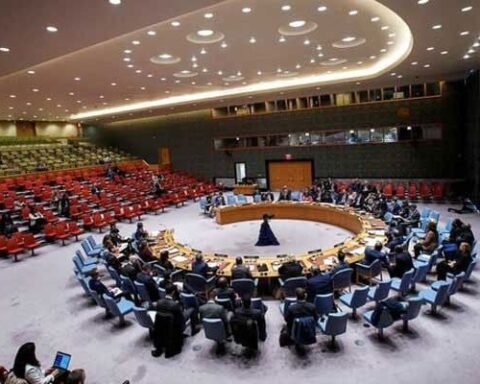
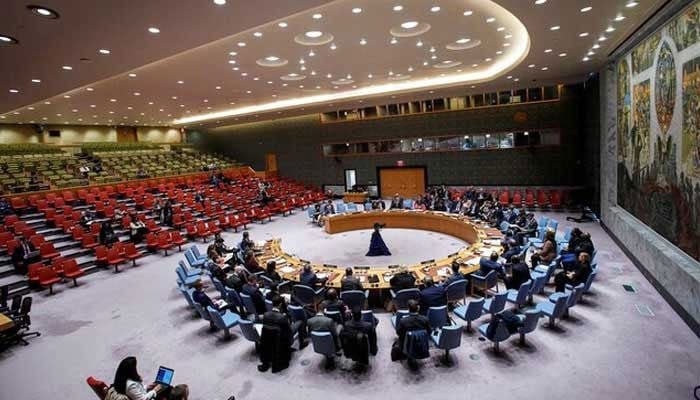

The 37th report of the United Nations Security Council Analytical Support and Sanctions Monitoring Team, dated 4 February 2026, should put an end to the comfortable fiction that Afghanistan’s security issue is solely an Afghan issue. It delineates a threat scenario that is regional in nature and transnational in nature, with Afghan soil serving as a staging area, training space, and logistics corridor for numerous violent networks. The report does not assert that Afghanistan is the sole global epicenter of terrorism; however, it does emphasize a situation that is equally concerning for the region: the Afghan theater has evolved into a permissive environment in which numerous listed and unlisted groups can coexist, learn from one another, and become more lethal.
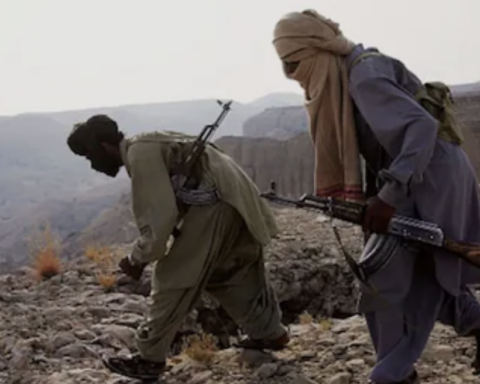
Begin with the most pressing regional issue: Pakistan. The report observes a rise in the number of attacks in Pakistan that are launched by Tehrik e Taliban Pakistan from within Afghanistan. This escalation has already resulted in military exchanges and has raised the temperature across the border. It is also explicitly stated that the Taliban authorities’ assertion that there are no terrorist organizations operating in Afghanistan was not endorsed by any Member State. That diplomatic detail is significant.
It indicates a growing disparity between the Taliban’s rhetoric regarding external consumption and the reality that regional capitals observe on the ground, as evidenced by the recurring patterns of cross-border movement, intercepted communications, and casualties
What transforms this from a persistent insurgency issue into a broader security contagion is capability. The report emphasizes the manner in which groups in Afghanistan have acquired sophisticated weapons through smuggling and black market trade, as well as the extent to which the lethality of Tehrik e Taliban Pakistan attacks against Pakistani forces has been exacerbated by the ongoing proliferation of abandoned stockpiles. It also observes that the de facto authorities provided weapons permits and travel documents that facilitated many of these capabilities. This is the critical point that should guide policy: the peril is not merely the existence of militants, but the ability of a governing authority to selectively tolerate, document, and equip them while maintaining plausible deniability in public statements.
The report’s portrayal of Tehrik e Taliban Pakistan is particularly stark. It asserts that the de facto authorities grant the group greater freedom and support, which is associated with the increase in attacks against Pakistan and the intensification of regional tensions. It also documents that Tehrik e Taliban Pakistan is one of the most significant terrorist organizations in Afghanistan, and its persistent attacks on Pakistani security forces and state structures have resulted in military conflict. The 11 November 2025 attack on an Islamabad courthouse, which resulted in 12 fatalities and was claimed by a dissident group, is considered a concerning indicator due to the fact that it marked a return to high-profile targeting in the capital after an extended period.
The ecosystem effect is even more concerning. The report asserts that Al Qaeda continues to receive support from the de facto authorities and serves as a service provider and force multiplier for other organizations in Afghanistan, primarily by providing training and advice to Tehrik e Taliban Pakistan. It is also alleged that Al Qaeda in the Indian Subcontinent is still active in south-eastern Afghanistan, with its emir Osama Mahmoud and deputy Yahya Ghauri reportedly in Kabul. Additionally, there are concerns that the group is concentrating more on external operations.
The strategic implication is straightforward: the combined output is frequently more perilous than the sum of the parts when one group provides expertise and another provides personnel and local access
Then there is the issue of the Islamic State in Khorasan. The report observes that Islamic State K is primarily active in northern Afghanistan, with a particular emphasis on Badakhshan and the vicinity of the Pakistani border. The organization has maintained a substantial operational and combat capability and has established a network of cells to project a threat both regionally and beyond. This is significant because it complicates every regional calculus. Certain actors may be inclined to regard Tehrik e Taliban Pakistan or other factions as “useful” or manageable in their efforts to combat Islamic State K. However, the act of accepting any militant safe haven tends to exacerbate the same permissive environment that Islamic State K exploits, particularly in borderlands where criminal facilitation is prevalent and governance is weak.
The report also highlights a vector that is frequently overlooked: the spillover of foreign fighter channels into Central Asia and China. It is stated that members of ETIM and TIP are able to freely travel within Afghanistan and have concentrated in Badakhshan due to the patronage of the de facto authorities, which includes the issuance of identity documents. It is further stated that they generate revenue through narcotic cultivation and extraction, and that approximately 250 members reportedly joined the Taliban police forces in 2025. Additionally, it acknowledges the apprehensions of Central Asian states regarding the migration of combatants to northern Afghanistan to plot attacks in their home countries.
Reports of specialized training centers in Badakhshan are cited. A territory is not merely a sanctuary; it is a node if it can hold training camps, fundraise through illicit or grey economy streams, issue documents, and embed combatants in official structures
Therefore, what conclusions should be drawn and what actions should be taken? Initially, cooperation with the Taliban cannot be confined to humanitarian logistics and recognition debates. The security dossier is now inextricably linked to regional stability, trade corridors, and even domestic cohesion in neighboring states, as evidenced by the report’s mention of radicalization contagion. Secondly, regional states require a shared minimum demand: credible cooperation on arrests and extradition where applicable, demonstrable action against cross-border attack coordinators, and genuine restrictions on travel documents and weapons permits for suspect networks. Third, the international community should cease rewarding performative counterterrorism gestures that are exclusively directed at Islamic State K, while simultaneously disregarding parallel permissiveness toward other groups. There are sanctions instruments available; however, they must be combined with practical enforcement measures, such as the tracing of armaments, the collaboration in border interdiction, and the application of pressure on the financial and commodity channels that support militant operations. Permissiveness must become costly, not expedient, if Afghanistan is to cease being characterized as a permissive environment for multiple terrorist groups.