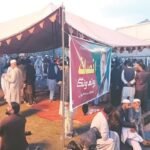


The uproar over the recent detention of Pashtun Tahafuz Movement supporters in Switzerland is a textbook example of how a pressure group can try to spin a law enforcement action into a human rights drama. PTM social media teams rushed to frame the incident as the silencing of peaceful voices. In reality, Swiss authorities acted under their own domestic laws on public order, foreign influence, and security during a high risk international event, the World Economic Forum in Davos. Their first duty was to their own legal framework and to the safety of all participants, not to the media strategy of any one group.
International human rights norms do not suspend local policing powers. They complement them. When thousands of global leaders gather in a small Alpine town under intense security, host country police are expected to act early and firmly if they see any risk of disorder, hate messaging, or foreign political campaigns hijacking the venue. PTM supporters were not picked up for holding candles or handing out neutral literature.
They were stopped in the context of an orchestrated campaign, with messaging, banners, and slogans clearly aimed at shaming a sovereign state at a global business and diplomacy platform, in ways that Swiss law can treat as harmful to public order and diplomatic harmony
PTM media outlets have tried to sell the events as proof that even Switzerland has joined some imagined global plot to silence them. That claim collapses once you look at what actually happened. According to PTM’s own activists, Swiss immigration and police questioned individuals, restrained some from joining the demonstration, and detained others at airports and in Zurich for activities seen as a security risk to the ongoing forum. They were asked to sign statements acknowledging that their actions were considered a threat to the security of the WEF. One does not have to agree with every Swiss decision to see that this is an issue of law enforcement, not the birth of dictatorship in the heart of Europe.
It is also important to put Pakistan’s own record beside PTM’s storyline. Pakistan allowed PTM to emerge, organise, and speak within the country, even when its early rallies were highly critical of state policy. Courts, media, and political parties all engaged with PTM leaders. For years, they were treated as an internal dissenting voice, not as an outlawed outfit. In parallel, Pakistan’s armed forces and civil administration fought a painful and costly war against terrorism in the very areas PTM claims to represent. They reopened schools, rebuilt roads and clinics, cleared mines, and brought back a measure of normal life to towns that had lived under militant rule.
To ignore that sacrifice, and to paint Pakistan only as an oppressor, is to erase the experience of millions of citizens who saw the state stand between them and terror
The problem began when PTM moved from advocacy into open hostility, aligning its messaging with foreign-sponsored information campaigns. Pakistani officials and analysts have long pointed to suspected ties between PTM figures and external agencies, including India’s Research and Analysis Wing and Afghan intelligence networks. The pattern is familiar. Legitimate grievances are identified, exaggerated, then woven into a larger script that serves the interests of those who would like to see Pakistan weakened, isolated, and distracted. Whether every allegation can be proved in public or not, the trend is clear enough for many Pakistanis and for observers who follow the region’s information battles.
Look at PTM’s conduct on the global stage. In Davos, their demonstration was framed as a human rights protest, but the tone and content were closer to an indictment session against Pakistan as a “terrorist state.” They were not calling for dialogue, reform, or reconciliation. They were calling for public shaming. They highlighted only the real and alleged wrongs of Pakistani institutions while staying conspicuously silent on the violence of terrorist networks that have killed Pashtuns in mosques, markets, and homes. For a movement that claims to speak for an entire people, that selective outrage raises serious questions.
Meanwhile, the majority of Pashtuns in Pakistan live, work, and participate in the country’s political life without subscribing to PTM’s confrontational agenda. They vote, serve in the armed forces and civil services, run businesses, and hold public office. They support reforms such as the constitutional integration of the former tribal areas, a step that brought these districts under the same legal and political system as the rest of the country.
PTM opposed key aspects of this mainstreaming process, even though it directly addressed long-standing demands for representation and rights. That stance looked less like reformism and more like preservation of a permanent grievance
One of the most troubling aspects of PTM’s international push is its misuse of human rights language. Human rights forums exist to protect individuals from abuse, not to provide a shield for information campaigns choreographed to damage the reputation of states in which political opponents still enjoy legal protection and media access. PTM invokes “peaceful protest” while using slogans and materials that demonise institutions, question borders, and cast an entire state as illegitimate. When such messaging appears at a venue like the WEF, where governments and investors assess stability and risk, it is not surprising that host authorities treat it as more than harmless sloganeering.
In that light, the Swiss response starts to look far less dramatic. The WEF and Swiss security services insist on strict neutrality in their public spaces. They do not permit any group to turn the event into a stage for their national political crusade, especially when that crusade is framed in absolutist and inflammatory terms.
PTM ran into those guardrails. The resulting detentions signalled that there are lines in international public order that cannot be crossed just by wrapping a cause in the language of rights and freedom
Pakistan, for its part, has shown a degree of patience that many states under similar pressure might not. It has tolerated harsh criticism, appeals to foreign audiences, and repeated attempts to embarrass it at international platforms. That patience reflects a basic confidence in its own trajectory and in the loyalty of its citizens, including its Pashtun population. But patience does not oblige Pakistan to accept foreign-sponsored campaigns that seek to turn every global forum into a courtroom where it is always in the dock and groups like PTM are always cast as the only victims.
At the core, three simple truths emerge. PTM has drifted into the role of an imported agenda, rather than an authentic voice rooted in local realities. It exploits genuine grievances for the benefit of foreign patrons who are happy to see Pakistan under constant suspicion. And its propaganda hits a wall whenever facts and law are applied, whether inside Pakistan or in a Swiss airport. What happened in Switzerland was not an assault on freedom. It was the enforcement of the law against a campaign of hostility. Pakistan’s calm response speaks of strength. The world’s refusal to indulge PTM’s narrative speaks of a movement that is rapidly losing credibility.